This article draws from the most current clinical guidelines published by the American Academy of Sleep Medicine, expansive research from the Sleep Foundation, and evidence-based commentary from board-certified physicians at medical institutions including Cleveland Clinic and Columbia University.
You deserve a moment of honest reflection.
You wake up feeling a profound sense of exhaustion. Your body feels heavy, as if the pull of gravity increased while you slept. The prospect of facing another day filled with high-stakes demands leaves you yearning to hide. Responding to emails, running errands, or simply existing in a social space feels like a mountain you cannot climb. You find yourself craving the safety of your blankets, hoping to vanish for a while.
Do you recognize this pattern? You are certainly not alone in this feeling. Many of us have navigated that heavy, paralyzed state where movement feels like a luxury we cannot afford.
The modern label for this specific craving is bed rotting.
I realize the terminology sounds somewhat jarring. It conjures images of neglected produce at the back of a refrigerator. Yet, this bed rotting trend has become a defining behavior across digital platforms, capturing the attention of millions who feel similarly burnt out.
The key is intention. Are you resting to heal, or are you hiding to avoid life? If you have experienced that wave of guilt after a day spent entirely in bed, you understand the internal friction this practice creates.
In this Bed Rotting Self Care Guide, we will determine if this viral behavior provides the genuine recovery you need or if it serves as a habit that might eventually hinder your well-being.
The data from 2025 highlights a clear trend. A June 2025 survey from the American Academy of Sleep Medicine revealed that approximately 31% of Gen Z have engaged in bed rotting, a sharp contrast to the 5% of adults aged 65 and over who report the same. This generational divide suggests that younger people are responding to external pressures and systemic burnout with a distinct form of withdrawal. While this offers a momentary reprieve, it carries risks; 53% of Americans report lingering feelings of guilt after choosing to stay in bed, which is significant given that 53% of the population already characterizes their general sleep quality as fair or poor.
By the conclusion of this guide, you will be equipped to distinguish between restorative rest and destructive avoidance. You will learn to recognize when your body needs a reset and how to execute that process without the weight of self-reproach.
What Is Bed Rotting? Understanding the Viral Self-Care Trend
We can strip this down to the core definition. Bed rotting describes the intentional choice to remain in bed for extended periods during daylight hours while you are fully awake. It is distinct from simply oversleeping or having a slow Saturday morning.
It represents an act of conscious downtime.
The behavioral standard identified in 2024 defines it as follows:
“The practice of spending many hours in bed during the day, often with snacks or an electric device, as a voluntary retreat from activity or stress.”
Nicole Maselli, a licensed mental health counselor, characterizes this as a deliberate pivot away from effort:
“Bed rotting is when someone makes a conscious choice to be alone in their bed rather than participating in an activity that requires more effort, socialization, or energy.”
The bed rotting trend gained widespread visibility on TikTok throughout 2023, serving as a tactical pushback against aggressive “hustle culture.” Rather than attempting to maintain peak productivity throughout every waking hour, individuals opt for a total cessation of demands. It is an exercise in doing nothing, or at least nothing that requires heavy cognitive load.
Typical bed rotting activities usually include:
- Binge-watching comforting television series.
- Endlessly navigating social media feeds.
- Reading literature that provides emotional comfort.
- Consuming snacks while reclined in your blankets.
- Engaging in intermittent, light naps throughout the day.
Some mental health professionals advocate for the term “bed marinating.” It feels warmer, suggesting that you are soaking up rest the way a sponge absorbs liquid. Regardless of the label, the underlying objective is to disconnect from external stressors and trigger a physiological and psychological reset.
Is Bed Rotting Self-Care? What Mental Health Experts Say
We arrive at the essential query: Is bed rotting self-care, or are we simply avoiding our responsibilities?
The answer fluctuates based on your underlying motivation and your emotional state once you finally decide to leave the bed. I have consulted findings from experts at the Cleveland Clinic and Columbia University to provide a nuanced perspective.
The Supporting Views
Many practitioners suggest that our culture is needlessly critical of the need for stillness. When we remove the shame, we can see the utility of true rest.
“Resting gives your muscles, joints, nervous system and more a chance to reset and recover from the daily stressors you endure in life.” , Dr. Meghan Galili, MD, internal medicine physician at Cleveland Clinic
The Cautionary Views
However, balance is critical. There is a precise boundary between replenishing your energy and withdrawing from life.
“Rest is vital, but too much emphasis on passive rest can backfire.” , Dr. Laurence Chan, clinical assistant professor of psychiatry at Columbia University (via Therapy Group of DC)
Dr. Chan emphasizes that blurring the lines between where you sleep and where you live can interfere with your neurological associations regarding sleep. Dr. John Saito, a sleep medicine physician and spokesperson for the AASM, echoes this concern:
“Staying in bed for long periods of time for activities other than sleep may hurt sleep health, and potentially mental health. If you retire to your bed to ‘rot’ away anxiety or daily challenges, it can cause negative thoughts and emotions to fester and potentially worsen over time.”
Dr. Patrick McGrath, PhD, Chief Clinical Officer at NOCD, provides a crucial perspective on avoidance. He observes that using the bed to hide from difficult problems often leaves a person in a state of stagnant avoidance rather than true recovery.
The Verdict
Is it healthy? In moderation, yes.
When you approach rest with awareness, bed rotting functions as a valid tool for mental health recovery. The danger arises when the practice shifts from a planned restorative session to a habitual crutch used to avoid the complexities of daily existence.
Think of it as a dietary choice. An occasional indulgence is fine, but relying on unhealthy sustenance every day will naturally diminish your vitality over time.
The Real Benefits of Bed Rotting (When Done Right)
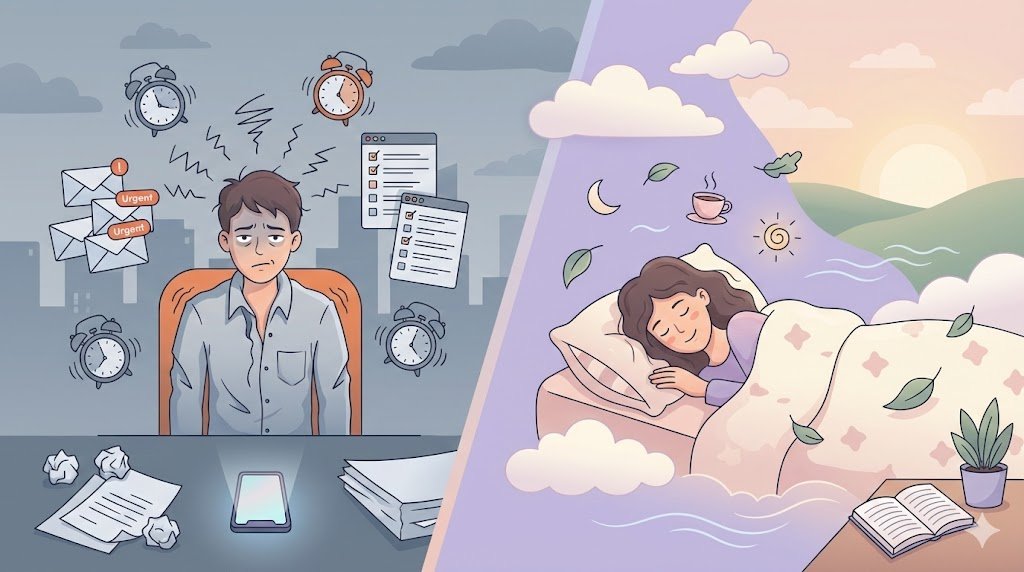
Provided you follow the guidelines for recovery and transition, there are tangible benefits. Here is why choosing to step away might be necessary for your overall health.
- Stress Relief and Burnout Prevention: Removing yourself from environmental demands allows your cortisol levels to stabilize. For those approaching burnout, a day of low stimulation acts as a critical circuit break. Setting healthy boundaries early in the week often prevents the need for an all-day collapse.
- Catch-Up Sleep: Research cited by the Sleep Foundation indicates that periodic catch-up sleep can mitigate the negative physiological effects of sleep debt. While not a replacement for a consistent routine, short-term replenishment can improve alertness. Interestingly, studies suggest this approach to recovery is particularly beneficial for middle-aged women, though small, consistent sleep gains yield better long-term results than prolonged, one-off sessions.
- Mental Clarity: Sometimes, the sheer volume of external information creates mental static. Lying in quiet, low-stimulus conditions grants you the space required for introspection, helping you process emotions that may have been sidelined during a busy work week.
- Rest Beyond Sleep: Your body requires rest even when you are not unconscious. The physical sensation of comfort and safety in a protected environment offers a type of nervous system regulation that public spaces cannot provide.
What Can Bed Rotting Do to Your Body? Bed Rotting Side Effects and Risks
We must balance the benefits against the physiological realities. While a quiet Sunday is helpful, extending this behavior too far disrupts the fundamental requirements of your biology. Your body is built for motion, and your mind requires natural light to maintain its internal timing. These are the bed rotting side effects that often go overlooked.
Physical Health Risks
Prolonged immobilization, especially over several days, triggers significant changes in your physiology.
- Muscle and Bone Issues: Dr. Joslyn Gober from Jackson Health System highlights that inactivity initiates a cascade of decline. Prolonged bed rest directly contributes to muscle atrophy and a decrease in bone density, which increases the likelihood of long-term mobility issues.
- Metabolic Changes: Your metabolic rate shifts when you remain inactive for too long. Scientific research suggests that after ten days of relative inactivity, mitochondrial density decreases and insulin sensitivity begins to wane, affecting how your body processes energy.
- Cardiovascular Impact: Experiments funded by agencies like NASA demonstrate that even two weeks of bed rest can reduce your baroreflex, which is the system your body uses to regulate blood pressure effectively.
- Skin Issues: Observations from clinical settings confirm that pressure sores can begin developing in as little as six to eight hours of remaining in a single position, particularly on a standard mattress that lacks professional pressure-relief capabilities.
- Circulation Problems: According to the CDC, sedentary behaviors significantly slow down peripheral circulation, which in extreme cases can elevate the risk of venous complications.
Mental Health Risks
The intersection of bed rotting and mental health is delicate.
- Increased Anxiety: It may feel like a protective cocoon, but staying in bed for over eight hours has been linked in studies referenced by the Therapy Group of DC to heightened anxiety symptoms after only one week.
- The Depression Loop: Ohio State University Health experts note that a cycle often forms where depressed mood prompts inactivity, which in turn fuels further depressive feelings. This is exacerbated by the 31% increase in depressive symptoms documented by the CDC among younger adults between 2019 and 2022.
- Doomscrolling Trap: If your time in bed is spent navigating high-stress media, you are not resting. You are engaging in a state of high-arousal stress while physically sedentary. Learning to protect your peace on social media is essential if you want your rest sessions to actually function as recovery.
Sleep Quality Impact
The American Academy of Sleep Medicine and the Sleep Foundation advocate for keeping the bed as a space reserved for sleep and intimacy. When you turn your bed into an office, a cafeteria, and a cinema, you disrupt the psychological cues that signal to your brain that it is time for rest. This can manifest as chronic insomnia, as your body begins to associate the bed with being alert and engaged. Furthermore, the lack of exposure to natural sunlight during these sessions actively degrades your circadian rhythm, making it much harder to fall asleep when night finally arrives.
How to Break the Paralysis
If you find yourself stuck in a loop of bed rotting that feels harder and harder to stop, there are practical steps to regain your momentum. You do not need to leap back into high-intensity activity immediately; you just need to initiate a shift in your environment.
Try the 5-4-3-2-1 countdown method. When you realize you have been inactive for too long and the guilt is starting to build, count down from five and commit to sitting up on one. This small physical movement breaks the paralysis of the “rot.”
It also helps to create friction in your environment. Keep your phone charger on the other side of the room. When your battery dies, you are forced to leave the bed to reconnect. Use sensory inputs to jolt your nervous system back into a waking state, such as splashing cold water on your face or immediately opening the blinds to let in natural light.
For those in shared living spaces, it is helpful to communicate your need for space with your partner or roommates. If you are struggling with neurodivergence or a particularly difficult period of mental fatigue, be gentle with yourself. Your goal is not to shame yourself into productivity, but to navigate your energy levels with compassion. If you have spent the entire day in bed, make your transition out of it gentle; stretch your muscles, drink a full glass of water, and move to a different room before trying to start any “productive” tasks. A successful recovery protocol acknowledges that your body needs to re-acclimate to gravity and light before you can effectively engage with the day again.
How Do I Know If I’m Bed Rotting? Signs and Symptoms
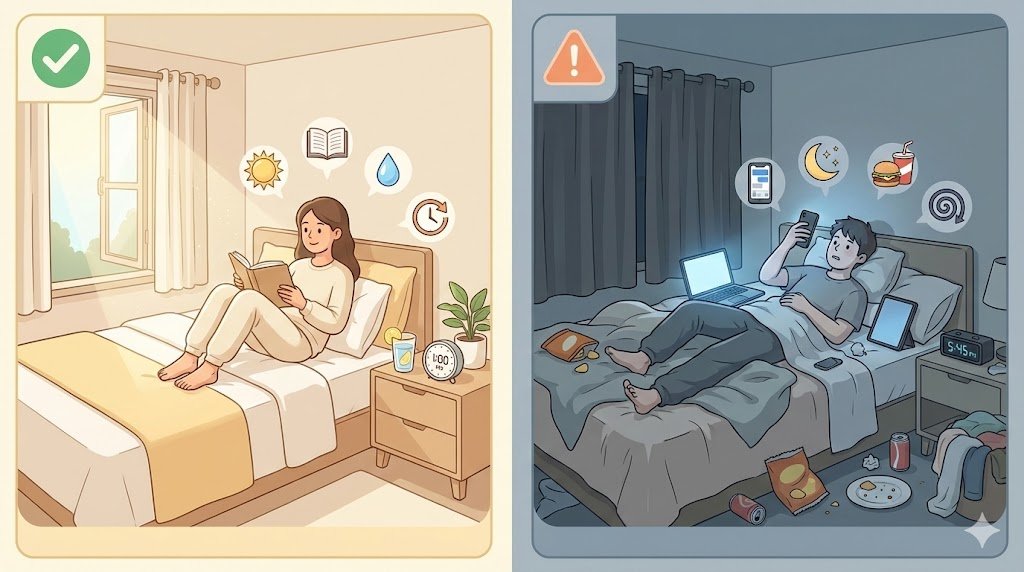
How do you distinguish between genuine self-care and slipping into a counterproductive slump? Recent 2026 data suggests that about 53% of adults report feeling significant guilt after an extended period of staying in bed, which highlights how common this struggle has become. Here are the clear signs to evaluate your own habits.
Signs of Healthy Bed Rotting
- You have a clear plan. You decided to rest for three hours, and you actually honored that timeframe.
- You feel genuinely restored, lighter, and more capable once you move around.
- It occurs infrequently, perhaps once or twice a month, rather than every single weekend.
- Your emotional state trends upward after your break.
- You have the physical and mental capacity to prepare a meal or engage in a social activity once the session ends.
Warning Signs of Problematic Bed Rotting
- You remain in bed for the entire day, skipping essential self-care like showering, brushing teeth, or eating nutritious food.
- The experience leaves you feeling sluggish, physically heavy, or guilty rather than refreshed.
- You find yourself declining invitations from friends or family specifically to avoid leaving your bed.
- It has become your default weekend routine, acting as a recurring escape rather than an occasional treat.
- You use your bed as a barrier to avoid difficult emails, uncomfortable conversations, or life stressors.
- You feel a compulsive need to stay hidden just to feel capable of functioning at a basic level.
If you find yourself bed rotting frequently because you are always tired with no energy, there might be deeper physiological or psychological issues worth exploring. The key is intention. Are you resting to heal, or are you hiding to avoid life?
Bed Rotting and Mental Health Conditions
Sometimes, the urge to remain stationary is not about exhaustion. It is a signal from your nervous system.
Bed Rotting and Depression
Bed rotting depression is a term frequently used for a reason. While staying in bed is not a mental health diagnosis on its own, it serves as a common behavioral marker. Current 2026 reports confirm that nearly 31% of Gen Z individuals engage in this behavior, which mirrors findings showing a steady increase in reported depressive symptoms among young adults over the last several years.
Depression can cause psychomotor retardation, making simple movements feel like climbing a mountain. If you notice a complete loss of interest in activities you once cherished, relying only on the passive stimulation of your phone, you might be struggling with a depressive episode. If feelings of emptiness or worthlessness follow your time in bed, I encourage you to seek out a mental health professional.
Bed Rotting and ADHD
For individuals with ADHD, bed rotting often functions as a dopamine trap. You may experience executive dysfunction, where you know exactly what you need to do, but your brain refuses to initiate the movement. The bed offers immediate, low-effort dopamine hits via screens, creating a cycle that makes the effort of standing up feel almost impossible. If you have ADHD, focus on body-doubling, where a friend stays with you while you complete a small task, to break this paralysis.
Bed Rotting and Anxiety
Anxiety creates a perceived lack of safety in the outside world, making your bed feel like a protective sanctuary. However, excessive avoidance often reinforces the idea that the world is a threat, which can intensify anxiety long-term. Nicole Maselli suggests that for many, this is a freeze response, a way of choosing comfort when the nervous system feels overwhelmed.
“Bed rotting can be seen as a freeze response in which people are feeling unsafe and perhaps on a conscious and unconscious level, they’re choosing the safety of their bed.”
This is a classic form of avoidance behavior. It provides temporary relief but often traps you in a cycle of worsening apprehension.
Bed Rotting Treatment: When Rest Becomes a Problem
When rest crosses the line into a compulsive behavior, evidence-based interventions can help you regain your independence:
- Cognitive Behavioral Therapy (CBT): This helps you reframe the thoughts that keep you in bed. It allows you to distinguish whether you are truly resting or merely avoiding your responsibilities.
- Stimulus Control Therapy: This keeps your bedroom dedicated solely to rest. By working or eating elsewhere, you train your brain to associate the bed only with sleep, not with prolonged, unproductive lounging.
- Behavioral Activation: Especially useful for those dealing with depression, this focuses on scheduling small, meaningful activities that gradually increase your engagement with the world.
If you have struggled with this for more than two weeks, or if the feeling of being stuck has become persistent, please reach out to a licensed therapist. Professional help is not a sign of weakness. It is a necessary step for regaining your momentum.
How to Pull Yourself Out of Bed Rotting: Practical Strategies
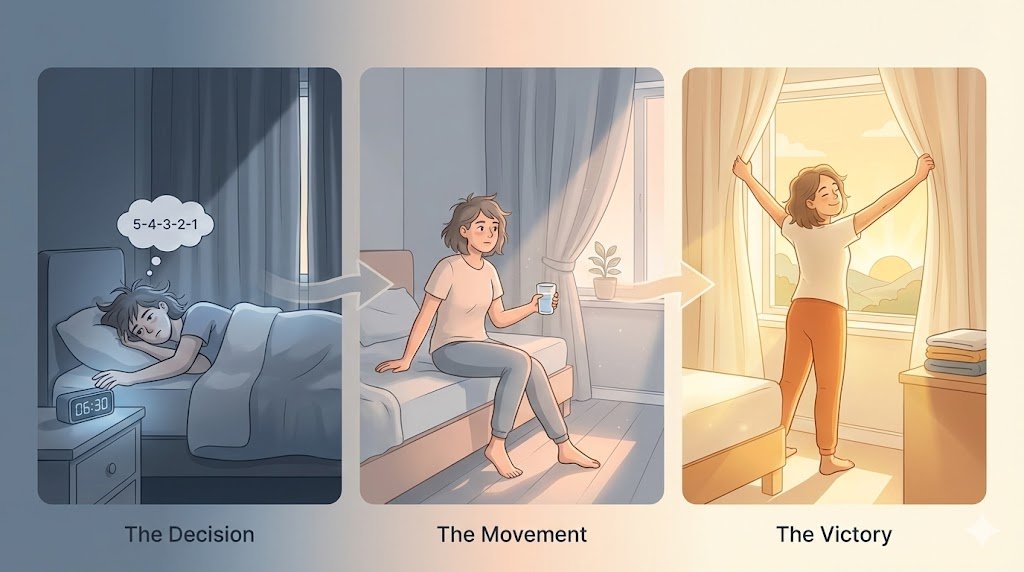
If you feel glued to your mattress, you need a strategy to break the mental paralysis. If bed rotting has turned into a way to ignore your life, these science-backed strategies to stop procrastinating are essential.
1. The 5-4-3-2-1 Countdown: This is a powerful tool to override overthinking. When you need to get up but feel frozen, count backward out loud. On one, physically commit to moving. This interrupts the brain’s internal debate and forces a physical reaction.
2. Micro-Movements: Don’t set your goal as cleaning the house. Start with just sitting up. Once you are upright, wiggling your toes or stretching your arms is enough. Action creates motivation, not the other way around.
3. Distance Your Tech: If your charger is within arm’s reach, you will stay in bed. Plug your phone into an outlet across the room. You have to stand up to turn off an alarm or check a notification, and once you are standing, you have already won half the battle.
4. Design Your Exit: Create a reason to leave. Perhaps it is a specific podcast episode you enjoy or a cup of coffee you love. Build a morning routine that works to act as a magnet pulling you out of the covers.
5. Sensory Interruption: Shock your senses slightly to signal to your body that rest time is finished. Splash your face with cool water, open the curtains wide, or sip from a cold drink. It forces your system out of that sluggish, low-energy state.
6. Environmental Inconvenience: Stop bringing snacks and water into the bedroom. By forcing yourself to go to the kitchen, you break the comfort of the “rot.”
7. Scheduled Connection: Social pressure is a helpful motivator. If you know a friend is meeting you at 10 AM, you are far more likely to leave the house. External accountability is often the strongest antidote to isolation.
What Should I Do Instead of Bed Rotting? Healthier Alternatives
True rest does not require isolation. If you need to recover, try these quick ways to relieve stress at home that won’t leave you feeling guilty or groggy.
Restful Alternatives
- Nature Immersion: Even sitting in a garden or on a balcony provides better restoration than lying in a dark room.
- Active Mindfulness: Instead of mindlessly scrolling, lie on a yoga mat and follow a guided meditation. Data shows that 27% of adults now use intentional breathwork to improve their sleep quality and daily focus.
- Change Your Space: Move your entertainment to the living room. Keeping your bedroom strictly for sleep protects your brain’s association with rest.
Active Alternatives
- Movement Snacks: A five-minute stretch or light yoga session can reset your metabolism.
- Walking: Even a short walk contributes toward global exercise recommendations and significantly boosts mood.
- Journaling: When you feel the urge to rot, use 2-minute journaling prompts to identify what you are actually feeling. Often, you are not tired, you are overwhelmed.
Remember that bed marinating is intentional, while bed rotting is a habitual loss of control. Always aim to marinate, never to rot.
How to Help Someone Who Is Bed Rotting
If you see someone you love trapped in a cycle of bed rotting, approach with empathy, not correction.
What to do:
- Validate their experience. They likely already struggle with intense shame.
- Offer an invitation that is easy to say yes to, like joining you for a short drive to get coffee.
- Ask if you can help them with one small, low-stakes task to help them build momentum.
What to avoid:
- Do not shame them or call them lazy. This only increases the anxiety that caused the behavior.
- Do not pressure them to be instantly productive.
- Avoid enabling them by acting as a butler. They need a reason to get up, not total comfort in their hiding spot.
Try saying: “I have noticed you have been in your room a lot lately and I miss your company. Is there anything on your mind that I can help with?”
How to Bed Rot the Healthy Way: A Guilt-Free Guide
If you choose to use your bed for restoration, do it with clear boundaries to ensure it remains a helpful tool rather than a crutch.
1. Set a Hard Limit
Establish a specific end time. Set an alarm. When that alarm sounds, leave the bed immediately.
2. Keep It Occasional
Treat this as a rare luxury, like a spa day. If you need consistent rest, plan a proper, structured reset day that engages your body and mind properly.
3. Choose Quality Activities
Abandon doomscrolling for something restorative. Reading, knitting, or listening to calming music keeps your mind engaged while you rest your body.
4. Prioritize Sunlight
Leave the blinds open. Natural light keeps your circadian rhythm in balance, helping you stay alert even while you are resting.
5. Stay Hydrated
Fatigue is often dehydration. Keep a large bottle of water within reach to maintain your energy levels.
6. Plan Your Exit Strategy
Decide on your next activity before the alarm rings. A planned shower or a walk will make the transition away from the mattress easier.
7. Monitor Your Feelings
Check in with yourself. If you feel more exhausted or anxious after an hour, pack it up. Your body is telling you that this method of rest is not working for you today.
The 5 C’s of Self-Care (Beyond Bed Rotting)
Bed rotting is just one minor tool. True health recovery requires a holistic approach. For further practical self-care routines, remember the 5 C’s.
- Connection: We are social creatures. Meaningful human interaction is essential.
- Calm: Use your rest time to truly quiet your nervous system, not just to avoid tasks.
- Competence: Engaging in hobbies where you feel capable boosts your confidence.
- Compassion: Forgive your mistakes and treat yourself with patience.
- Consistency: Build a life you don’t need to escape from by prioritizing stable routines.
The 10-3-2-1 Rule for Better Sleep
This evidence-based framework prevents the chronic exhaustion that drives people toward bed rotting in the first place:
- 10 hours before bed: No more caffeine consumption.
- 3 hours before bed: No more food or alcohol, giving your body time to digest.
- 2 hours before bed: No more work related tasks.
- 1 hour before bed: No more screens, allowing your brain to wind down naturally.
- 0: The number of times you hit snooze.
Adhering to this routine significantly improves sleep hygiene. You will wake up feeling genuinely rested, which naturally diminishes the temptation to “rot” the following day. When you focus on high-quality sleep, your need for extreme rest-based coping mechanisms disappears.
Frequently Asked Questions About Bed Rotting
Q: Is it okay to rot in bed all day? Occasionally, yes, but regular sessions are counterproductive. Data from 2026 shows that 31% of Gen Z have tried this, but overdoing it is common. Experts now suggest limiting bed rotting to one short session per month. If you finish your time in bed feeling groggy, anxious, or more tired than when you started, it is a clear indicator that you have crossed the line from rest into avoidance.
Q: How long should you bed rot? Aim for a hard stop. Two hours is a generous maximum for occasional rest. Anything longer triggers a physical decline; research, including NASA-funded studies, notes that even short periods of sustained, inactive bed rest can lead to a decline in physiological systems like your baroreflex. If you find yourself needing full-day escapes, your body is likely flagging a deeper need for lifestyle adjustments or professional support.
Q: Can bed rotting cause insomnia? Absolutely. Sleep hygiene experts emphasize that your bed should only be reserved for sleep and intimacy. When you turn your mattress into a lounge, gaming station, or cafeteria, you weaken the brain’s association between your bed and restorative rest. This psychological blurring often leads to significant sleep fragmentation later that night, contributing to the 53% of Americans who currently report their sleep quality as only fair or poor.
Q: Is bed rotting a mental illness? It is not a clinical diagnosis, but it is often a behavioral red flag. Given that CDC data identified a 31% increase in depressive symptoms among young adults in recent years, it is vital to track if your “rot” is a choice or a compulsion. If you feel unable to leave your bed, or if it becomes a daily default to cope with low mood, please reach out to a therapist.
Q: Is the Navy Seal sleep trick real? The “Military Method” is a popular technique that, while not officially branded by the Navy, utilizes evidence-based strategies like progressive muscle relaxation and visualization. To practice it, start by systematically relaxing your facial muscles, dropping your shoulders, exhaling to release chest tension, and loosening your legs. After that, clear your mind for 10 seconds. It works well to reset your nervous system after a period of high stress.
Q: Is it better to make your bed or leave it unmade? While some claim leaving a bed unmade helps air out moisture, the mental health benefits of making your bed outweigh this. For recovery from a bed rot session, physically making the bed signals to your brain that the period of inactivity is officially over, helping you regain momentum.
Q: What if I have trouble moving after a rot session? Physical paralysis can feel real. If you feel stuck, use the 5-4-3-2-1 countdown method to break the inertia. Place your phone charger across the room to force yourself to stand up. Sensory jolts, like splashing ice-cold water on your face or immediately opening the curtains to let in natural light, are effective tools to jumpstart your metabolism and mood.
Q: What are 5 tips for self-care beyond bed rotting?
- Get outside for at least 15 minutes of natural sunlight.
- Engage in active social connection rather than just passive scrolling.
- Move your body with intentional, gentle activity like stretching or a short walk.
- Set firm, non-negotiable boundaries to address the root causes of your burnout.
- Maintain a consistent wake-up time, even on weekends, to stabilize your circadian rhythm.
Quick Takeaways
- Intentional rest is valid self-care, but it should be a deliberate, timed choice.
- Warning signs include feeling worse after resting, persistent guilt, or using the bed as a way to avoid daily responsibilities.
- Limit your sessions to 1-2 hours and set an alarm to help you transition back to active life.
- Listen to your body: If inactivity becomes a cycle of muscle aches or low mood, seek professional support to find more sustainable ways to cope.
Conclusion
Here is the bottom line: Is bed rotting self-care? It can be, but only when it is a controlled recovery period rather than a chronic state of withdrawal.
You deserve high-quality rest. We live in an increasingly loud, demanding world, and the urge to retreat under a duvet is a common reaction to sensory overload. However, there is a fundamental difference between recharging your internal battery and letting your mental health corrode through excessive isolation.
The key is intention. Are you resting to heal, or are you hiding to avoid life?
If you choose to lean into a period of rest, do it with absolute pride. Set a clear timer, grab a book or listen to calm music, get cozy, and do it guilt-free. But when that timer sounds, honor your commitment to yourself. Get up. Open the window. Shift your focus. Life is waiting for you, and now you have the physical and mental energy required to engage with it.
Instead of defaulting to bed rotting every weekend, consider adopting a Sunday reset routine that clears your space and prepares your mind for the week ahead, preventing the need for an escape in the first place.
Note: This content is for informational purposes and is not a substitute for professional medical advice. If you are struggling with persistent symptoms of depression, anxiety, or physical fatigue, please consult a licensed healthcare provider to explore evidence-based treatment options.
How to Bed Rot the Healthy Way: A Guilt-Free Guide
You clicked on this article because you want to stay in bed, right? Good news: You can. You just need some ground rules. Here is your Bed Rotting Self Care Guide.
1. Set a Time Limit
Don’t leave it open-ended. Decide, “I am rotting until 2 PM.” Set an alarm. When it goes off, the session is over.
2. Keep It Occasional
Treat it like a spa day. Once a month? Great. Every Saturday? That’s too much. If you need more than a few hours of rest, consider planning a proper reset day that’s more structured and restorative than random bed rotting.
3. Choose Activities Wisely
Swap the doomscrolling for something that actually fills your cup. Read a fiction book, knit, journal, or listen to music. If you must watch TV, watch something funny, not something stressful.
4. Let Natural Light In
Open the blinds. This tells your brain it is daytime, even if you are horizontal. It helps prevent that groggy, confused feeling later.
5. Stay Hydrated
Bring a big bottle of water to bed. Dehydration makes fatigue feel way worse.
6. Plan a Gentle Exit
Know what you are doing after the rot. Plan a shower or a stretch. It helps bridge the gap between “rotting” and “living.”
7. Check In With Yourself
Ask: “Do I feel better than I did two hours ago?” If the answer is no, stop.
How to Bed Rot the Healthy Way: A Guilt-Free Guide
1. Set a Time Limit
2. Keep It Occasional
3. Choose Activities Wisely
4. Let Natural Light In
5. Stay Hydrated
6. Plan a Gentle Exit
7. Check In With Yourself
How to Bed Rot the Healthy Way: A Guilt-Free Guide
1. Set a Time Limit
2. Keep It Occasional
3. Choose Activities Wisely
4. Let Natural Light In
5. Stay Hydrated
6. Plan a Gentle Exit
7. Check In With Yourself
How to Bed Rot the Healthy Way: A Guilt-Free Guide
1. Set a Time Limit
2. Keep It Occasional
3. Choose Activities Wisely
4. Let Natural Light In
5. Stay Hydrated
6. Plan a Gentle Exit
7. Check In With Yourself
How to Bed Rot the Healthy Way: A Guilt-Free Guide
1. Set a Time Limit
2. Keep It Occasional
3. Choose Activities Wisely
4. Let Natural Light In
5. Stay Hydrated
6. Plan a Gentle Exit
7. Check In With Yourself

Oladepo Babatunde (Prince Babatee Tunde) is a Computer Scientist, researcher, and professional content writer with a Higher National Diploma in Computer Science from Kwara State Polytechnic, Nigeria.
With a background in technology and a passion for clear communication, Babatunde specializes in creating thoroughly researched, reader-focused content on productivity, personal development, home living, and technology. Every article he writes is backed by extensive research and fact-checking to ensure readers receive accurate, actionable information.
As a freelance writer, he has helped brands and publications deliver content that educates, engages, and empowers their audiences. His mission at Vibena is simple: make complex topics easy to understand and help Nigerians live smarter, more productive lives.