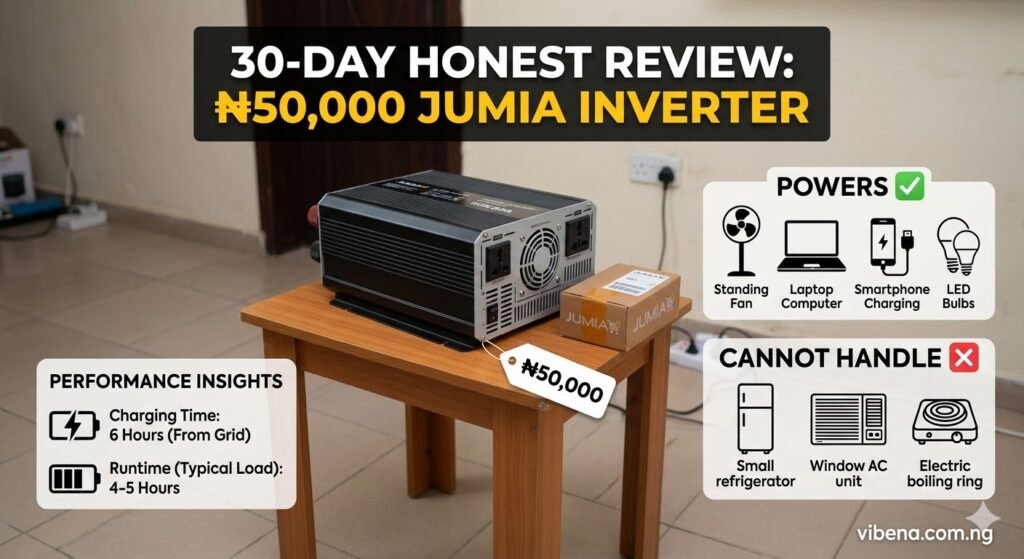
If your inverter battery used to power your fans, lights, television and router for several hours but now goes flat much earlier, do not rush to buy another battery. The battery may have lost capacity, but a heavier household load, incomplete charging, incorrect inverter settings, a poor connection or a misleading battery percentage can produce similar symptoms.
The useful question is not simply “Why is my battery draining fast?” It is: Is the battery storing less energy, is the house using more energy, or is the system failing to recharge or deliver that energy properly? This guide helps you separate those possibilities using observations you can make safely before calling an installer.
It covers common 12V, 24V and 48V inverter systems in Nigerian homes, including tubular lead-acid and lithium batteries. Exact voltage limits, charging settings and maintenance rules depend on the battery and inverter models. Always use the manuals for your equipment.
Quick diagnosis: what changed?
| What you notice | Possible explanation | First useful check |
|---|---|---|
| Battery runtime reduced gradually over months | Ageing, repeated deep discharge, heat or loss of capacity | Compare runtime under a similar load and after a proper full charge |
| Battery suddenly drains faster this week | New appliance, longer outage, incomplete charging or a new fault | List what is running and check the last full-charge period |
| Battery percentage falls sharply when an appliance starts | High startup current, voltage sag or inaccurate state-of-charge reading | Note the appliance and check whether the reading recovers after it stops |
| Inverter switches off while battery still shows charge | Low-voltage cut-off, voltage drop, BMS protection or incorrect settings | Record the exact warning, voltage, percentage and load |
| Battery reaches “full” unusually quickly but runs out quickly | Capacity loss, incomplete charging, monitoring calibration or charge settings | Compare the battery app and inverter readings; ask for a capacity test |
| Battery drains even when the house seems switched off | Inverter idle consumption, hidden loads or DC equipment connected directly | Check what remains connected and whether the inverter is still on |
1. Too many appliances are connected to the inverter
This is one of the first things to investigate. A battery can appear to have become weak simply because the household is now asking it to do more work. Someone may have added another freezer, water dispenser, television, pump, air conditioner or extra fans to the backup circuit.
Remember that an appliance’s power rating in watts is not the same as the energy it uses over a night. A 100W fan running for 8 hours uses about 800Wh. A 60W television running for 5 hours uses about 300Wh. These are simple energy calculations; actual consumption varies by model and operating conditions.
Fridges, freezers, pumps and air conditioners also have motors or compressors. Their starting demand can be much higher than their normal running demand. A system may therefore beep, show overload or shut down when one of these appliances starts even when its average load looks manageable.
What to do:
- Check the inverter display or monitoring app for the load in watts, if available.
- Write down the appliances that run during an outage and roughly how many hours each operates.
- For one normal outage, switch off non-essential loads using their normal switches and observe whether backup time improves.
- Keep high-power heating appliances such as electric kettles, irons and hot plates off a small inverter system unless it was designed for them.
- Ask an installer to assess motor startup demand if the inverter trips when a pump, fridge or AC starts.
Do not conclude that the battery is faulty just because runtime improves when you reduce the load. It shows that consumption matters; it does not measure the battery’s remaining capacity.
2. The battery is not getting fully charged
A battery that starts an outage at 60% cannot provide the same backup as it would after a proper full charge. In Nigeria, grid supply may return for only a short period before the next outage. That charging window may be insufficient for a large battery bank, especially if the charging current is limited or appliances are running while the battery charges.
Solar systems can also fail to replace the energy used overnight. Shade, dirty panels, a tripped solar breaker, a charge-controller problem, unsuitable settings or heavy daytime consumption can reduce the energy reaching the battery.
Check these signs:
- Does the inverter or battery app show that charging actually starts when grid or solar is available?
- Does the battery reach the full-charge condition specified by its manufacturer, or does charging stop early?
- Has the available grid charging time become shorter than before?
- Are appliances using most of the solar power while the battery is supposed to be charging?
- Does the display show a charging fault, solar-input warning or battery alarm?
If the inverter is not charging the battery properly, use our separate guide: Solar inverter not charging battery: causes and safe checks. This article focuses on short backup time; that guide covers the charging fault itself.
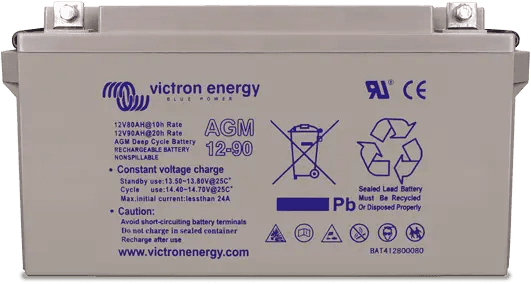
3. The battery has lost capacity through age or repeated deep discharge
Rechargeable batteries gradually lose the amount of energy they can store and deliver. The rate depends on the battery chemistry, quality, temperature, charging method, depth of discharge and number of cycles.
Lead-acid tubular batteries can lose usable capacity through ageing, sulphation, corrosion, water loss in serviceable flooded types and repeated deep discharge. Lithium batteries can also lose capacity or develop cell imbalance, and their battery management system (BMS) may disconnect output when a cell or the whole pack reaches a protection limit.
A battery that has been repeatedly left deeply discharged, or stored empty for a long period, may be damaged. Do not attempt to “revive” it by repeatedly forcing the inverter to restart or by changing the low-voltage cut-off.
How to tell whether capacity loss is likely:
- Backup time has been declining gradually despite similar appliances and charging conditions.
- The battery reaches its low-voltage warning much sooner than it used to.
- It appears to reach full charge quickly but cannot support the same load for long.
- A qualified battery test shows reduced capacity or a weak cell.
Age alone does not prove a battery has failed. A battery that is only a year old can be damaged by poor charging or deep discharge, while another may continue working longer depending on its use and manufacturer rating. Test before replacing.
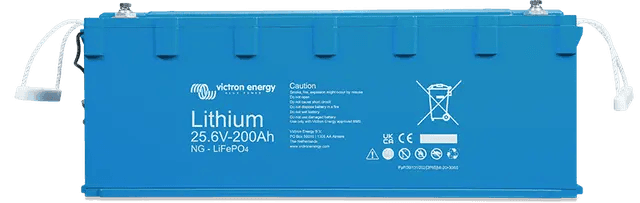
4. The inverter settings do not match the battery
Inverter settings control how a battery is charged and when the inverter stops drawing power from it. Incorrect battery type, charging voltage, charge-current limit, low-voltage cut-off or battery communication settings can reduce usable backup or harm the battery.
This is especially important when replacing a tubular battery with lithium, changing battery brands, adding another battery or resetting the inverter to factory defaults. A lithium battery’s BMS may need a compatible communication protocol, while a lead-acid battery has different charging requirements.
Do not copy voltage values from a YouTube video or another battery brand. Even batteries with the same nominal voltage can have different recommended charging and discharge limits. Ask the installer to compare the inverter settings with the exact battery manual, model number and system voltage.
Also, do not lower the low-voltage cut-off just to squeeze more hours out of the battery. The inverter or BMS may be stopping discharge to prevent damage. Victron’s lithium battery documentation explains that low-voltage protection can disconnect loads, and deep discharge can cause permanent cell damage. Read Victron’s battery troubleshooting guidance.
5. Heavy startup loads are causing voltage dips or battery protection
A fridge compressor, water pump or air conditioner can demand a short burst of current when it starts. If the battery, inverter or cables cannot supply that demand, voltage may dip and trigger an inverter low-voltage warning or battery BMS protection.
This can make the battery look empty even when it still has energy. Voltage under load is not the same as resting voltage after the appliance has stopped. When the load is removed, voltage can recover, which may cause the battery percentage to rise again.
What to observe:
- Does the warning appear exactly when a compressor, pump or other motor starts?
- Does the inverter recover after that appliance is switched off?
- Does the battery app show overcurrent, low-voltage or temperature protection?
- Does the inverter show an overload or low-battery error?
If the problem repeats, have an installer compare the appliance’s startup demand with the inverter surge rating and the battery’s permitted continuous and peak discharge current. Do not bypass BMS protection or repeatedly reset a tripping breaker. Battery manufacturers such as Epoch Batteries explain how high loads, voltage drop and cable resistance can trigger lithium battery shutdown.
6. Loose, damaged or undersized battery cables and connections
A poor connection or cable that is too small for the current can cause voltage drop between the battery and inverter. The inverter may then see a lower voltage than the battery itself is producing, especially under heavy load. A resistive connection can also heat up and become dangerous.
From a safe distance, look for visible cable damage, melted insulation, burn marks, unusual smells or signs of overheating around the battery and inverter. Do not touch exposed conductors. Do not remove inverter or battery covers, tighten terminals, disconnect cables or measure high-current DC circuits yourself. Leave those checks to a qualified installer with the correct protective equipment and test instruments.
If the system has recently been moved, upgraded or had another battery added, ask the installer to inspect cable size, cable length, terminal crimps, fuses, isolators and connections. The cable arrangement must suit the inverter’s maximum DC current and the battery manufacturer’s instructions. A cable can look thick enough and still be unsuitable if its length, material, termination or protection is wrong.
7. The inverter itself is consuming power even when appliances are off
An inverter uses some energy simply to remain switched on. The amount depends on its design, size, operating mode and settings. Some systems also have equipment connected directly to the battery, such as DC lights, routers, monitoring devices or control equipment, which may not appear in the inverter’s AC load display.
If the battery seems to lose charge while no obvious appliance is running, check whether the inverter remains on and what other devices are connected. A battery monitor only gives a complete picture if all relevant battery current passes through its measurement point.
Do not disconnect battery cables or switch off safety equipment to test this. Ask the installer to measure the system’s idle consumption and check for direct DC loads.
8. The battery percentage or voltage display is misleading
Some inverter displays estimate battery charge mainly from voltage. Others use a battery monitor or receive state-of-charge information from a lithium BMS. These methods do not always agree, and voltage can change when charging starts, a heavy load switches on or the battery rests.
Warning signs of a reading problem include a percentage that suddenly falls by a large amount, jumps upward after a short rest, remains unchanged for an unusually long time or differs substantially between the inverter and battery app.
Record both readings at the same time, along with the load and any alarm. Ask the installer to check the configured battery capacity, monitor shunt wiring, current measurement and inverter-to-BMS communication. Manually setting the display to 100% does not recharge the battery or restore lost capacity.
9. The battery is too small for the load you expect it to carry
Sometimes the battery is not faulty at all. It may simply be undersized for the number of appliances and the length of outages. A system that comfortably powered lights and fans may struggle after a freezer, extra television or water pump is added.
To estimate energy use, multiply each appliance’s power in watts by the hours it runs. Add the results to get watt-hours (Wh). For example:
| Appliance | Assumed power | Hours | Energy used |
|---|---|---|---|
| Two fans | 2 × 50W | 8 | 800Wh |
| Television | 60W | 5 | 300Wh |
| Router | 15W | 8 | 120Wh |
| LED lights | 40W total | 6 | 240Wh |
| Total | 1,460Wh |
This example uses assumed appliance wattages, not measured values from a particular Nigerian home. Actual consumption will differ. It also excludes inverter losses and any startup surge.
For a rough first check, battery nominal energy in watt-hours is voltage multiplied by amp-hours: Wh = V × Ah. A 12V, 200Ah battery has a nominal rating of about 2,400Wh. That does not mean all 2,400Wh should be used. The safe usable amount depends on battery chemistry, manufacturer limits, discharge rate, temperature, age and inverter losses. Use the manufacturer’s specified usable energy or permitted depth of discharge for proper sizing.
If you need to resize the whole system, start with our solar inverter setup and sizing guide for Nigerian homes.
How to investigate fast battery drain without damaging the battery
- Record the equipment: Write down the battery brand, model, chemistry, voltage, Ah or kWh rating, approximate age and inverter model.
- Record the starting condition: After the system has completed its normal charging process, note the battery percentage or voltage and any charging indicator. Do not assume a quick 100% display means a full charge.
- List the load: Note the appliances running, their approximate watts and how long they stay on. Include devices that may be connected directly to the battery.
- Record the shutdown: Note the time, remaining percentage, voltage, load and exact alarm or error code when backup stops.
- Compare like with like: Repeat the observation during a normal outage with a similar starting charge and similar appliance use. Do not deliberately run the battery to a damaging low level.
- Reduce optional loads: During a normal outage, switch off non-essential appliances with their normal controls. If runtime improves, load demand is part of the problem.
- Request a proper test: If runtime remains poor under a modest, known load after proper charging, ask a qualified technician to test battery capacity, cells, charging and cable voltage drop.
This record helps the installer distinguish between lost battery capacity, an undersized system, a charging problem and a fault in the inverter or wiring.
When you should stop using the battery and call an installer
Stop using or charging the battery and keep people away if you notice swelling, leaking, smoke, hissing, a burning or rotten-egg smell, unusual heat, melted cables or visible damage. Do not open the battery, touch leaking material, attempt a repair or continue resetting the system. If there is smoke or fire, leave the area, keep others away and contact emergency services. Do not attempt to fight a battery fire yourself; responders should follow the appropriate procedure for the battery chemistry and site.
Arrange a qualified inspection if the battery repeatedly trips its protection, becomes hot, produces an unusual smell, fails to charge, or the inverter shuts down under an ordinary load. Do not bypass fuses, breakers, low-voltage cut-offs or the battery management system.
When should you replace the inverter battery?
Consider replacement only after the battery has been charged according to its manual and tested under suitable conditions. If a capacity or load test confirms that it can no longer deliver the energy required, and repair or warranty support is not available, replacement may be appropriate.
Before buying, confirm the inverter’s DC voltage, battery chemistry compatibility, continuous and peak discharge current, charging requirements, physical dimensions, communication support for lithium batteries and warranty terms. Do not mix an old battery with a new one in a bank unless the manufacturers explicitly permit the arrangement. Our guide to extending inverter battery life covers the habits that help protect a replacement.
Frequently asked questions
Why does my inverter battery drain fast even when fully charged?
The household load may be higher than before, the battery may have lost capacity, a heavy appliance may be causing voltage dips, or the battery percentage may be inaccurate. Compare runtime under a similar load and have the battery tested if the problem continues.
Why does my inverter battery drain when nothing is connected?
The inverter consumes some standby power while switched on, and some devices may be connected directly to the battery. Ask an installer to measure idle consumption and check for hidden AC and DC loads.
Can a faulty inverter make a battery drain quickly?
Yes. Incorrect charging settings, excessive idle consumption, a fault in the charging circuit or incorrect battery monitoring can affect runtime. A technician should check both the inverter and battery rather than replacing the battery automatically.
Why does my battery percentage drop suddenly when the fridge starts?
A fridge compressor can draw a high starting current. The resulting voltage dip can trigger a warning or cause the displayed percentage to change. If the inverter repeatedly shuts down, have the battery, inverter surge rating and cables checked.
Does a bigger inverter drain the battery faster?
An inverter uses some power while operating, and a larger model may have a different idle consumption. However, the appliances connected and how long they run are usually the main factors in energy use. Check the manufacturer’s idle-consumption specification for your exact inverter.
How do I know if my inverter battery is weak?
Shorter backup under the same load, a rapid voltage drop under normal demand and repeated low-battery warnings can indicate reduced capacity. These symptoms are not proof on their own; a proper battery capacity or load test is the more reliable confirmation.
Should I lower the inverter low-battery cut-off to get more hours?
No. Lowering the cut-off without checking the battery manual can over-discharge the battery or defeat a protection limit. Ask a qualified installer to verify the correct settings for your exact battery chemistry and model.
Official technical references
- Victron Energy: Lithium battery troubleshooting and low-voltage protection
- Victron Energy: Lithium battery troubleshooting and cell-health guidance
- Epoch Batteries: Why lithium batteries may shut down under heavy load
- Projecta: Battery and inverter troubleshooting checks

Oladepo Babatunde (also known as Prince Babatee Tunde) is a Computer Scientist, researcher, professional content writer and SEO content strategist with more than eight years of experience. He holds a Higher National Diploma (HND) in Computer Science from Kwara State Polytechnic, Nigeria, and is based in Ilorin, Kwara State. As a freelance writer, he creates research-led, practical content on technology, Nigerian internet services, AI tools, gadgets and solar power. His work combines research, source checking, technical understanding and SEO strategy. Where an article includes hands-on testing, the product, method and relevant conditions are described in the article; research-based guides are identified as such.