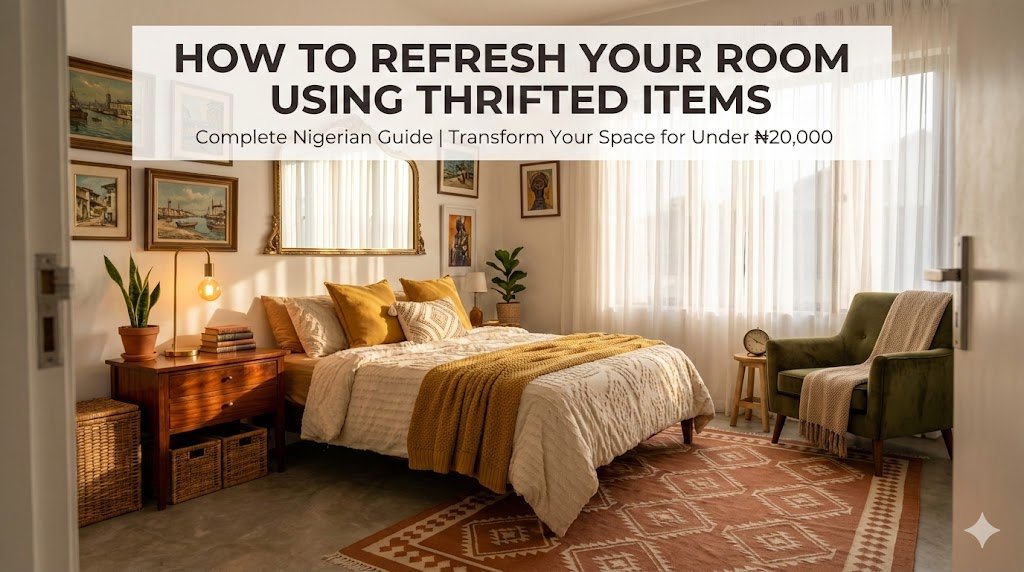
Just last month, I managed to overhaul my entire bedroom for a mere ₦15,000, relying exclusively on the hidden treasures tucked away in Yaba Market. That vintage brass mirror which now acts as the focal point of my space? It set me back just ₦3,500. Honestly, those high-end showrooms scattered across Victoria Island cannot hold a candle to the raw personality and incredible value found within our local thrift markets. When you know where to look, you aren’t just buying furniture, you are curating a home with a story that feels entirely your own.
Refreshing your space doesn’t mean you have to break the bank. Whether you are scrolling through digital marketplaces like Jiji.ng to find sturdy secondhand furniture or you are out on the ground navigating the crowded aisles of our “bend-down boutiques,” you hold the power to change your environment on a shoestring budget. Whether you are aiming to elevate a small corner or applying deliberate bedroom design principles to a full apartment, pieces found at thrift shops provide a level of creative freedom that retail chains rarely match. Industry experts across the Nigerian housing sector continue to emphasize that a top-tier aesthetic does not require massive capital, as intentional upcycling and smart thrifting remain the most accessible ways to build a polished, homey atmosphere, as detailed by the Nigeria Real Estate Blog: 10 Budget Home Decoration Ideas for Nigeria 2025.
In this updated 2026 guide, I am going to walk you through the exact process of giving your living quarters a significant makeover without stepping foot into a traditional big-box store. We will look at how to scout the best markets in Nigeria for quality finds, the non-negotiable steps for sanitizing your items, and the foundational design rules that make your cost-effective decorating choices look like they were pulled straight from an expensive interior magazine.
Quick Guide: Thrifting Success in Nigeria
- Best markets: Yaba, Tejuosho (Lagos), Wuse (Abuja), Mile 3 (PH)
- Optimal timing: 7-9 AM, Wednesday/Thursday, dry season
- Negotiation strategy: Offer 60% of asking price
- Safety: Always inspect for bedbugs, use flashlight in dim stalls
- Cleaning: Two-wash minimum, The Nigerian sun is a powerful sanitizer.
Understanding the 3-5-7 Rule for Decorating Your Room
Before you get excited and start hauling furniture home, pause and draft a plan. Professional designers lean on a few core mathematical rules to ensure a room feels balanced rather than chaotic. If you are asking yourself how the pros achieve that effortless look, I am here to demystify the process for you. These guidelines are about creating visual interest through rhythm and proportion.
What is the 3-5-7 Rule of Decorating?
The 3-5-7 rule of decorating focuses on grouping decor items in odd-numbered sets. As interior designer Mollie Ranize often notes, by clustering your objects in groups of three, five, or seven, you establish a natural visual rhythm that pulls the eye through the room and creates a cohesive composition. Most people make the mistake of using even numbers like two or four, which often leaves a space feeling stagnant, robotic, or overly symmetrical.
What is the Rule of 3 When Decorating?
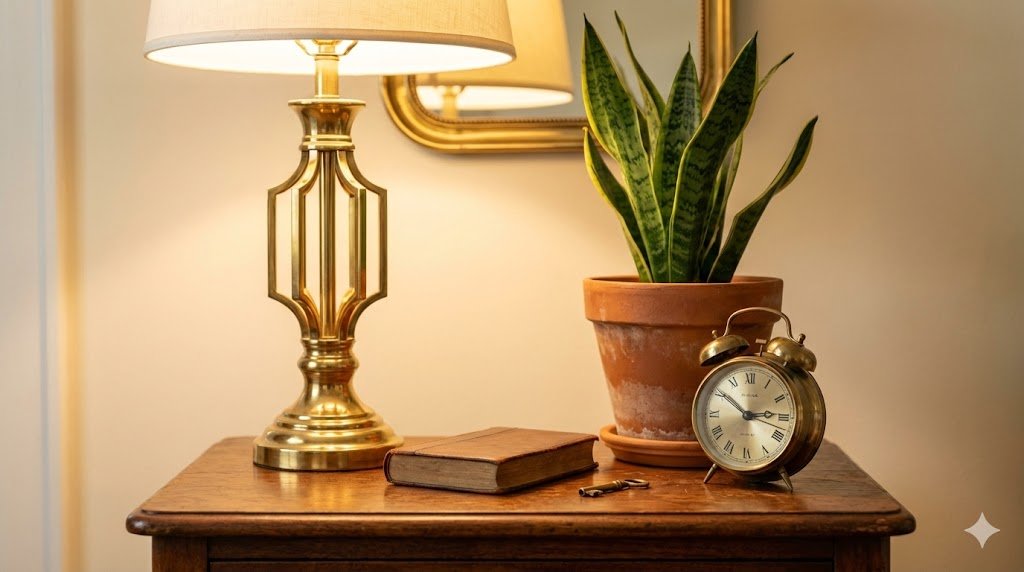
This is the most approachable version of the broader odd-number concept. The rule of 3 when decorating posits that three is the “magic number” for tabletops or shelves. Picture your bedside surface: you might place a lamp, a small indoor plant, and a vintage analog clock there. That trio provides the perfect amount of variance in height and shape, making the surface look intentional rather than just a place to dump your keys and charger.
What is the 3 4 5 Rule in Interior Design?
This specific framework is your best friend when you want to blend different styles without making the room look like a cluttered market stall. According to experts like Nancy Cavaliere, the 3 4 5 rule in interior design serves as a balancing act for your decor choices:
- 3 Patterns: Mix items like a striped rug, a subtle floral pillow, and a geometric throw blanket to create layers.
- 4 Eras: Combine items from distinct time periods. A clean-lined modern lamp, a 90s-era mirror, a traditional hand-carved wooden stool, and a mid-century side table create depth.
- 5 Colors or Textures: Balance your room by mixing smooth glass, rougher woods, soft velvet, metallic accents, and woven baskets.
What is the 60-30-10 Color Rule?
This is the industry secret for achieving flawless color harmony. As discussed by House Beautiful: The 60-30-10 Color Rule Explained, this classic principle dictates that sixty percent of your room should be a dominant primary color, thirty percent a secondary shade, and ten percent a pop of accent color. It is a foolproof way to ensure you never over-apply a bold color in a way that makes a small Nigerian bedroom feel closed in.
- 60% is your primary base color, typically applied to walls or large floor areas.
- 30% is your secondary color, which usually shows up in upholstery, curtains, or a sizable rug.
- 10% is the final accent, perfect for pillows, curated art, or a unique thrifted vase.
The 60-30-10 rule is rooted in deep color theory and the psychology of how we perceive space, acting as a strategic tool to keep the eye moving comfortably around a room. Using these proportions prevents visual fatigue, creating a sanctuary that feels both organized and vibrant, a method championed by design authorities like ALMA de LUCE: The Guide to Using the 60-30-10 Rule.
What Are the 7 Basics of Interior Design?
To ensure your thrifted collection translates into a professional-grade bedroom, you should always check your progress against these 7 basics of interior design:
- Space: Focus on the flow, and avoid cramming too much furniture into a small footprint.
- Line: Utilize horizontal planes like low benches and vertical accents like tall lamps to create visual movement.
- Form: Choose furniture with shapes that complement each other rather than clashing.
- Light: Balance harsh overhead lighting with softer window light and localized lamps.
- Color: Decide on a mood early, choosing between calming cool tones or energetic warm shades.
- Texture: Create tactile interest by pairing soft rugs with hard, smooth surfaces like glass or polished wood.
- Pattern: Integrate stripes or geometric shapes in small doses so they add character without overwhelming the senses.
Where to Find Quality Thrifted Items in Nigeria
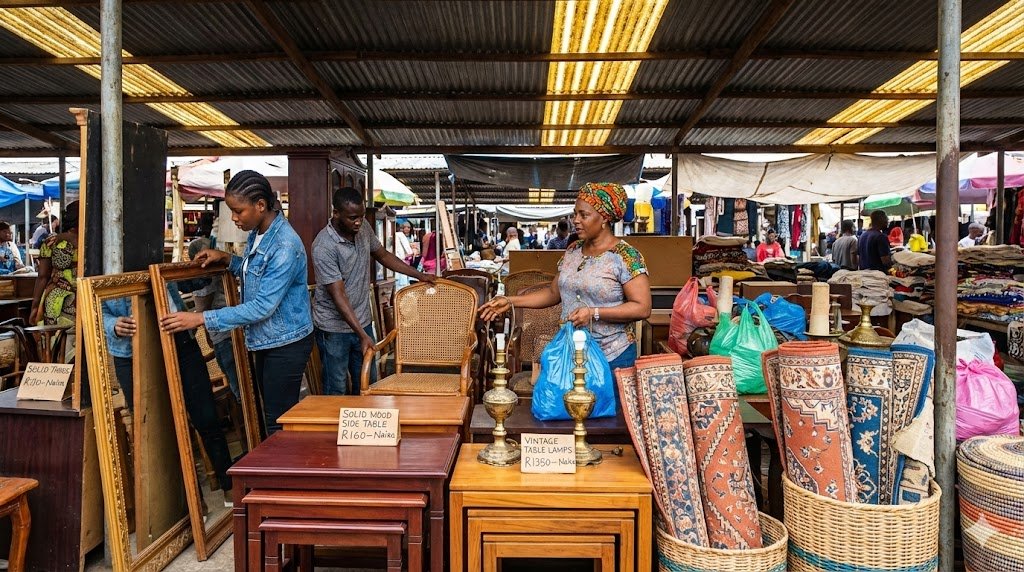
You definitely do not need to look beyond our borders to source vintage decor. Nigeria boasts some of the most vibrant, diverse markets for secondhand furniture styling and affordable interior design. Refreshing your space doesn’t mean you have to break the bank.
Stepping into a powerhouse market like Yaba or Aswani is a sensory rush. You are immediately met with the rhythmic, iconic shouts of vendors calling out “Bend down select!”, the earthy, comforting scent of rain on corrugated iron, and the irresistible aroma of fried plantain drifting from a nearby kiosk. According to urban design studies highlighted by Wallpaper Magazine: How Lagos Street Markets Inspire Nigerian Creatives, hubs like Yaba and Tejuosho serve as essential creative laboratories, influencing how modern Nigerian designers approach texture and materiality in small-space living.
Best Markets for Secondhand Decor
If you are ready to scout for high-quality treasures, here is a curated breakdown of the best spots across the country to focus your energy:
Oshodi Market (Lagos)
- Best for: High-density velvet, organic linen, and heavy-duty blackout curtains.
- Price range: ₦800 – ₦7,500 per yard or finished item.
- My tip: Navigate toward the third row of the fabric section. The vendors there often hold the highest-grade surplus from textile importers at the most competitive rates.
Tejuosho/Yaba Market
- Best for: High-end “bend-down boutique” decor, genuine vintage rugs, imported linens, and weighted curtain sets.
- Price range: ₦500 – ₦22,000.
- My tip: Avoid the stalls right on the main access roads. Venture deeper into the interior alleyways where rent is lower and the pricing reflects that reality.
Lawanson Market (Lagos)
- Best for: Reclaimed, sturdy hardwoods like teak and mahogany that respond beautifully to a simple polish.
- Price range: ₦8,000 – ₦45,000.
- My tip: Ignore the initial front-facing electronics shops. The master craftsmen and vintage furniture dealers are clustered in the hidden corners behind the main drag.
Alaba International (Lagos)
- Best for: Sturdy, imported pre-loved modular sofas and ergonomic dining sets.
- Price range: ₦60,000 – ₦250,000.
- My tip: Dedicate an entire morning to the peripheral warehouses outside the electronics hub. That is where you find the architectural gems that don’t make it to the main showrooms.
Wuse Market & Lugbe Hub (Abuja)
- Best for: Aesthetic accents (Wuse); heavy-duty timber bed frames and plush, structural sofas (Lugbe).
- Price range: ₦15,000 – ₦150,000.
- My tip: Lugbe is your primary destination for major furniture hauling, while Wuse serves as the perfect spot for picking up those final finishing touches like ceramics and textiles.
Mile 3 Market (Port Harcourt)
- Best for: Unclaimed, high-quality household artifacts and unique storage solutions.
- Price range: ₦3,000 – ₦35,000.
- My tip: If you aren’t there by 7:15 AM, you have missed the freshest stock from the morning bale drops.
Online Thrift Shopping Options
Modern thrifting requires a hybrid approach. While physical markets offer the best tactile inspection, digital platforms are essential for covering ground:
- Jiji.ng: The primary marketplace for secondary goods. Update (Jan 2026): The ‘Verified Thrift Vendor’ badge is now a non-negotiable standard. Only transact with sellers who have passed these identity checks. I find the best furniture deals by searching “relocation sale” or “expatriate furniture,” as these listings often feature high-quality wood pieces priced to sell quickly.
- Instagram Thrift Curators: A growing community of professional Nigerian thrifters now scours markets for you. Searching hashtags like #NigerianVintageDecor or #LagosThriftHome allows you to browse hand-picked items from your phone, which saves significant time.
Best Times to Shop Nigerian Thrift Markets
Mastering market timing is a competitive edge. Here is how I organize my shopping calendar:
- The 7:00 AM Commitment: Be at the gate before the main rush. The best condition items are snatched up within two hours of the bales hitting the ground.
- Skip Saturdays: Between the heat and the intense foot traffic, you lose your ability to negotiate properly. Vendors are far less flexible when they have a queue of other buyers waiting behind you.
- Wednesday Mid-Morning: This is my sweet spot. The markets are quieter, and dealers are looking to move stock to prepare for the Friday/Saturday restocking cycle.
- Salary Cycle Awareness: Shopping in the final week of the month often leads to higher starting quotes. I prefer the first ten days of the month when sellers are still focused on moving volume rather than holding out for peak holiday prices.
Best Seasons for Thrift Shopping in Nigeria
Regional climate plays a massive role in how these items are stored and preserved:
- Dry Season (November – March): This period is ideal for furniture inspections. Without the looming threat of sudden humidity or roof leaks, the integrity of upholstery and wood is much easier to evaluate.
- Rainy Season (April – October): I switch my focus to non-porous items like metal lamps, ceramic vases, and hard plastic storage crates. Leave the fabric sofas alone until the weather stabilizes.
- January Clear-Outs: Following the festive season, many households purge items to make space for gifts. This is when unique antique pieces and high-quality homeware hit the market in bulk.
What to Pay: Lagos Thrift Market Price Guide (2026)
Successful negotiation requires knowing your baseline. Note: These ranges represent current market averages as of early 2026.
| Item | Market Price Range | Negotiated Entry Point | New Retail Comparison |
|---|---|---|---|
| Solid Wood Side Table | ₦7,000 – ₦12,000 | ₦4,500 | ₦65,000 – ₦110,000 |
| Vintage Brass Lamp | ₦4,000 – ₦8,000 | ₦2,500 | ₦35,000 – ₦55,000 |
| Full-Length Mirror | ₦6,000 – ₦15,000 | ₦4,000 | ₦50,000 – ₦95,000 |
Getting Your Items Home (The Logistics)
Securing the item is only phase one. My strategy for transport involves maintaining a contact list of local logistics providers. Always negotiate with the ‘wheelbarrow boys’ first for internal market movement (usually ₦800-₦1,500). For heavy loads, keep a trusted keke or small truck driver in your phone contacts, I have one tagged ‘Logistics Musa.’ Having this person on speed dial removes the stress of trying to hail a vehicle with a vintage dresser in tow.
Essential Items to Bring Thrift Shopping (The Toolkit)
I never leave home for a market day without my dedicated kit. It ensures I remain professional and prepared:
- Heavy-Duty Tape Measure: Never guess if a piece fits. Measure your space, record it, and measure the find.
- High-Lumen Flashlight: Market stalls are notoriously dark. A bright light is mandatory for checking for structural cracks, wood rot, or hidden stains on fabric.
- Sanitization Kit: Always carry heavy-duty wipes and disinfectant spray for immediate application if you find a porous item worth saving.
- Small Notebook: I log stall numbers and prices as I go to ensure I am getting the best deal before I circle back to purchase.
- Small Denominations: Carrying a stack of ₦200, ₦500, and ₦1,000 notes makes the transaction move faster, especially early in the day when vendors are short on change.
- A Second Set of Eyes: I always bring a friend. They provide honest feedback and assist in carrying items, which is vital for safety in dense crowd environments.
Expert Advice: Always lead with a polite, firm inquiry regarding the vendor’s best price. If I find a defect, such as a wobbly leg or a chip in ceramic, I use it as a respectful lever for negotiation. Once I identified a piece priced at ₦20,000, noticed a loose joint, and negotiated it down to ₦9,000. That small repair saved me thousands.
Step-by-Step Guide: How to Refresh Your Room with Thrifted Finds
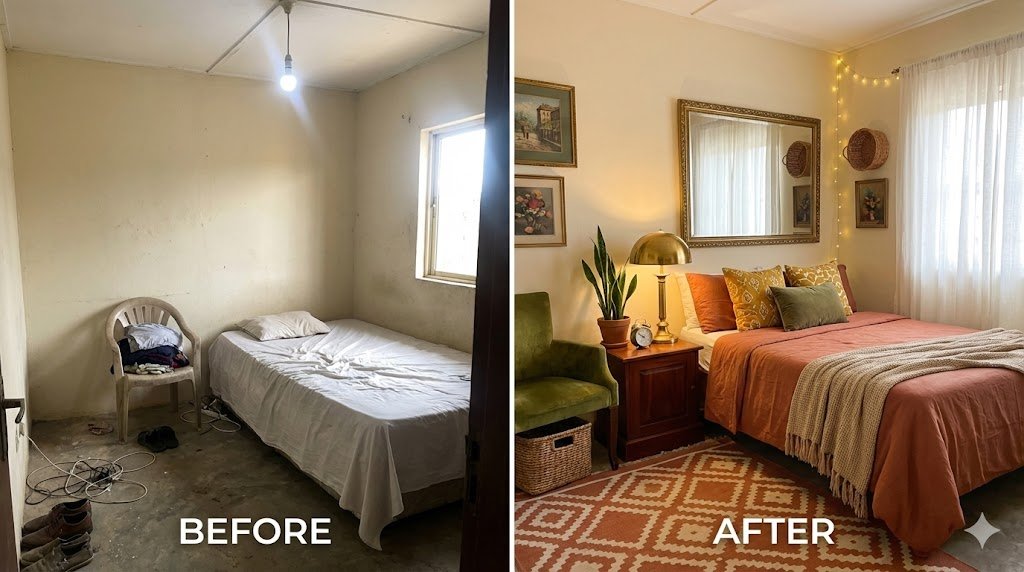
To achieve a professional aesthetic on a thrift budget, follow this systematic approach to design.
Step 1: Shop Your Own House
Before you commit to a single purchase, conduct an internal audit of your own belongings. Often, we own pieces that simply need a new context. Can that side table look better painted in a matte charcoal finish? Can that mirror be moved to create an illusion of depth? If your current space feels suffocating, start by reading my guide on how to declutter quickly before moving; it applies perfectly to stagnant rooms. By clearing out the non-essentials first, you gain the visual space to correctly place your new, carefully curated thrifted finds.
Step 2: Plan Your Thrift Trip
Avoid the “everything looks good” trap. Create a design board or a simple list before visiting the market. If you are aiming for a cohesive look, apply the 60-30-10 color rule, 60% primary base color, 30% secondary, and 10% accent. When you are decorating a limited-square-footage space, every item must serve a purpose, either structural or aesthetic. Check my resources on decorating small Nigerian apartments for tips on using scale and proportion to keep your room feeling airy even when you add new furniture.
Step 3: Inspect Before You Pay
Quality control is the difference between a deal and a liability. Treat these steps as a mandatory process for every item:
- Wood Integrity: Test the weight and surface of any wooden piece. High-quality mahogany or teak feels dense and cool to the touch. If the surface feels like hollow, light plastic laminate, keep walking. Inspect for tiny pinholes or fine dust at the base, which are clear indicators of termite activity.
- The Sanitization Protocol: I learned this the hard way years ago. Always flip upholstered furniture to inspect the inner lining and seams for debris. If you fall in love with a piece, but have concerns about bugs, remember that The Nigerian sun is a powerful sanitizer. Enclose the item in heavy-duty black polyethylene plastic and leave it in direct, high-intensity sunlight for three full days. The internal heat will eliminate most biological contaminants. If the piece has a strong, persistent chemical smell, pass on it, as these odors often indicate improper factory-level chemical treatments that are nearly impossible to remove.
- Glass Inspection: Check for edge chips or micro-fractures. Any sign of internal clouding suggests that the silvering behind the glass has failed, which can ruin the reflective quality over time.
- Fabric Feel: Good quality natural fibers should feel substantial and temperature-neutral. Avoid synthetic blends that feel oily or snag easily, as these accumulate dust and odors far faster in our climate.
Sanitizing and Cleaning Thrifted Items Properly

This is the most important part. Safety comes first when you bring home pre-loved pieces. You might be asking, “How to clean thrifted clothes” or soft furnishings effectively without compromising their condition? It requires diligence.
Refreshing your space doesn’t mean you have to break the bank. I know what you are thinking, as we have all encountered that distinct thrift store scent. Yes, sometimes those piles carry a heavy odor. That is exactly what washing machines are for. That “funny smell” is usually a temporary hurdle on the path to owning a ₦5,000 solid wood dresser that would command ₦150,000 in a glossy showroom today. I will take the smell any day if the quality is solid. The final step in cleaning is managing the scent profile of your room. Instead of relying on harsh chemical sprays that might damage delicate vintage textiles, explore natural ways to freshen your space to give your room that inviting, finished feel without the chemical burn.
⚠️ Safety Warning: When Using Bleach or Strong Disinfectants
- Always work in a well-ventilated area, so ensure you open all windows and doors before you begin.
- Never mix bleach with other chemicals, as the reactions can be toxic and dangerous.
- Wear rubber gloves to protect your hands and skin from potential irritation.
- Keep children and pets away from the area during your deep-cleaning process.
- If you feel dizzy or develop a headache, step away from the cleaning area and move to fresh air immediately.
Sanitizing Thrift Store Clothes: Is One Wash Enough?
Many people ask, “Is one wash enough for thrifted clothes?” The honest answer is a firm no. For sanitizing thrift store clothes and fabrics like curtains, rugs, or cushion covers, experts recommend a double-wash protocol to eliminate stubborn allergens, dust mites, or bedbug eggs.
- Soak: Immerse the items in hot water infused with a high-quality disinfectant like Dettol and a reliable detergent for at least 30 to 45 minutes.
- First Wash: Agitate the fabric vigorously by hand or machine. Regarding power supply constraints, I suggest planning your heavy machine washing for when you expect stable electricity. If you are desperate for a deep clean, find a local laundromat with a reliable generator. It is well worth the ₦1,000 per load to ensure the machine runs a full, hot cycle without interruption.
- Second Wash: Rinse and wash a second time with a quality fabric softener to completely neutralize the lingering “market smell.”
- Sun Dry: The Nigerian sun is a powerful sanitizer. Exposure to intense UV rays acts as a natural disinfectant that no synthetic spray can replicate. Drape items in direct sunlight until they possess that crisp, sun-baked freshness. Once you have sanitized your finds, the next priority is maintenance. Adopting a routine for maintaining a clean home efficiently ensures your refreshed space stays beautiful, even throughout the dusty Nigerian harmattan season.
Comparison: Cleaning Hard vs. Soft Items
| Item Type | Cleaning Method | Safety Tip |
|---|---|---|
| Wood Furniture | Wipe with wood-safe polish or vinegar solution. | Check deep in joints for hidden pests. |
| Plastic/Glass | Wash with warm soapy water and mild disinfectant. | Never combine ammonia with bleach. |
| Upholstery/Rugs | Steam clean or hire professional cleaners. | Ensure items sun dry fully if dampened. |
How to Decorate Your Room with Items You Already Have
You can truly master how to make your room look aesthetic without buying anything. It is all about how you manipulate the space you possess.
- Rearrange the Layout: Try moving your bed to a different wall. It changes the entire energy flow and visual perspective of the room.
- Declutter: A cluttered space can never look expensive. Be ruthless and remove items you have not used or touched in over a year.
- Change the Lighting: Maximize natural light by keeping curtains wide open during the day. Wipe down your bulbs and shades, as dust drastically dims the brightness of a room.
Styling Tips: Making Your Room Look Aesthetic Without Spending Money
Here is how to cultivate that coveted “Pinterest” look using principles of sustainable room design and conscious arrangement.
Focus on Textures
Rooms that look high-end rely on the interplay of texture. I like to mix a rough, hand-woven rug with smooth silk or linen throw pillows. Thrift store living room decor often yields unique textures, like heavy brocade or raw clay, that you simply cannot find in modern, mass-produced shops. Imagine the contrast of placing a gritty, unglazed clay pot next to a sleek, cool glass vase; your eyes should feel that difference immediately.
Elevating Your Thrift Store Living Room Decor
When styling your living room, prioritize items that spark conversation. Search for center tables constructed from solid mahogany or teak, which are still plentiful in older Nigerian furniture markets. Draping a piece of vintage Ankara fabric over a worn sofa arm adds instant, soulful character. Do not feel obligated to match everything perfectly. A mid-century wooden chair found in Lawanson market often looks absolutely stunning when paired next to a modern glass table.
Essential Bedroom Decor Tips for Nigerian Homes
Your bedroom should function as a personal sanctuary. These bedroom decor tips are tailored for the realities of the Nigerian climate:
- Mosquito Net as Decor: Stop viewing mosquito nets as purely medical. Choose white or cream netting to create a soft, romantic canopy-bed effect. You can even stitch vintage lace curtains over a standard frame to achieve a luxurious, hotel-like atmosphere while maintaining protection.
- Storage Solutions: Space is a luxury in many Nigerian homes. Thrifted wooden crates can be sanded, painted, and stacked to create stylish, modular storage. They serve perfectly as bedside tables or book displays. Since many of us are working from home, setting up a functional workspace is key. Look for sturdy thrifted desks and shelving; they cost a fraction of new pieces and provide a unique backdrop for your video calls.
- Airflow Optimization: Always position your furniture to facilitate cross-ventilation. Avoid blocking windows with bulky wardrobes. A room that breathes feels significantly more comfortable. This airflow is vital for keeping your room cool without AC, helping you maintain a restful environment during our most intense heat waves.
Balancing Tradition and Trends
Nigerian interior style has always gravitated toward warm, inviting tones like deep golds, browns, and burnt reds. While global trends may favor cool pinks or electric blues, ensure your thrifted color palette respects the atmosphere of your household. Brookhouse Designs International: Top Interior Design Trends for 2025 emphasizes that warm, earthy tones like terracotta, sage green, and mustard yellow are defining 2025 interior choices in Nigeria, effectively replacing the previously popular cool grays.
Sustainable Room Design
Innovative Nigerian companies like TFA Recycling: Sustainable Furniture Solutions are pioneering the use of reclaimed materials to craft beautiful, functional pieces. By integrating upcycled market finds alongside these sustainable items, you are not just decorating; you are contributing to a healthier environment while saving significant money.
The Power of Paint
A small tin of high-quality paint is the most affordable investment you can make. Painting a mismatched thrifted chair to match your headboard creates a cohesive, high-end upcycled room transformation that makes cheap items look bespoke.
15 Valuable Thrift Store Finds for Your Room

When scouring the market, keep your eyes peeled for these high-value categories that yield the greatest return on your investment:
- Solid Wood Frames: Disregard the dated picture inside; focus entirely on the quality and condition of the frame.
- Wicker Baskets: Excellent for hidden storage and adding a touch of natural, bohemian charm to your shelves.
- Ceramic Vases: Prioritize heavy, uniquely shaped pottery over flimsy, lightweight plastic alternatives.
- Hardcover Books: Use them as stylish risers to add height to your lamps or photo displays.
- Brass Lamps: A little bit of elbow grease and polish makes these look brand new, perfect for achieving classic vintage room styling.
- Mirrors: A well-placed large mirror instantly expands the perception of small rooms and reflects natural light.
- Curtains: Always check the weight. Look for sturdy linen, cotton, or heavy-duty velvet that hangs beautifully.
- Glassware: Vintage glass jars and containers make excellent desktop organizers. Utilizing thrifted ceramic or glass jars is a pillar of effective kitchen organization strategies, proving storage can be both functional and attractive.
- Wooden Stools: Versatile and sturdy, they make ideal bedside tables or extra guest seating.
- Throw Blankets: A thorough sanitization cycle will leave these soft, cozy additions looking fresh and welcoming.
- Valuable Paintings: There are truly valuable paintings to look for at thrift stores. I scan for artist signatures, surface texture, and solid frames. Last year at Tejuosho, I spotted a dusty painting of the Lagos Marina signed “Abiodun 1987” for ₦2,500. A gentle cleaning revealed the work of a respected local artist worth over ₦50,000 today.
- Plant Pots: Hand-thrown clay pots are inexpensive and provide that essential earthy, grounding texture.
- Decorative Trays: Perfect for gathering your perfumes, jewelry, or entryway keys into one polished, organized cluster.
- Tablecloths: These can be easily repurposed and sewn into durable, vintage-patterned pillow covers.
- Clocks: An analog vintage clock adds a sophisticated focal point to any wall or mantle.
Future Trends: Decorating for 2025
Staying ahead of the curve means understanding the shifting bedroom style for 2025. Design experts at Black Pelican: Top Interior Design Trends Transforming Nigerian Homes in 2025 report that homeowners are increasingly opting for sustainable materials like bamboo, reclaimed woods, and organic stone to achieve a natural luxury look that feels both grounded and modern.
How to Make a Y2K Room
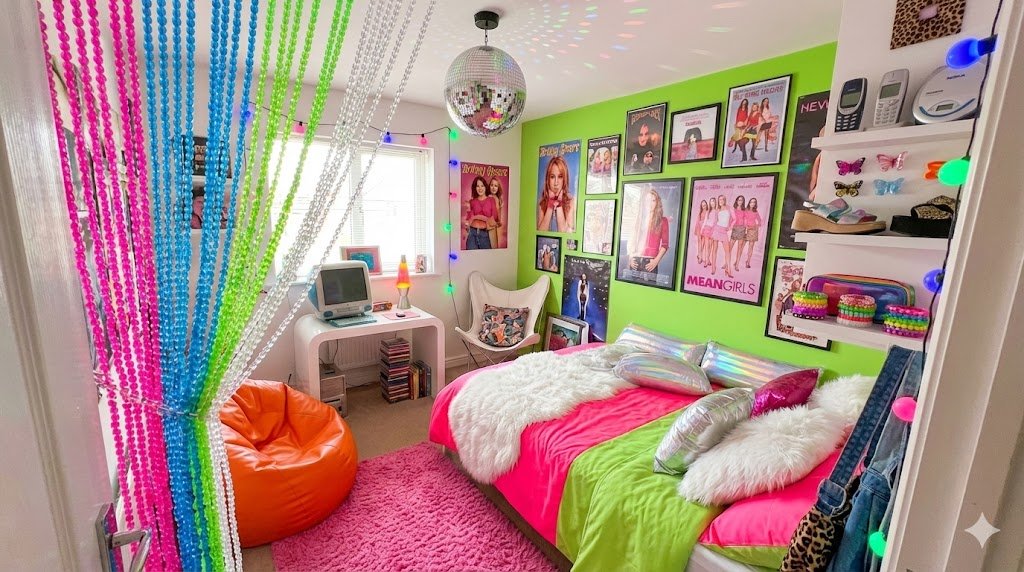
The turn-of-the-century aesthetic has made a massive comeback. According to Abiterra: Top 10 Interior Design Trends Taking Over Lagos, maximalist layering is gaining massive popularity among younger homeowners. They suggest blending bold wallpapers with vibrant, nostalgic art. To nail this vibe, prioritize:
- Inflatable accent furniture.
- Beaded room dividers or curtains.
- Bright, neon accents in lime or hot pink.
- Plush, ultra-fluffy area rugs.
The defining trend for 2025 is second-life furniture, prioritizing pieces with history and narrative. Your thrifted treasures are inherently more stylish and sustainable than anything you could pull off the shelf at a big-box retail store.
Frequently Asked Questions
How to give your room a makeover without buying anything? Focus on the 60-30-10 color rule to ground your space. Use 60% for a dominant neutral, 30% for a secondary color, and 10% for an accent. Deep cleaning is your best tool. Wash your windows to allow natural light to shift the mood, and rearrange furniture to improve flow. Swap decor between rooms, and remember to group accessories using the 3, 5, or 7 rule to create a professional rhythm.
Is it safe to bring used furniture into my house? It is safe if you are diligent. Inspect every joint and crevice with a flashlight. If you find a solid mahogany or teak piece with loose legs, know that simple wood glue and a clamp can fix it in minutes. If you buy a mattress or a soft chair, pay for professional steam cleaning. The Nigerian sun is a powerful sanitizer for smaller textiles, but for heavy upholstery, professional intervention gives you peace of mind.
How to negotiate without insulting the vendor? Start with a warm greeting like “Good morning, ma” or “Bros, how far?” When asking for the price, avoid saying “How much last?” because it signals you are just wasting time. Instead, listen, then say, “Ah, ma, that price is quite steep for my budget. Please, help me out.” A solid strategy is to offer 60% of the initial price and work toward a middle ground. Always keep a smile on your face, even if you decide to walk away.
How do I know if a thrifted item is genuine wood or fake? Quality wood, like Mahogany or Teak, feels dense and heavy. Particle board is light and fragile. Examine the edges closely. If you see layers of compressed wood chips or paper, walk away. Genuine wood has unique, irregular grain patterns. Scratch the underside gently with your nail, and if it smells like fresh wood, you have found a winner.
What if I buy something and find defects at home? Thrift markets operate on a buyer-beware basis. This is why I always carry a tape measure to check dimensions and a flashlight to spot hidden cracks or termite damage before I pay. Ask “Any wahala with am?” clearly. Some vendors might offer an exchange, but you should never bank on it.
Are thrift markets safe for solo female shoppers? They are welcoming if you are savvy. Visit on Wednesday or Thursday mornings when stock is fresh and the crowds are thin. Keep your funds in a secure internal pocket, and stay aware of your surroundings. If you feel uncomfortable, find a vendor you trust or mention you are meeting a contact. Market solidarity is strong, and most women there look out for each other.
Should I tip the boys who help carry items? Absolutely. A tip of ₦500 to ₦1,000 depending on the weight is standard etiquette. These guys are your secret weapon. If you treat them with respect, they will notify you the moment a fresh bale of high-quality items arrives, saving you hours of searching.
Can ChatGPT decorate my room? AI is useful for generating mood boards or suggesting color schemes based on the 60-30-10 principle. However, AI cannot test the stability of a chair or feel the texture of a rug. Use digital tools for your initial planning, but trust your own eyes and hands when you are physically standing in the market.
Conclusion
Refreshing your space doesn’t mean you have to break the bank. By sourcing local, reclaimed, or thrifted pieces, you cultivate a home that feels authentic and deeply personal. It is the small details, like a well-placed bamboo accent or a perfectly restored vintage chair, that turn a house into a sanctuary. Never underestimate the impact of a curated, intentional environment on your daily life.
In the noise of Lagos or Abuja, your home must serve as your refuge. Investing time into your living environment is a form of self-care through environment that provides long-term mental clarity. Focus on natural materials and sustainable choices that stand the test of time.
Start your project this weekend. Pick one corner, find one treasure, and take the time to clean and style it. You will be surprised by how much joy a small change can bring. Happy decorating!
About the Author
Chidinma Okeke is a Lagos-based interior stylist and budget decorating expert. With over 9 years of experience scouring markets like Balogun, Alaba, and Tejuosho, she has mastered the art of sustainable, high-impact design. Her mission is to show Nigerians that style is not about the size of your wallet, but the creativity you bring to your space.

Oladepo Babatunde (Prince Babatee Tunde) is a Computer Scientist, researcher, and professional content writer with a Higher National Diploma in Computer Science from Kwara State Polytechnic, Nigeria.
With a background in technology and a passion for clear communication, Babatunde specializes in creating thoroughly researched, reader-focused content on productivity, personal development, home living, and technology. Every article he writes is backed by extensive research and fact-checking to ensure readers receive accurate, actionable information.
As a freelance writer, he has helped brands and publications deliver content that educates, engages, and empowers their audiences. His mission at Vibena is simple: make complex topics easy to understand and help Nigerians live smarter, more productive lives.