It’s 2 PM on a scorching Lagos afternoon. You just got home, your living room feels like an oven, NEPA just took the light, and running your small generator all day is too expensive. This feeling of being trapped by the heat is one shared by millions of Nigerians every day. You are not alone in wondering how to cool down a hot house without air conditioning when your electricity bill is already too high.
I have personally lived through 15 years of Nigerian heat, from the dry, harsh sun of Abuja to the sticky, humid coastal heat of Port Harcourt, and spent over ₦65,000 on generator fuel in just two months during late 2025 trying to keep a ceiling fan spinning. I became obsessed with finding effective, low-cost heat management strategies that work even when the power is gone. The good news is that you don’t need a heavy duty HVAC system or a huge budget to find thermal comfort.
This article delivers 15 proven methods that leverage science and strategy. By combining techniques like blocking solar gain (curtains/reflective film), using evaporative cooling (the ice bowl trick), and improving structural defense (insulation/thermal mass management), you can realistically expect to lower your indoor temperature by 3-7°C, turning an unbearable space into a tolerable one. The secret to success is combining multiple cooling methods based on the time of day. We cover everything from emergency cooling hacks for immediate relief to long-term structural solutions for permanent comfort, complete with localized prices and security advice. These budget-friendly cooling strategies are perfect for our climate and work even when there’s an electricity shortage or power outage. Let’s get started on making your home comfortable again.
Understanding Why Your House Gets So Hot
Before we start cooling, let’s look at what causes houses to trap heat. It’s not magic; it’s physics. If you know how the heat is getting in, you can stop it. In most Nigerian homes, the building material acts like a sponge for thermal energy.
How Heat Enters Nigerian Homes (Heat Transfer)
Heat transfer follows three thermodynamic principles: radiation, conduction, and convection. Understanding which affects your specific home most allows you to target the right solutions for your floor plan.
- Radiation: The sun’s rays shine directly through your windows, causing significant solar heat gain which heats up your furniture and floors. It’s the primary cause of afternoon discomfort.
- Conduction: This is when heat moves through materials. In Nigerian homes with corrugated metal roofing, conduction typically dominates during afternoon hours when the roof surface reaches temperatures exceeding 70°C. This conducted heat then radiates downward into living spaces long after the sun has set.
- Convection: This is when air moves. Hot air rises. If you leave a window open on the sunny side, the hot ambient temperature air flows right in, pushing the cooler air out. This highlights the necessity of ambient temperature management through tactical ventilation.
According to Nigerian Meteorological Agency (NiMet), Lagos experiences average daytime temperatures of 29-34°C during peak heat months, with extreme urban heat islands often pushing those figures much higher.
The World Bank Climate Knowledge Portal confirms that Nigeria’s climate data continues to show significant temperature variations across different regions, with coastal areas experiencing high humidity levels that complicate traditional cooling.
Ongoing research shows that urban areas like Lagos, Ibadan, and Kaduna are seeing increased heat-trapping effects due to the density of concrete and lack of green canopy coverage.
According to Climate-Data.org, Lagos maintains a high average temperature, with moisture levels making dehumidification a priority. Weather data consistently highlights that daytime temperatures vary from 24°C to 33°C, making the dry season a particularly critical window for active cooling maintenance.
NiMet’s latest climate analysis underscores the continued warming trend across urban centers, emphasizing that natural cooling is no longer a luxury but a standard necessity for Nigerian households.
What to Expect in 2026: NiMet’s Latest Predictions
NiMet’s climate projections continue to forecast shifting weather patterns that directly impact your indoor environment:
Rainy Season Duration:
- Lagos: Increasingly long wet periods (250-290 days).
- Northern states: Shortened but more intense rainy windows (110-150 days).
- This means Lagos residents must prioritize air circulation and mold prevention over evaporation-based cooling for the majority of the year.
Dry Spells to Watch:
- Severe dry spells (15+ days) expected in the southwest during the mid-year transition months.
- The “Little Dry Season” is a critical period where evaporative cooling methods finally become highly effective for southern households.
- These dry windows are when you should maximize the use of the ice bowl trick and wet sheet methods.
Rainfall Patterns:
- Total annual rainfall continues to trend higher in the southwest.
- Heavy rains mean higher relative humidity.
- When humidity consistently exceeds 70%, your focus must shift entirely to ventilation and cross-breezes rather than trying to evaporate water into already saturated air.
Practical Application: During the dry season, Lagos residents should maximize use of the Ice Bowl Fan Trick and Wet Sheet Method. During the longer rainy periods, prioritize cross-ventilation and dehumidification strategies to prevent the “sticky” heat trap inside your living room.
Climate and Regional Variations (Crucial Context)
The success of these cooling methods depends on your specific region’s climate patterns:
- Humid Coastal Cities (Lagos, Port Harcourt, Calabar): These areas have chronically high humidity, making the Wet Sheet Method and other evaporative strategies often counterproductive. You are simply adding water to already wet air. Prioritize cross-breezes, blocking solar gain with heavy-duty curtains, and using high-velocity fans.
- Dry Northern Cities (Kano, Sokoto, Maiduguri): In low-humidity conditions, evaporative cooling works exceptionally well. The Ice Bowl Fan Trick and the Wet Sheet Method are the most effective non-electric solutions here, as water turns into vapor rapidly and sucks heat right out of the room.
Quick Relief: How to Cool Down a Single Room Fast
Sometimes, you need to cool down a room fast. These methods are for immediate temperature lowering and work great for quick relief when you get home or are trying to get to sleep before the generator fuel runs out.
The Ice Bowl Fan Trick (Evaporative Cooling)
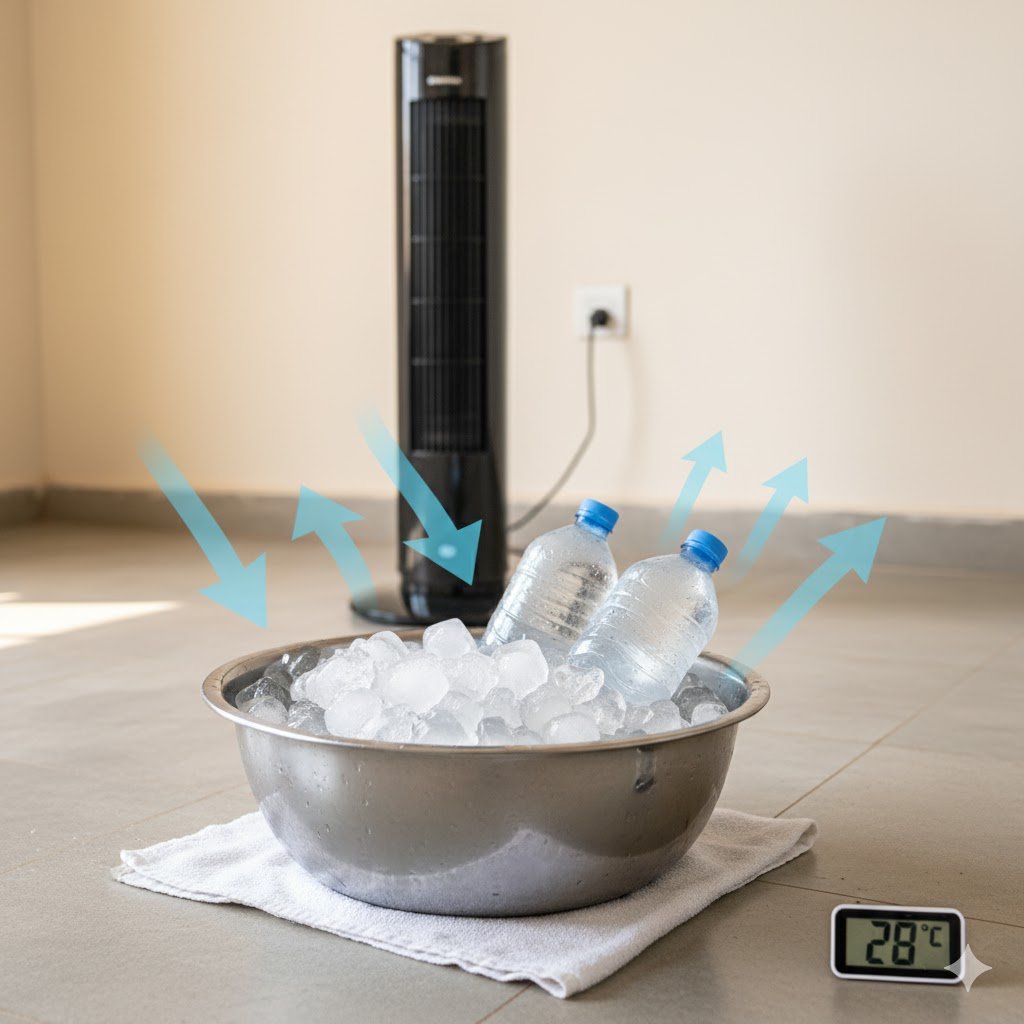
When I first tried the ice bowl method during a long outage, I was genuinely skeptical. But within 20 minutes, my bedroom went from stifling to manageable. This is a classic and one of the most effective natural cooling methods available to the average Nigerian household.
| Element | Detail |
|---|---|
| What It Is | A simple setup that uses melting ice and a fan to create a localized, cool mist stream. |
| Why It Works | As the ice melts, it absorbs heat from the air. The fan pushes this newly chilled air across the room, which, combined with the evaporative effect, improves your personal thermal comfort significantly. |
| How to Do It | 1. Fill a large, shallow metal basin with ice cubes or frozen water bottles. 2. Place the bowl on a tray or thick towel to catch condensation. 3. Position your standing fan about 40 cm behind the bowl. 4. Turn the fan on medium speed. |
| What You Need | Ice or frozen bottles, a metal bowl, a towel, and a fan. |
| Nigerian Consideration | This method is most effective in dry climates and should be used cautiously in high humidity environments to avoid feeling sticky. |
| Realistic Expectations | Expect a 3-5°C temperature reduction within a 2-meter radius, lasting as long as the ice remains solid. |
Emergency Cooling: How to Cool Your House Without Electricity During Extended Outages
This section focuses on non-electric strategies for when you need to cool your house without electricity during extended NEPA/PHCN outages. Reliance on grid power is a luxury we often cannot afford to count on.
The Wet Sheet Method
- Dampen a large bedsheet or cotton sheet with water. Do not soak it; it should be damp, not dripping.
- Hang the damp sheet in a doorway or in front of an open window where there is natural airflow.
- As the water evaporates from the fabric, it pulls heat from the air, instantly lowering the room temperature slightly.
- Caution: Do not use this during the rainy season or in humid coastal areas. It will only increase the moisture in the air and make the room feel muggy.
No-Power Cooling Techniques
- Go Low Tech: Use handheld fans, take frequent cool showers, and wear light, loose-fitting cotton clothing.
- Unplug Electronics: Even when off, electronics like TVs, chargers, and decoders generate heat through standby power draw. Unplug everything you aren’t using to reduce ambient heat in the room.
These no-electricity cooling methods become essential during the frequent grid outages many Nigerians experience daily. While managing your home’s temperature, you may also want to explore our guide on how to stay focused during power outages to maintain productivity even when the heat and lack of power seem overwhelming.
Managing Humidity During Rainy Season
Humidity, or the amount of water vapor in the air, is your enemy in coastal areas. When humidity is high, your body’s natural sweat can’t evaporate, making you feel much hotter even if the air temperature seems mild.
Why Evaporative Methods Backfire
Methods like the Wet Sheet Method and using misting fans rely on evaporation to cool. If the relative humidity is already above 70%, the air is saturated and cannot hold more water. Evaporation stops, and all you achieve is a damp, sticky, and still hot living space.
Practical Humidity Reduction Strategies
- Seal and Ventilate Smartly: During heavy rains or peak humidity, keep windows and doors closed to block the moisture-laden outside air. Open them only during the early morning or late night when there is a dry, cool cross-breeze.
- Use Moisture Absorbers: Purchase commercial moisture absorbers (calcium chloride crystals in plastic containers) available in major supermarkets. Place these in closets and near exterior walls to pull moisture out of the air. They are small, but they help maintain better air quality in enclosed bedrooms.
- Vent During Cooking: Always run a fan or exhaust hood while cooking or taking hot showers. This vents the steam directly outside before it can settle into your living areas and drive up humidity.
- Prioritize Airflow: Focus on moving the existing air rapidly with a strong ceiling fan to break up the layer of moist air clinging to your skin, which helps sweat evaporate even in high humidity conditions.
How to Sleep When It’s Hot With No AC: Cooling for the Night
If you struggle with how to sleep when it’s hot with no AC, you’re dealing with the most draining part of the current Nigerian climate reality. Why does my room stay hot at night? It is because your building materials, particularly concrete walls and metal roofing, act like a thermal battery. They soak up intense solar radiation throughout the day and release that heat directly into your living space well into the night. Even if the outdoor air drops, your room temperature stays trapped by these surfaces. It’s 2 PM on a scorching Lagos afternoon. You feel the heat radiating from the walls, and you know the night will offer little relief unless you intervene aggressively.
The secret to success is combining multiple cooling methods based on the time of day. When planning or redesigning your space, consider our tips for one-bedroom apartment design in Nigeria that prioritize natural cooling and airflow optimization to break this cycle of heat storage.
Best Sleeping Positions and Bedding Materials
- Go Low: Basic physics tells us that hot air rises. This is the principle of convection. If your home has multiple stories, the ground floor will inherently be cooler than the top floor. If you live in a single-story flat, consider sleeping closer to the floor on a woven mat or a low-profile mattress. Heat accumulates near the ceiling, so dropping your sleeping position by even two feet can make a noticeable difference.
- Ditch Synthetic: I have learned the hard way that polyester sheets are your enemy in the heat. They trap moisture and heat against your skin. Switch to 100% cotton, linen, or high-quality bamboo bedding. These materials breathe, allowing air to circulate while wicking moisture away from your body as you sleep.
- The Cold Water Trick: Take a lukewarm shower exactly 30 minutes before bed. Avoid freezing cold water, as that can actually cause your body to generate more heat to compensate. Lukewarm water encourages evaporation as you step out, which naturally drops your core body temperature and prepares you for sleep.
Trying to rest in a room that feels like a furnace does more than just ruin your night. It prevents your body from entering deep restorative sleep cycles. You end up waking up just as exhausted as when you laid down, often facing a grueling morning with no energy reserves. If you continue to find yourself dragging your feet throughout the day despite managing your room temperature, you should take a look at our guide on why you’re always tired and have no energy. Sometimes, external environmental stressors play a larger role in chronic fatigue than we realize.
Night Ventilation Strategies That Work in Nigeria
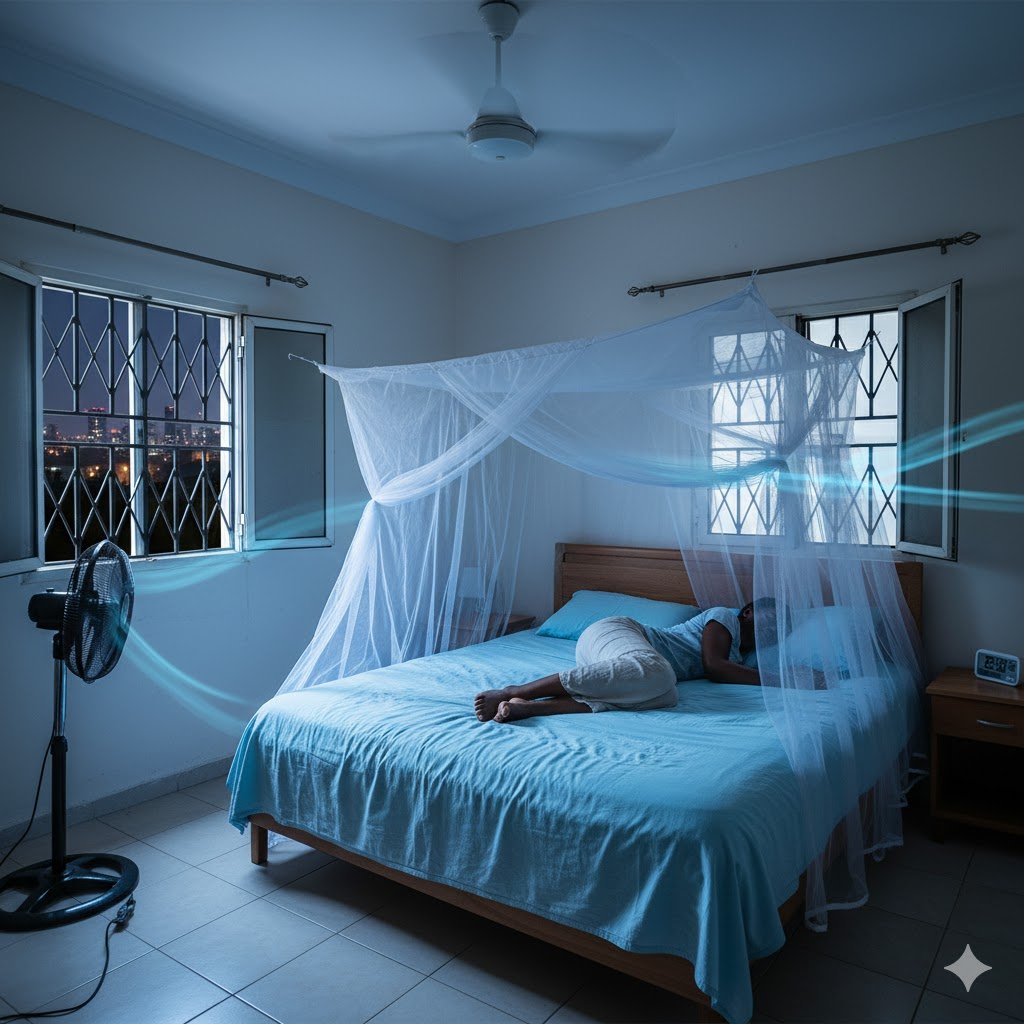
- The Single Fan Strategy: Most people point their standing fan directly at their face, but that just recycles the same stagnant, hot air. Instead, try placing your fan at the window, facing outward. By blowing the hot air in your room out through the window, you create a negative pressure zone that sucks in cooler air from other vents or doors. It is a simple but highly effective way to pull in the evening breeze.
- Managing Mosquitoes, Pests, and Security (Critical Nigerian Consideration):
- If you use burglar-proof bars, you must ensure they don’t block airflow. Over time, dust and debris build up on these meshes, choking the ventilation. Clean them regularly. Using a well-fitted, fine-mesh mosquito net is non-negotiable, not just for malaria prevention, but because it gives you the confidence to leave windows open at night without fear.
- Ground Floor Security: For those of us in high-density areas like Mushin, Ajegunle, or Agege, security is a major concern when sleeping with open windows. Installing heavy-duty, lockable, yet ventilated security screens is a smart investment. You can find robust, removable window grilles at local fabricators for about ₦15,000 to ₦25,000 depending on the size. They allow you to sleep with your windows fully open while keeping your home protected from intruders.
Defense Strategies: Keeping Your House Cool During Extreme Heat
These are passive cooling techniques for keeping your house cool in extreme heat without relying on AC. We are focusing on aggressive heat mitigation. By blocking the sun before it hits your glass, you stop the greenhouse effect from turning your home into an oven.
Interior Window Films and Heat Reduction
Windows are the primary entry point for solar heat. If you have clear glass windows facing the sun, you are essentially letting a giant space heater run in your living room. Reflective films are an excellent way to bounce that heat away.
- Solar Window Film: These reflective films are a game-changer for renters. They act like a mirror for infrared light, blocking a massive portion of the solar gain while keeping your room bright enough.
- Where to Buy: You can find high-quality heat-reflective films on Konga or Jumia, typically ranging from ₦4,500 to ₦10,000 per roll.
- Installation: It is a simple DIY project. Clean the glass with a vinegar solution, spray it liberally with soapy water, apply the film, and use a plastic squeegee to push out the bubbles. It peels off cleanly if you move houses, making it perfect for apartment living.
- The DIY Foil Method: If you are on a tight budget, the humble aluminum foil works wonders. Cut cardboard to the exact size of your window, wrap it in foil, and wedge it into the frame during the hottest hours of the day (noon to 4 PM). It reflects the heat away instantly. It looks a bit unconventional, but you will feel the temperature drop within minutes.
- Where to Buy: Any local supermarket or market stall selling kitchen supplies will have rolls for around ₦1,000.
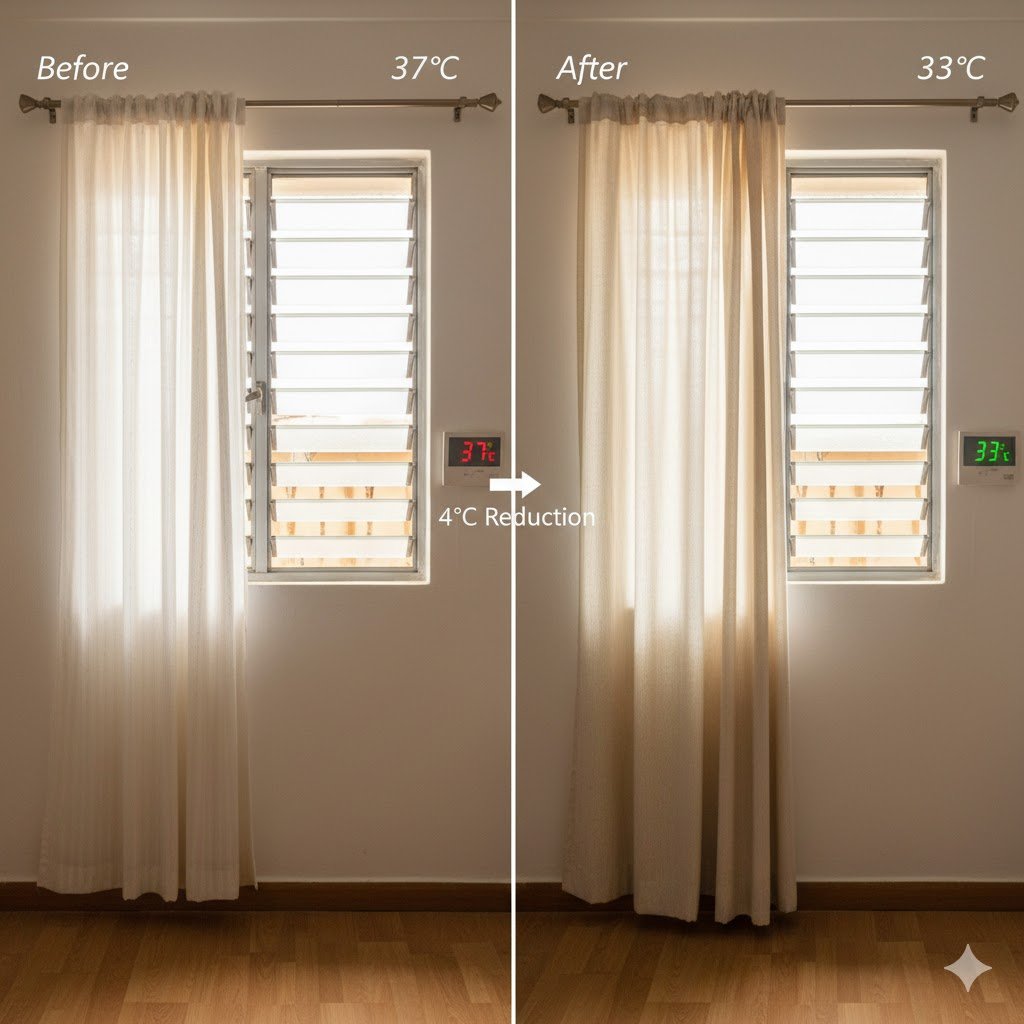
- Thermal Curtain Strategies: Invest in heavy, light-colored, thermal-backed fabric. The color is important: white or cream reflects sunlight, while dark colors absorb it. Draw these closed from 9 AM to 5 PM without fail.
- When I lived in my previous flat in Surulere, the living room faced west, which meant the afternoon sun was brutal. I sourced thick cotton backing from Balogun Market and sewed it onto my existing curtains. The difference was startling. By keeping the curtains closed, I kept the temperature at 33°C on a day when it hit 37°C outside. That 4-degree gap was the difference between being able to work and having to retreat to the shade of a neighbor’s house.
- I verified these results using a simple ₦1,000 thermometer. Tracking the data allowed me to optimize exactly when to open and close my windows, turning my home into a managed climate zone.
Timing Activities Away From Hot Rooms
If you have a room that gets hit by the late afternoon sun, stop trying to fight the heat there. That room should be treated as a no-go zone during peak hours. Use your kitchen, study, or living area in the north-facing, shaded parts of your home while the sun is beating down on the west side. If you must be in the hot room, combine all your defenses: reflective film on the glass, heavy curtains drawn tight, and perhaps a small oscillating fan running on a low setting to keep air moving.
- Move Cooking Times: Cooking is a massive heat generator. Boiling water, frying plantains, or using the oven during the day adds heat and humidity to your living space. Shift your heavy cooking to 6 AM or after 8 PM. If you must cook during the day, keep the kitchen door closed and run an exhaust fan if possible to pull the heat out.
- Relocate Electronics: Large desktop computers, high-definition TVs, and old-school game consoles generate immense heat. If these are in your bedroom, they will raise the ambient temperature while you try to sleep. Move your electronic setup to a living space that is easier to ventilate, and keep the bedroom for rest only.
In smaller dwellings, every piece of furniture placement matters. Do not shove your mattress or sofa against a wall that catches the afternoon sun, as those walls will radiate heat for hours after dark. Give your furniture a few inches of breathing room from the wall to allow air to circulate. For more practical ideas on making the most of your footprint, see our guide on how to decorate a one-room apartment in Nigeria so you stay comfortable without sacrificing style.
Night Purging for Sun-Facing Rooms
Night purging is a technique that uses the cooler night air to physically flush the heat out of your home. If your walls are warm from the sun, you cannot cool the room down with just a small fan; you need a high volume of air to replace the internal heat.
Follow these steps to reset your thermal mass:
- Seal the house: Keep every window, vent, and curtain shut tight from 7 AM to 7 PM. This prevents the hot, humid daytime air from replacing your cooler, stale air.
- The 7 PM Release: As soon as the sun dips below the horizon, open every single window. If your home has windows on opposite sides, open both to create a cross-breeze.
- Fan Assist: Point your fans to blow out of the windows to push the warmest air in the room outside. Within 30 minutes, you will feel the change.
- Continuous Cooling: Keep the windows wide open all night. This constant flow of air will cool down the actual structural elements of your room, allowing you to wake up in a space that hasn’t started the day already sweltering.
How to Stay Cool Without AC in Your Car During Lagos Traffic
Traffic in Nigeria is hard enough without sitting in a metal box that is basically a greenhouse on wheels. Even if your car’s AC isn’t working or the cost of fuel makes running it impossible, there are ways to manage the heat during those long waits on the Third Mainland Bridge or in heavy Oshodi traffic.
Before Entering and Immediate Relief
- Park in Shade: This is common sense but often ignored. A car parked in direct sun can reach 50°C+ inside. If you must park in the sun, use a high-quality reflective windshield screen. It pays for itself within a week by keeping the interior temperature significantly lower.
- Flash-Cooling: Never jump in and start driving immediately. Open all doors or windows for a full minute before getting in. This allows the super-heated air that has accumulated inside to escape, immediately lowering the interior temperature by several degrees.
While Driving (In Slow Traffic)
- The Venting Technique: Lower the front driver-side window by a few inches and do the same for the rear passenger-side window on the opposite side. This creates a diagonal flow of air that pulls air through the cabin much more effectively than just opening your own window.
- Evaporative Cooling: If you have a small spray bottle of water, keep it in the car. Lightly mist your shirt or a damp cloth and place it over the vents if there is even a slight airflow. The evaporation will cool the air down before it reaches your skin.
- Pulse Point Focus: If you are feeling faint from the heat, don’t try to cool your whole body. Focus on your wrists and the back of your neck. If you have a handheld, battery-operated fan, point it directly at your neck. Cooling these pulse points will trick your brain into feeling cooler almost instantly.
Stuck in Standstill Traffic
- Engine Off: If traffic is truly stuck for an extended period, kill the engine. It stops the engine from radiating extra heat into the footwell and keeps you from wasting expensive fuel.
- Personal Fan: A small, rechargeable USB fan is a lifesaver. You can charge it at home or in the car and use it to maintain a steady stream of air right in your face. It is far more efficient than relying on a dying car AC.
- The Ice Hack: If you are heading out for a long trip, put a frozen water bottle in a small cooler. When traffic gets bad, hold the cold bottle against your wrists. It is a simple, effective way to regulate your temperature without electricity.
Long-Term Car Investment
- Strategic Tinting: Getting professional, high-grade ceramic window tinting is one of the best investments you can make for a vehicle in Nigeria. It does not just darken the glass; it rejects infrared heat. While it costs between ₦30,000 and ₦50,000, it makes a massive difference in how much work your AC has to do, and it is a one-time cost that lasts for years. Just ensure your installer stays within the legal limits for tinting to avoid unnecessary harassment from the authorities.
Long-Term Solutions for Natural Cooling (Structural and Building Decisions)
These methods demand a slightly higher initial investment, but they provide the most reliable cooling strategies for keeping your house cool in summer naturally over the long haul. I have spent years testing these structural fixes, and they are far more effective than temporary gadgets if you own your home or have a long-term lease.
Understanding Thermal Mass for Natural Cooling
Thermal mass is essentially the capacity of building materials like concrete, sandcrete blocks, or fired bricks to soak up and hold onto heat. Most Nigerian residential buildings are constructed with dense blocks, which means they are high-thermal-mass structures. This is a double-edged sword depending on where you live.
- When Thermal Mass Works: In drier northern states where temperatures plummet at night, high-mass walls are a gift. The walls store the cool energy from the night air, acting as a heat sink that keeps the interior steady throughout the intense midday sun.
- When Thermal Mass Works Against You: In humid southern regions like Lagos, the high thermal mass is a persistent trap. The concrete walls absorb heat throughout the day, but the ambient humidity prevents that heat from escaping at night. Because the walls continue to radiate heat long after the sun has set, you end up with an indoor oven that stays hot well past midnight. This is thermal lag.
- Actionable Tip: If you reside in the south, you must mitigate this. Prioritize installing exterior window film or heavy-duty solar curtains to prevent the sun from hitting the walls in the first place. You must also commit to night purging, which involves opening every secure window the moment the outdoor temperature dips below your indoor reading to force that stored heat out of the structure.
Roof and Ceiling Improvements
- Insulation is Essential: A metal roof can reach punishing temperatures exceeding 70°C during a standard January afternoon in Lagos. Installing mineral wool or fiberglass insulation between your corrugated iron sheets and your ceiling board is the single most effective structural upgrade you can make. It creates a thermal break that reduces conducted heat transfer by as much as 90%. I have seen this change the entire atmosphere of a top-floor flat.
- Reflective Roof Treatments: If insulation is currently out of budget, look into high-albedo reflective roof coatings. These white, elastomeric paints reflect solar radiation rather than absorbing it. By turning your roof surface into a reflective barrier, you can drop your interior temperature by 3-6°C. It is an affordable way to fight back against the 2025 NiMet climate predictions suggesting longer, harsher rainy and hot cycles.
Improving Your Home’s Natural Ventilation
- Strategic Exhaust Fans: You can use the principle of stack ventilation by placing an exhaust fan in your kitchen or bathroom ceiling. This fan creates negative pressure, pulling hot, humid air out and forcing fresh air to enter through lower, shaded windows.
- Where to Buy: Shops in Alaba International Market or Ikeja Computer Village carry industrial-grade units for ₦8,000 to ₦18,000 as of 2026.
- Installation Guidance: Hiring a local electrician to cut into a plaster or PVC ceiling costs roughly ₦12,000 to ₦20,000. If you are a tenant, always check your tenancy agreement or get written approval from your landlord before modifying the ceiling.
- High-Efficiency Ceiling Fans: I strongly prefer ceiling fans over standing fans for bedrooms and living areas. They move a significantly larger volume of air with less noise and lower energy consumption. They are particularly effective when paired with a simple 300W solar setup.
- Where to Buy: Check out the electronics aisles in major malls or specialized hardware markets like Apo in Abuja for energy-rated models.
Fan Strategies vs Air Conditioning Costs
A standard 1HP air conditioning unit is a massive energy drain, pulling 750-1,000 watts of power every hour. In contrast, a high-quality ceiling fan uses only 60-80 watts. If you are operating on a budget or limited solar capacity, realize that running your AC for just one hour is equivalent to running your ceiling fan for over twelve hours. The math is simple: minimize the AC for emergencies and let the fan handle the daily load.
| Method | Average Monthly Cost (₦) | Cooling Effectiveness | Best For | Renter-Friendly? |
|---|---|---|---|---|
| Ceiling Fan | ₦4,000 – ₦8,000 | Good | Whole room, long term | No* |
| Standing Fan | ₦3,000 – ₦6,000 | Moderate | Targeted relief | Yes |
| Small Window AC (1hp) | ₦35,000 – ₦60,000+ | Excellent | Quick room cooling | No* |
Solar Panel Optimization:
If you have invested in solar, treat your ceiling fans as your primary defense. Because they are more power-efficient, they are the ideal partner for a solar-inverter system. A standard 300W setup can easily power two ceiling fans for the duration of the day without putting excessive strain on your batteries. This keeps your system healthy while keeping you cool.
Creating Your Personal Cooling Strategy (The Three-Phase Plan)
The secret to success is combining multiple cooling methods based on the time of day. Consistency is what makes this work.
Phase 1: Morning Routine (Heat Prevention)
- The Morning Flush: Between 6:00 AM and 7:30 AM, open every window in your home. The air is at its crispest, and this allows you to push out the stagnant, warm air that collected overnight.
- The Lockdown: By 8:30 AM, the outside temperature usually begins to climb. Close all your windows, pull your shutters, and ensure that your home is sealed off from the rising heat.
- Shade Deployment: Close all your heavy curtains, especially on the southern and eastern sides of the building, to prevent solar gain through your glass.
Phase 2: Afternoon Heat Management (Heat Blocking)
This is the period from 11 AM to 5 PM where you must maintain a defensive posture against the sun.
- Stay Sealed: Keep those curtains drawn. If your windows face direct sun, consider applying reflective window film. It is an affordable, renter-friendly way to bounce heat back outside.
- Pulse Point Cooling: Dampen a small towel with cool water and dab your wrists, neck, and temples. This provides immediate relief by cooling your blood at its most exposed points.
- The Ice Bowl Technique: If your humidity levels are low, place a bowl of ice in front of your fan. Note that this is only effective when the relative humidity is below 70%. If it is too humid, the ice will simply melt without cooling the air effectively.
Phase 3: Evening and Night Cooling Strategies (Night Purging)
Once the sun drops, your goal is to evacuate the heat trapped in the walls and furniture.
- Cross-Ventilation: The moment the outdoor thermometer drops below your indoor temperature, open windows on opposite sides of the room. This creates a cross-breeze that effectively flushes the room.
- Fan Positioning: Position your fan at the window, facing outward, to create a vacuum effect that pulls the hot, lingering air out of the room.
Common Mistakes to Avoid
- Midday Airing: Opening your windows at 2 PM is a guaranteed way to bring the outside heat inside. Always wait until the temperature gradient shifts.
- Empty Room Cooling: Fans cool the skin via evaporation, not the air itself. Turning a fan on in an empty bedroom is pure waste; it does nothing for the room environment.
- Humidity Neglect: In the rainy season, avoid wet laundry or hanging wet sheets inside. You are just adding moisture to an already heavy atmosphere, which makes it harder for your body to regulate its own temperature.
- Electronics Overload: Computers and older lightbulbs are heat radiators. If you are working from home, stick to LED bulbs and power down unused electronics during the peak 1 PM to 4 PM window.
Community and Cooperative Solutions
Shared living spaces offer unique opportunities for collective cooling:
- Cooperative Generator Scheduling: In many compounds, neighbors pool funds to run a generator during the most punishing hours of the day (2 PM – 5 PM). This saves fuel costs compared to everyone running their own units and ensures communal relief.
- Plant-Based Shading: If you have a shared yard, plant trees or use climbing vines on trellises to create a “green wall” that shades the exterior of the building. Transpiration from plants also naturally cools the air in their immediate vicinity.
Cost-Benefit Analysis: Which Methods Pay for Themselves Fastest?
Passive cooling is almost always the best financial move. By focusing on blocking heat rather than fighting it, you slash your monthly recurring expenses.
| Investment | Estimated Cost (₦) | Monthly Savings (₦) | Break-Even Time |
|---|---|---|---|
| Reflective Window Film | ₦12,000 | ₦2,500 – ₦4,500 | 3 months |
| Thermal Curtains | ₦18,000 | ₦3,500 – ₦5,500 | 4 months |
| Weather Stripping | ₦3,000 | ₦600 – ₦1,200 | 3 months |
| Energy-Efficient Ceiling Fan | ₦25,000 | ₦2,000 – ₦3,500 | 9 months |
Conclusion on ROI: Spending ₦30,000 on film and curtains for your main windows will likely lower your monthly cooling bill by ₦10,000 or more. You recoup your entire initial investment in roughly one quarter, and from there, every cent saved stays in your pocket.
Quick Reference Guide
When You Need to Cool Down Right Now:
- Close every curtain on the sun-exposed side of the house.
- Open windows on the shady side to create a draft.
- Use the ice bowl method if the air is dry.
- Keep a cool, damp cloth on your wrists.
For Sleeping in Heat:
- Take a lukewarm shower to lower your core temperature slightly.
- Stick to natural cotton linens, which breathe better than synthetics.
- Position your fan to draw air across your skin, not just around the room.
- Keep your mosquito net secure but ensure it doesn’t block your cross-ventilation flow.
Frequently Asked Questions
Q: What is the most effective low-cost cooling hack? A: It is strictly your window management. Keeping the heat out is 100% free and 100% effective. If you manage your windows, closing them when it is hot and opening them when the air turns cool, you solve the primary issue before it even enters your home.
Q: Why does my house feel like a furnace despite having the fan on? A: Because the air temperature is higher than your body temperature and the humidity is preventing sweat evaporation. A fan is not a cooling device; it is a movement device. If the air is 35°C, the fan is just blowing 35°C air at you. You must pair the fan with structural cooling like shades to feel a difference.
Q: How do I know when it is time to perform Night Purging? A: Watch the sunset. Once the sun goes down, the concrete walls will begin to release their stored heat. Monitor the air outside; the second you feel the breeze turn cooler than the indoor air, open every door and window wide. This process usually peaks between 8 PM and 10 PM in the southern regions of Nigeria.
Conclusion
Dealing with a hot house isn’t just physically uncomfortable. It is mentally draining. The frustration of sleepless nights and persistent heat takes a genuine toll on your well-being. It’s 2 PM on a scorching Lagos afternoon. You are staring at a ceiling fan that barely moves the air, and your energy bills are already through the roof. While these cooling methods address the temperature, you might also benefit from our guide on 15 ways to relieve stress quickly at home, which covers additional strategies for maintaining peace and comfort in challenging Nigerian living conditions.
Learning how to cool down a hot house without air conditioning is about regaining control. You are saving money, reducing reliance on unstable power, and protecting your sanity. The secret to success is combining multiple cooling methods based on the time of day. With NiMet reporting longer, more intense rainy seasons and shifting patterns, mastering these passive habits is more vital than ever before.
To start seeing results today, focus on these Top 3 Immediate Methods:
- Block the Sun: Close all thermal curtains and apply reflective window film. Since metal roofs can exceed 70°C, stopping radiant heat entry is non-negotiable. This simple action can drop your indoor temperature by 3-7°C.
- Night Purging: Aggressively cross-ventilate your home only after sunset. Opening windows while the sun is out lets in hot air, so wait until the temperature outside dips below your indoor reading to flush out the heat trapped in your walls.
- The Ice Bowl Technique: Use this only during low-humidity hours. If the relative humidity is above 70%, evaporative cooling fails. In drier periods, placing a bowl of ice before a fan creates a chilled breeze that is far more efficient than a 1HP AC unit, which draws 1,000 watts compared to a 60-watt fan.
For Lasting, Long-Term Comfort, focus on these Top 3 Investments:
- Ceiling Insulation: This is the gold standard. It acts as a barrier against the extreme heat radiating from corrugated iron sheets.
- Albedo Management: Paint your exterior walls a lighter color. High-albedo surfaces reflect solar radiation, keeping the building structure from absorbing heat throughout the day.
- Exhaust Ventilation: Install a roof-mounted exhaust fan to create negative pressure. This pulls the hottest air, which naturally rises to the ceiling, out of the house, forcing a steady replacement of cooler air through lower openings.
Cooling your home is a battle won in stages. Combine passive heat blocking with active air movement to beat the climate. Start with one change today, even closing curtains during peak sun makes a measurable difference. Small adjustments compound into real, lasting comfort. I have tested these systems for years, and they are the only reliable way to keep cool when the grid fails.
This guide is updated for 2026 to reflect current climate realities. Bookmark it for future reference as you refine your setup.
Additional Resources
For further reading on cooling strategies and localized climate data:
- Nigerian Meteorological Agency (NiMet) – Official seasonal climate predictions for the year.
- World Bank Climate Knowledge Portal – Nigeria – Detailed historical climate statistics.
- Weather Spark – Lagos Climate – Specific data on humidity and heat index trends.

Oladepo Babatunde (Prince Babatee Tunde) is a Computer Scientist, researcher, and professional content writer with a Higher National Diploma in Computer Science from Kwara State Polytechnic, Nigeria.
With a background in technology and a passion for clear communication, Babatunde specializes in creating thoroughly researched, reader-focused content on productivity, personal development, home living, and technology. Every article he writes is backed by extensive research and fact-checking to ensure readers receive accurate, actionable information.
As a freelance writer, he has helped brands and publications deliver content that educates, engages, and empowers their audiences. His mission at Vibena is simple: make complex topics easy to understand and help Nigerians live smarter, more productive lives.