If you are considering a VDM Ratel power station in Nigeria, the first thing to compare is not just the price. The six models currently listed by Ratel Power range from a 300Wh portable unit to a 5,120Wh model, and their output ratings are very different. Buying the cheapest one without checking both figures can leave you with a unit that cannot run the appliance you had in mind.
I checked the product listings on Ratel Power’s official website on 17 November 2026. The prices below are the amounts displayed there at the time of checking. They can change, and you should confirm stock, delivery and the exact accessories before paying.
VDM Ratel power station prices in Nigeria (November 2026)
| Model | Battery capacity | Rated output | Listed price |
|---|---|---|---|
| Ratel RP300 | 300Wh | 300W | ₦184,275 |
| Ratel RP600 | 256Wh | 600W max | ₦236,250 |
| Ratel RP1200 | 992Wh | 1,200W max | ₦567,000 |
| Ratel RP2400 | 2,232Wh | 2,400W | ₦897,000 |
| Ratel RP3600 | 3,840Wh | 3,600W continuous | ₦1,100,000 |
| Ratel RP5000 | 5,120Wh | 5,000W continuous | ₦2,100,500 |
Source: Ratel Power’s official product listings. “W” describes the output rating; “Wh” describes stored energy. The RP600 and RP1200 pages say “max”, while the RP3600 and RP5000 pages explicitly say “continuous”. Do not assume every model’s rating is a continuous rating or its surge rating. Read our detailed Ratel RP1200 review for runtime estimates, appliance limits and buyer checks.
Official listings: RP300, RP600, RP1200, RP2400, RP3600 and RP5000.
Which Ratel model is right for your needs?
Ratel RP300: basic personal backup
The RP300 is listed with a 300Wh battery and 300W output. Its official product page describes it as an entry-level unit for personal electronics and lists an AC outlet, USB-A and USB-C connections, a battery indicator and a carry handle.
It is the lowest-priced model in the range at ₦184,275. It is best approached as a small backup option for low-power devices. Before connecting a laptop, monitor or other equipment, check the device’s actual wattage and make sure the combined load stays below the power station’s output limit.
Ratel RP600: higher output, smaller battery than the RP300
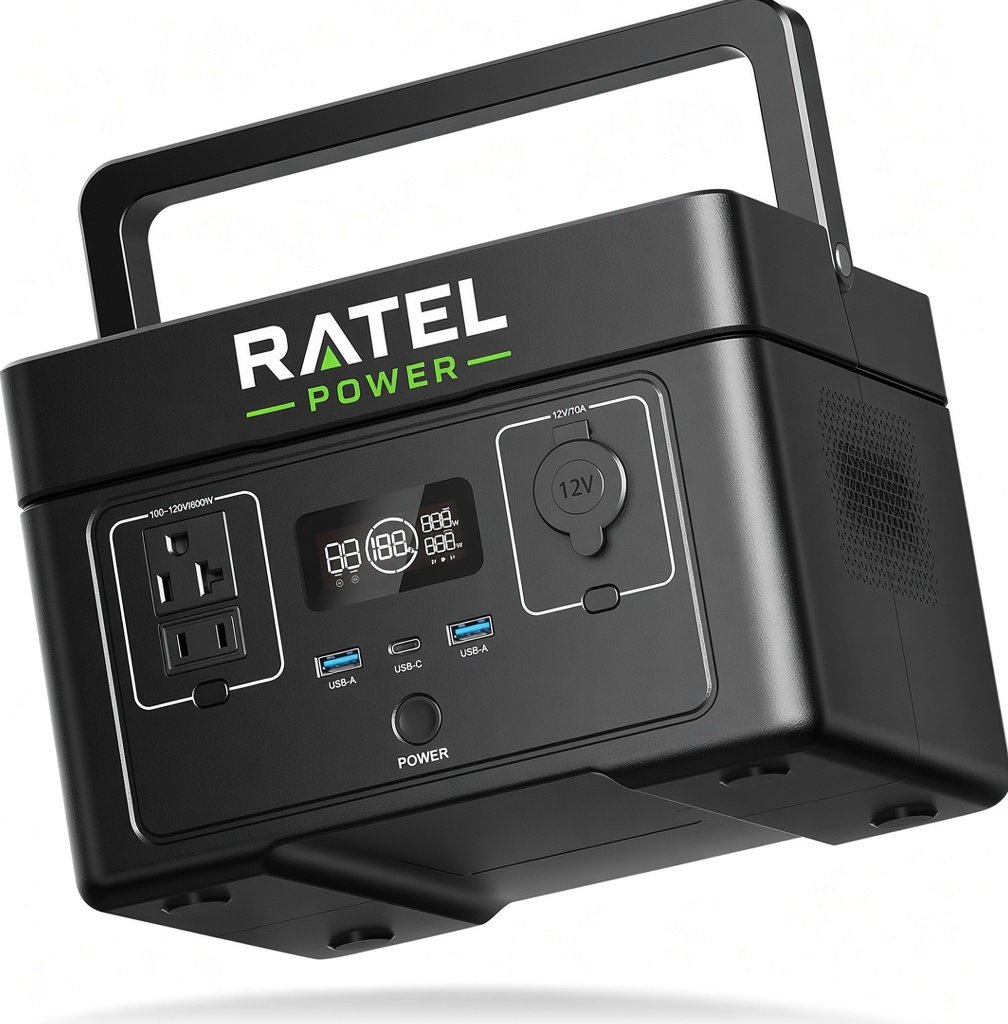
This model is easy to misunderstand. The RP600 has a higher stated output rating (600W max), but its listed battery capacity is 256Wh, which is actually lower than the RP300’s 300Wh. That means the RP600’s higher wattage does not automatically mean longer backup time.
Ratel lists LiFePO4 cells, an LCD showing load and battery percentage, cooling, overload protection and multiple outputs for the RP600. At ₦236,250, compare it with the RP300 based on the appliances you need to run, not the model number alone.
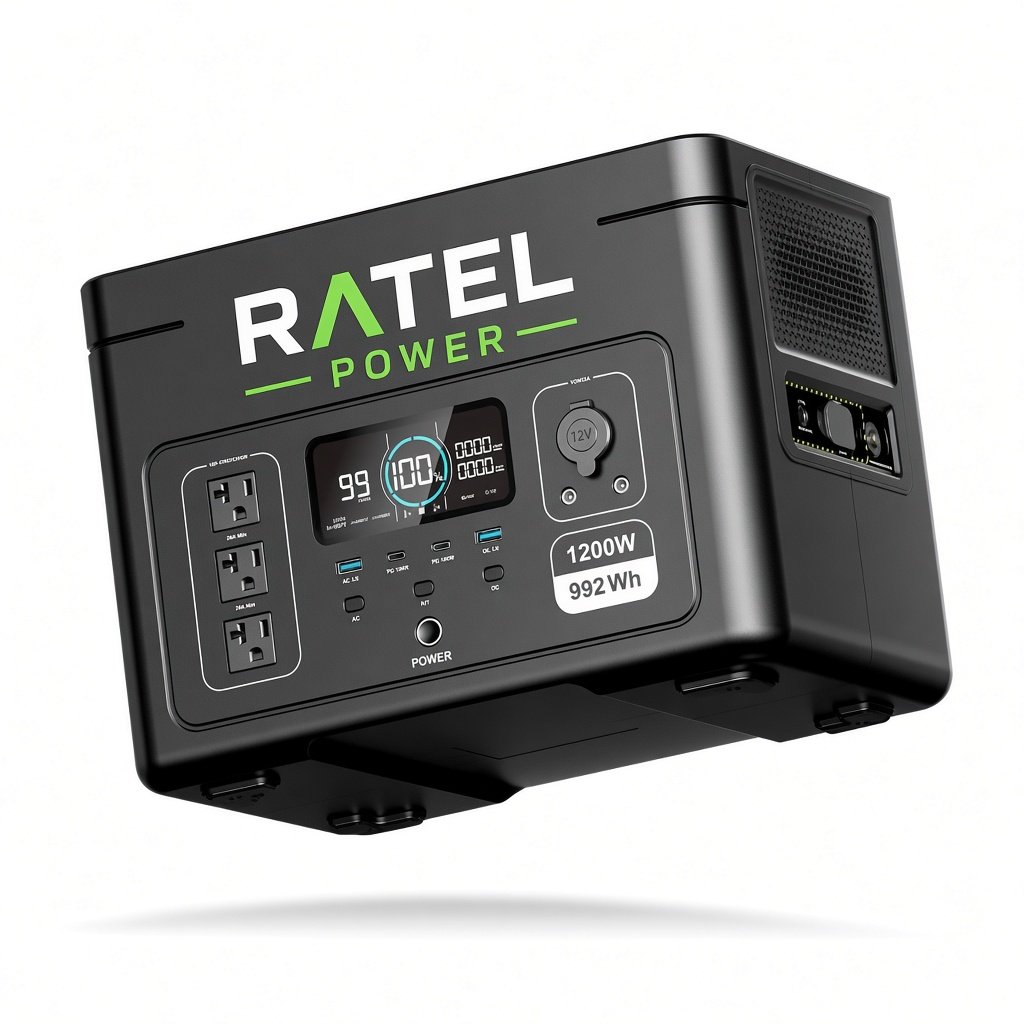
Ratel RP1200: a mid-sized option for essential home electronics
The RP1200 is listed at ₦567,000 with 992Wh of storage and a 1,200W maximum output. Its product page mentions two AC sockets, a DC car socket, a monitoring display, a battery management system (BMS) and parallel charging from solar and grid power.
Its larger battery makes it a more sensible starting point than the RP300 or RP600 if you need several hours of backup for a combination of lower-power devices. However, do not assume it can run every refrigerator, freezer or pump: check both the appliance’s normal running wattage and its startup surge against the exact Ratel model specifications.
Ratel RP2400: more stored energy for longer backup
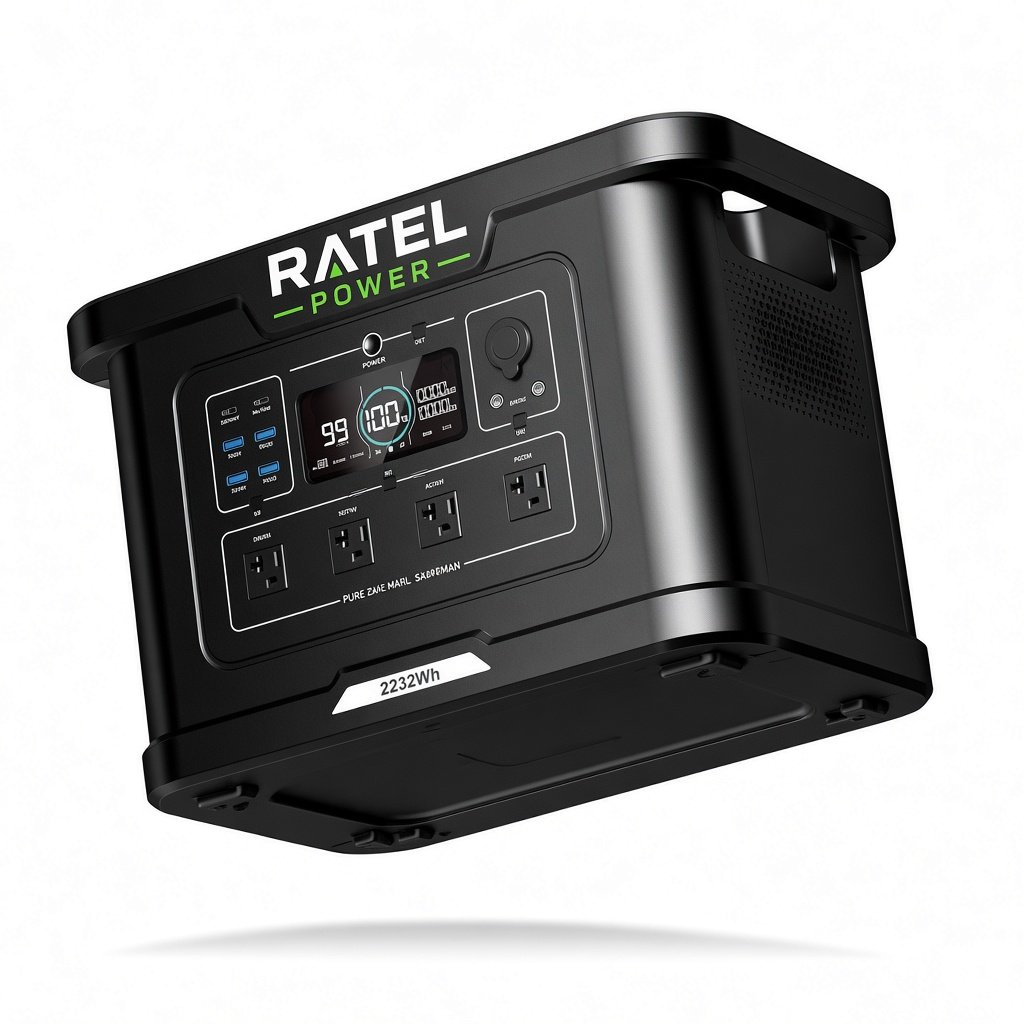
The RP2400 is listed with 2,232Wh of capacity and a 2,400W output rating, priced at ₦897,000. Ratel describes it as a higher-capacity option and lists an integrated MPPT charge controller and multiple AC outputs.
Its battery capacity is more than twice that of the RP1200, but actual runtime still depends on what you connect. A 2,400W output rating should not be read as a promise that every appliance below 2,400W will start successfully; motor-driven appliances can have a much higher startup demand.
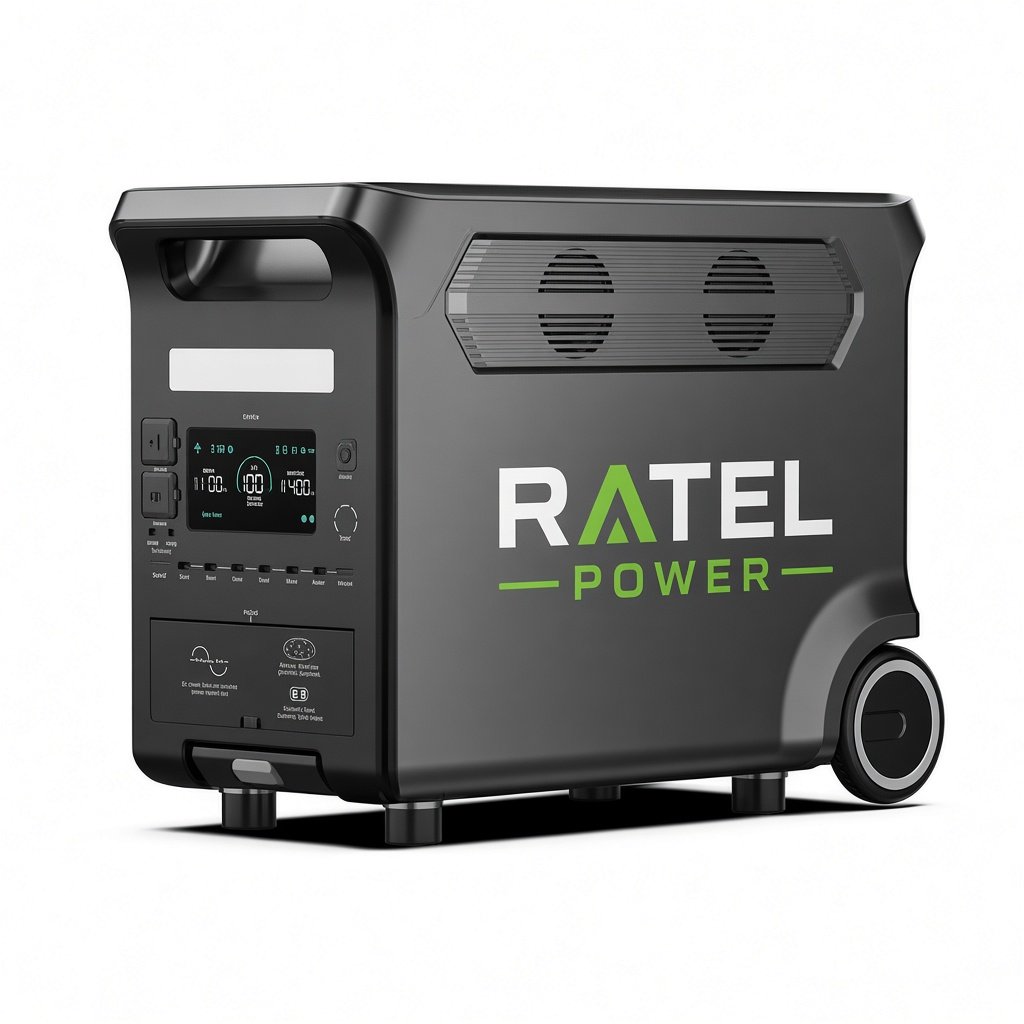
Ratel RP3600: larger backup for homes and small businesses
The RP3600 is listed at ₦1,100,000, with 3,840Wh of storage and 3,600W continuous output. The official page mentions a pure sine wave inverter, MPPT solar charging, active cooling and wheels with a pull handle.
This model is in a different class from the smaller portable units. It may be worth comparing if you need to run several appliances together, but check the full output, surge, solar-input and charging specifications before treating it as a replacement for a petrol generator or a permanently installed home inverter system.
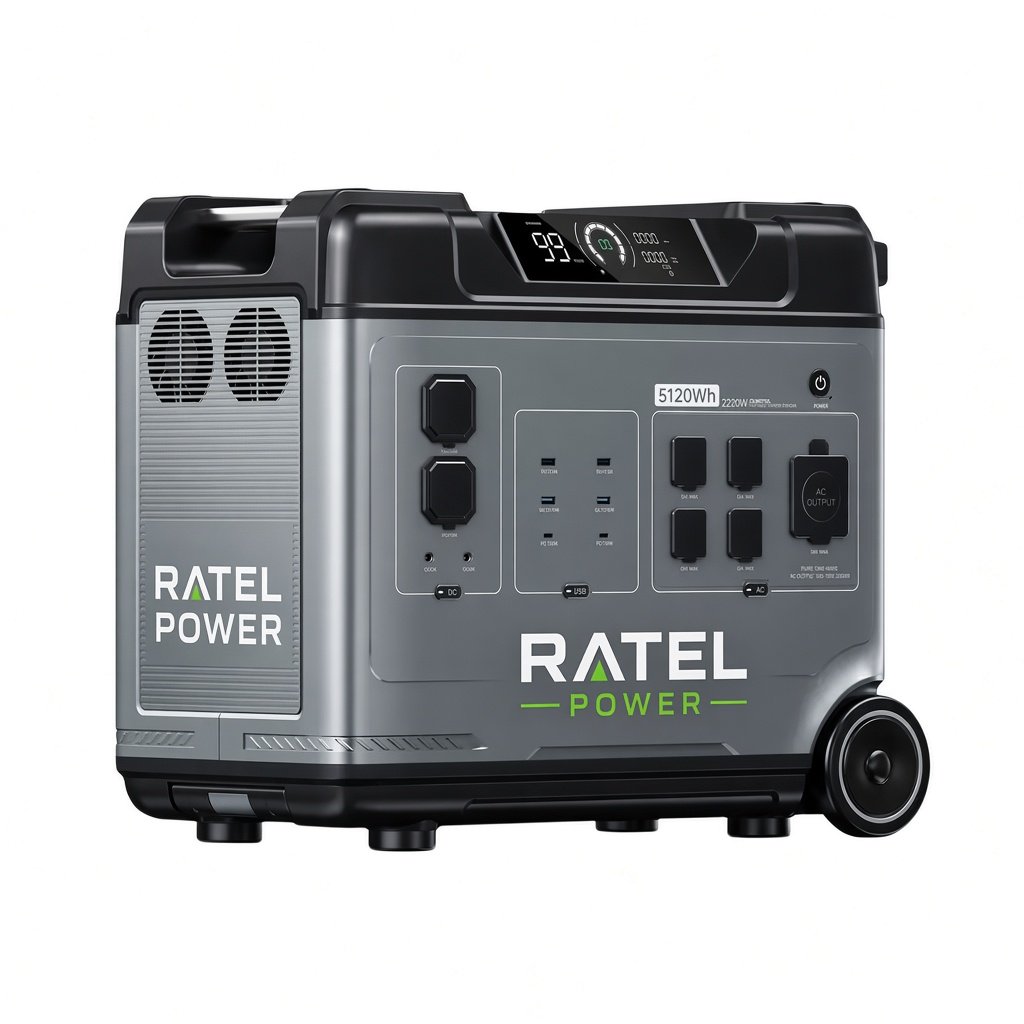
Ratel RP5000: the largest listed model
The RP5000 is listed at ₦2,100,500, with 5,120Wh of battery capacity and 5,000W continuous output. Ratel’s page describes a high-output inverter, BMS and solar-array integration.
It is the most expensive model in the current range. Before spending this amount, ask for the full technical datasheet, maximum PV input, supported panel voltage/current, AC charging rate, surge rating, warranty terms and service process. Those details matter more than the headline wattage.
Which Ratel model offers the best value for money?
To compare the prices fairly, divide the listed price by the advertised battery capacity. This gives a rough price per stored kilowatt-hour (kWh). It does not measure build quality, battery life, warranty or usable energy, and it does not account for the advertised free solar panel because Ratel does not clearly state the panel wattage and package value on the listings.
| Model | Listed price | Approx. price per kWh | What the numbers suggest |
|---|---|---|---|
| RP300 | ₦184,275 | ₦614,250 | Cheapest entry price, but expensive per unit of stored energy. |
| RP600 | ₦236,250 | ₦922,852 | Weakest capacity-per-naira value on this list; choose it only if its 600W output and exact features suit you. |
| RP1200 | ₦567,000 | ₦571,573 | More capacity and output, but still compare alternatives around 1kWh. |
| RP2400 | ₦897,000 | ₦401,882 | A stronger balance of price and storage within this Ratel range. |
| RP3600 | ₦1,100,000 | ₦286,458 | Lowest price per kWh in this range, if the published capacity and continuous output are confirmed for the exact unit. |
| RP5000 | ₦2,100,500 | ₦410,254 | Large capacity and output, but a much higher total price and poorer per-kWh value than RP3600. |
My price-only reading: RP3600 looks strongest on advertised capacity per naira, followed by RP2400. RP600 looks weakest on that measure. But do not buy the RP3600 solely because its calculated unit cost is lowest: warranty, surge rating, solar input, charging speed, after-sales support and independently verified usable capacity can outweigh a cheaper kWh figure.
There are also other prices online. A separate shop page hosted on the Verydarkman NGO website has shown RP1200 at ₦555,750, RP2400 at ₦855,000 and RP5000 at ₦1,757,500, while the Ratel Power shop lists ₦567,000, ₦897,000 and ₦2,100,500 respectively. These are material differences, especially on the RP5000. Confirm which seller is authorised, whether the product is the same revision, whether it is in stock, and what warranty and delivery are included before treating the lower listing as a better deal. A lower advertised price is not automatically a safer purchase. For the full Blunt model price list and buyer checks, see our Blunt power station prices in Nigeria guide.
How Ratel compares with other power stations in Nigeria
Ratel is not the only option in this price range. For example, the Nigerian BLUETTI store lists the AC180 at 1,152Wh and 1,800W for ₦810,000, the AC70 at 768Wh and 1,000W for ₦522,623, and the AC200PL at 2,304Wh and 2,400W for ₦1,718,005. On the listed figures, the Ratel RP1200 costs less than the AC180 but has a smaller battery and lower output; the Ratel RP2400 is substantially cheaper than the AC200PL with a similar advertised capacity and output rating. That makes Ratel look price-competitive, but this is not a like-for-like quality comparison: warranty, cell grade, inverter performance, charging speeds, app support, service network and independent test history need to be checked.
A November 2026 market survey by InfraSol, based on 69 brand-new Jumia and Jiji listings checked on 20 October, reported median prices around ₦380,000 for 1kWh units and ₦700,000 for 2kWh units. Many of those lower-priced units had only 300–500W or around 1,000W output, so they are not direct substitutes for every Ratel model. Use this as a market reference, not proof that all 1kWh or 2kWh products are equivalent.
Blunt Power’s online store is another Nigerian competitor and currently lists 1,000W at ₦1,180,000, 1,500W at ₦1,260,000, 3,000W at ₦1,880,000, 5,000W at ₦3,300,000 and 10,000W at ₦6,420,000. However, the product listing does not show enough battery-capacity detail alongside every model to calculate a fair price-per-kWh comparison. Do not conclude that Ratel is automatically better value just because its prices look lower: compare the actual battery Wh, continuous output, surge, solar input and warranty for the specific Blunt model you are considering.
What are owners and reviewers saying about Ratel?
Ratel is a new product range, so the public feedback available so far is early and limited. I found a few reported user experiences, but not enough independent, long-term testing to make a reliable judgement about battery degradation, failure rates or customer service across the range.
- RP2400 refrigerator report: a social-media post reshared on 2 November described a buyer running a refrigerator for nine hours with 28% battery remaining. That is encouraging as an individual report, but the refrigerator model, starting charge, temperature, compressor duty cycle and whether anything else was connected were not independently verified. Treat it as an anecdote, not a guaranteed runtime.
- RP1200 demonstration: a report on the 29 October demonstration described a TV, fan and refrigerator drawing a combined 274W while the unit ran for 5 hours 17 minutes. The same report refers to a 932Wh battery, while the Ratel shop currently lists 992Wh for the RP1200. This discrepancy should be clarified from the actual unit label and datasheet. A demonstration is useful, but it is not an independent controlled test.
- RP600 battery-drain complaint: a report published on 17 November described a customer saying an RP600 drained quickly; it also reported that VDM offered a refund and a proposed resolution. This is one reported complaint and response, not proof of a widespread defect. It is nevertheless a reason to test a new unit promptly and keep the receipt, packaging and warranty documents.
There has also been technical criticism of the way one RP1200 demonstration was interpreted. The important lesson is not to accept either praise or criticism at face value: a useful test should state the starting battery percentage, exact appliance models, measured average and peak load, duration, ending percentage, ambient conditions and whether solar or mains charging was connected during the test.
What this feedback tells buyers: there are some positive early runtime reports, but also at least one reported fast-drain complaint and unresolved questions about test methods and model specifications. It is too early to call Ratel either proven reliable or unreliable. Ask for a written warranty and test your own unit during the return or warranty window.
Important specification and price checks before buying
There are conflicting figures across online Ratel-related listings. The Ratel Power shop lists the RP600 as 256Wh and 600W max at ₦236,250, while another Ratel-branded online shop lists an RP600 as 600Wh at ₦320,000. The NGO store separately lists an RVP 600 at ₦285,000. These may be different products, revisions or sellers; do not assume the names mean the hardware is identical.
Likewise, the RP1200 has been described as 992Wh in the current Ratel Power shop and 932Wh in a report about the public demonstration. Before paying, photograph the model label and serial number, and ask the seller to confirm the exact rated battery capacity, continuous AC output, surge output, battery chemistry, PV input range and included panel specifications in writing. If the invoice, carton and product label do not agree, pause the purchase until the seller explains the difference.
Watts vs watt-hours: the difference that can save you from buying the wrong model
Output power is measured in watts (W). It tells you how much load the unit can supply at one time. Battery capacity is measured in watt-hours (Wh). It tells you how much energy is stored for use over time.
For example, a power station with a 600W output rating may be able to supply a 400W appliance if its surge and other limits allow it. But a 256Wh battery will not run that appliance for long. A larger battery can provide longer runtime, but it does not necessarily mean the inverter can start a high-wattage appliance.
That is why the RP600’s 600W output and 256Wh capacity should not be compared with the RP300’s 300W output and 300Wh capacity by looking at only one number.
Estimated runtime: how long could each Ratel model last?
To make the capacities easier to compare, the table below estimates runtime at a steady 50W and 100W load. I have used 85% of the advertised battery capacity as an illustrative usable-energy assumption to allow for conversion losses. This is a calculation, not a measured test of any Ratel unit.
| Model | At 50W | At 100W |
|---|---|---|
| RP300 (300Wh) | About 5.1 hours | About 2.6 hours |
| RP600 (256Wh) | About 4.4 hours | About 2.2 hours |
| RP1200 (992Wh) | About 16.9 hours | About 8.4 hours |
| RP2400 (2,232Wh) | About 37.9 hours | About 19 hours |
| RP3600 (3,840Wh) | About 65.3 hours | About 32.6 hours |
| RP5000 (5,120Wh) | About 87 hours | About 43.5 hours |
Real runtime can be shorter. AC inverter losses, battery reserve settings, temperature, battery age, changing appliance demand and the power station’s own standby consumption all affect the result. A refrigerator, freezer, fan or pump also cycles on and off, so its average consumption is not the same as its startup wattage. For a useful estimate, add the actual wattage of the devices you plan to use and calculate from their expected operating time.
What can a Ratel power station run?
There is no single appliance list that applies to all six models. A phone charger or Wi-Fi router is a small load; a refrigerator compressor, water pump, kettle or pressing iron is a very different load.
- Phones, tablets and routers: generally modest loads, but check the device’s charging input and the power station’s available ports.
- Laptops and monitors: check the charger label for watts and include every device you intend to use at once.
- Fans and televisions: often lower-power than heating appliances, but their actual wattage varies by model and speed setting.
- Refrigerators and freezers: check both running consumption and compressor startup surge. Ask the seller for the Ratel model’s surge specification in writing.
- Kettles, irons and air conditioners: do not assume they are suitable. These can draw substantial power, and some may exceed the output or surge limit.
Do not choose a unit based only on the number printed in its model name. Confirm the exact continuous output, peak/surge output and battery capacity for the product being sold.
Does a Ratel power station come with a solar panel?
The official product pages currently advertise a “Free Solar Panel and Accessories” with each of the six models. However, the listings I checked do not clearly state the panel wattage, exact accessories, cable types or the expected solar charging time for each package.
Before buying, ask the seller to write down the panel’s wattage and electrical specifications, how many panels are included, whether the cables and connectors are supplied, and whether the panel is compatible with the model’s PV input limits. Do not connect a panel until its voltage and current are confirmed against the unit’s manual.
Questions to ask before paying for a VDM Ratel power station
- What is the exact model number and battery capacity shown on the unit’s label?
- What are its continuous AC output and peak/surge output ratings?
- What battery chemistry is used in this specific model, and what is the stated cycle-life or warranty condition?
- What is the maximum solar PV input voltage, current and wattage?
- How quickly can it charge from mains electricity, and can it charge from solar and mains at the same time?
- What solar panel wattage and accessories are included in the advertised package?
- What does the warranty cover, where is service handled, and how are faults or battery issues assessed?
- Can you inspect and test the exact unit before completing payment?
Ratel’s official contact page lists its physical store at Kefiano Autos, Plot 750, Mohammadu Buhari Way, Central Area, Abuja. It also says its online checkout supports bank transfer and warns buyers about people falsely claiming to be distributors. Confirm payment instructions and stock directly through the contact details on Ratel’s official contact page; do not rely on a phone number or payment account forwarded in a social-media comment.
Is a Ratel power station better than a normal solar inverter system?
They solve related but different problems. A portable power station combines a battery, inverter and charging electronics in one package. It is convenient for moving between rooms or taking to another location, and it can be simpler to set up for small loads.
A conventional inverter system is usually designed around separately selected batteries, panels, protection devices and installation wiring. It can be more suitable when you need a fixed home system sized around your household loads, but it requires proper design and installation.
If you are planning backup for an entire flat, compare the complete installed system cost and capacity rather than comparing a portable unit’s headline price with an inverter-only price. See our solar inverter setup cost guide for Nigerian 2- and 3-bedroom flats and our solar generator vs solar inverter comparison.
Frequently asked questions
How much is the VDM Ratel power station in Nigeria?
On 17 November 2026, Ratel Power’s official listings showed prices from ₦184,275 for the RP300 to ₦2,100,500 for the RP5000. Prices and stock can change, so confirm directly before purchase.
Which Ratel power station has the biggest battery?
The RP5000 has the largest listed battery capacity in the current range at 5,120Wh. Ratel lists it with 5,000W continuous output.
Is the RP600 more powerful than the RP300?
The RP600 has a higher listed output rating (600W max versus 300W), but its battery capacity is 256Wh compared with the RP300’s 300Wh. Higher output does not mean longer runtime.
Can a Ratel power station run a fridge or freezer?
Possibly, depending on the model and the appliance. Check the refrigerator’s running wattage and compressor startup surge against the power station’s continuous and surge ratings. Ask the seller to confirm the exact combination before buying.
Can I charge a Ratel power station with solar panels?
Ratel markets the range as solar-ready and advertises a free solar panel and accessories with its models. Confirm the included panel’s wattage and the unit’s PV input limits for the exact model before connecting it.
Where can I buy a Ratel power station?
Ratel’s official website lists its store at Kefiano Autos, Plot 750, Mohammadu Buhari Way, Central Area, Abuja, and provides contact details on its official contact page. Verify stock, payment instructions and warranty directly with the seller.
Bottom line
The lowest price is not automatically the best value. The RP300 has a larger listed battery than the RP600 despite its lower output rating; the RP1200 is a more substantial option for essential electronics; and the RP2400, RP3600 and RP5000 offer progressively more stored energy and output at much higher prices.
Choose by checking the appliances you need to run, their combined wattage, startup surge and the number of hours you need backup. Confirm the current price, full specifications, solar panel package and warranty with Ratel before paying.

Oladepo Babatunde (Prince Babatee Tunde) is a Computer Scientist, researcher, and professional content writer with a Higher National Diploma in Computer Science from Kwara State Polytechnic, Nigeria.
With a background in technology and a passion for clear communication, Babatunde specializes in creating thoroughly researched, reader-focused content on productivity, personal development, home living, and technology. Every article he writes is backed by extensive research and fact-checking to ensure readers receive accurate, actionable information.
As a freelance writer, he has helped brands and publications deliver content that educates, engages, and empowers their audiences. His mission at 9jaboizgist is simple: make complex topics easy to understand and help Nigerians live smarter, more productive lives.