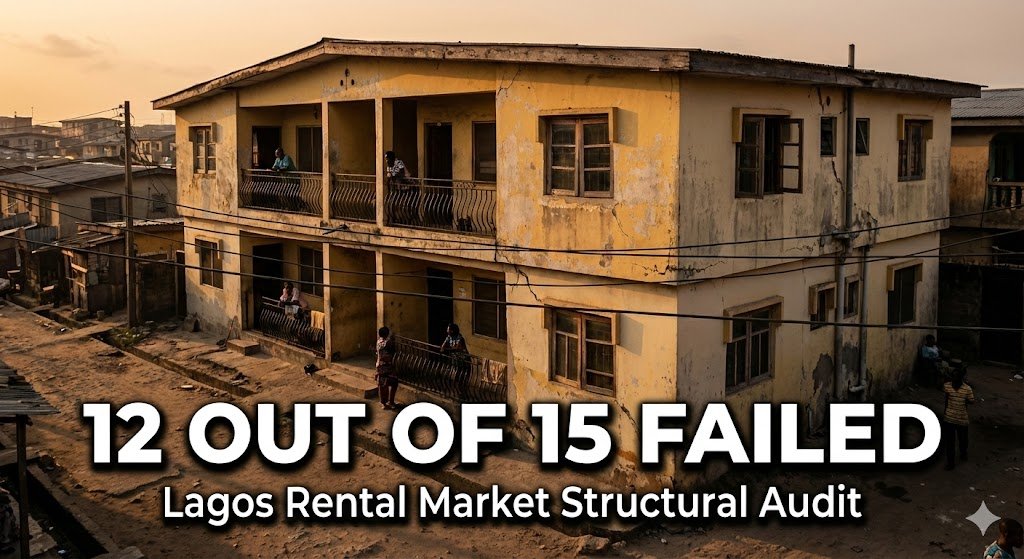
Lagos has recorded over 150 building collapses in the past decade, and the budget apartment segment is most affected. When I set out to conduct an informal Lagos rental market structural audit of 15 “budget” apartments across Yaba, Surulere, and Lekki Phase 2, I expected to find a few minor problems. I did not expect 12 of them to fail basic safety checks that any tenant could perform in 10 minutes. My findings underscore a grim reality: the rush to fill the housing void has birthed a culture of negligence that turns dwellings into death traps.
I didn’t go alone. I took a licensed structural engineer with me. We posed as a young couple looking for an apartment between ₦300,000 and ₦800,000 per year. What we found was shocking: painted-over cracks, sinking foundations, and desperate agents who kept insisting there was “no wahala” while standing in a room with a clearly sagging ceiling. These agents are trained to sell a vibe, not a structure, and they know that once you pay that non-refundable caution fee, you are on your own.
If you are looking for a house in Lagos, you need to read this. It might save your life.
Why I Did This Lagos Rental Market Structural Audit (The Housing Issues in Lagos Nobody Discusses)
Three months ago, a friend of mine in Iwaya woke up to a loud crack. A massive chunk of his ceiling, heavy with water and degraded concrete, fell onto the exact spot where he had been sitting just moments before. He was lucky. Many others are not. The sheer frequency of these structural failures is a silent epidemic that plagues the city’s underbelly.
That incident changed how I see housing issues in Lagos. We complain about high rent, but we rarely talk about whether the buildings will actually stand. We focus on aesthetics like tiled floors and kitchen cabinets, while the bones of the building are rotting.
Nigeria has a massive housing problem. According to the Lagos State Ministry of Housing, while Nigeria’s national housing deficit stands at 28 million units, the situation here is critical. Lagos specifically faces a 3.4 million unit shortfall, a 15% increase from the 2.95 million units recorded in 2016. Because there are not enough houses, landlords can rent out anything, even buildings with active structural warnings, and desperate people will pay for them. In fact, the average Lagos resident spends 40-60% of their income on rent, making the cost of living in Lagos one of the highest concerns for young professionals.
I realized that ‘budget apartment’ in Lagos is often code for ‘unsafe apartment.’ I wanted to prove it, and I wanted to show you exactly what to look for so you don’t become a statistic in another building collapse Lagos news story. The market is not built for your safety; it is built for the profit of landlords who know that someone more desperate than you will take that house if you hesitate.
How Big Is the Real Estate Industry in Nigeria? (Why This Matters)
As we move into 2026, Nigeria’s real estate market is projected at $2.61 trillion USD (approximately ₦4.17 quadrillion at current rates), with the residential segment alone valued at $2.25 trillion. The market is forecast to reach $3.41 trillion by 2029 at a growth rate (CAGR) of 6.87%. Lagos, with a population of over 23 million people, is the furnace of this economic activity, yet infrastructure growth struggles to keep pace.
The scale of the problem is daunting. Nigeria needs to construct 550,000 housing units annually for the next decade to close the deficit, yet the government and private sector collectively deliver only 50,000 units annually. To show how slow progress is, official records reveal that the Sanwo-Olu administration has delivered 9,970 home units in six years and targets 14,022 affordable units by 2027. But this is a mere fraction of what is actually required. This massive shortfall drives the desperation that allows dangerous buildings to thrive, as demand far outweighs ethical supply.
The Lagos Mortgage Board has pushed initiatives like the Rent-to-Own Program to make housing accessible. This program allows first-time buyers to make just a 5% down payment, take immediate possession, and pay the balance over 10 years (monthly payments are capped at 33% of income). However, the sheer scale of the deficit means most people are still stuck in the unverified private rental market, where no such protections exist.
The government is waking up to this reality, albeit slowly. The Lagos State 2025/2026 budget framework allocated over ₦100 billion for Housing and Community Amenities, a significant increase from previous years. This demonstrates clear government awareness of the crisis. But because private developers are still rushing to build fast and make money to fill the gap, they are often cutting corners before government oversight can catch them. They use inferior rods and skip mandatory soil tests, knowing they can blame the “Lagos terrain” when the walls inevitably start to crack.
Real Estate Trends in Nigeria 2026: Why Budget Apartments Are More Dangerous
Why is it so bad right now? It comes down to the brutal reality of the economy and the cost of basic inputs.
The real estate trend in Nigeria 2026 is being driven by unrelenting inflation. While the economy shows signs of stubborn resilience, this moderation has not eased pressure on housing markets. Rental apartments now make up over 80% of the Lagos market, driven by the inability of many to afford homes. Property prices in Lagos have surged by nearly 40% in the last two years. One-bedroom flats in Lekki-Ajah now average ₦2.2 million annually, a staggering figure that effectively consumes the entire annual salary of an average mid-level worker, leaving them with no choice but to rent older, often decaying units.
The cost of building materials has reached historical peaks. The price of a 50kg bag of cement rose from approximately ₦4,500 in early 2024 to over ₦8,500 by early 2025, and it has remained volatile.
To put this in perspective, current market data shows that to construct a one-bedroom flat today, you need between ₦12 million and ₦15 million, an amount that could previously build a twin duplex. Even the basics are out of reach; roofing alone for a basic three-bedroom design now costs between ₦3 million and ₦4.5 million. When a developer faces these costs, they don’t lower their profit margins. They lower their standards.
- The Problem: A landlord wants to build a house for ₦20 million. Midway through, the price of materials doubles.
- The Result: Instead of buying the high-quality iron rods the engineer recommended, they buy the cheap, underweight ones. Instead of mixing the concrete correctly with the right cement-to-sand ratio, they add more sand to save costs.
This creates ‘Sandcrete’ buildings, structures that look fine on the outside with a fresh coat of Dulux paint, but fail a proper structural integrity inspection on the inside. These ‘Sandcrete’ structures are the silent culprits behind the frightening statistics of building collapse in Lagos. This is the reality of the market I audited, and it is a reality you must prepare to confront.
Why Some Areas Are Riskier: While the 68km Green Line Metro Rail and Fourth Mainland Bridge construction are driving development, rushed construction to capitalize on these projects is contributing to unsafe buildings in corridors like Lekki Phase 2, where the soil is marshy and requires expensive foundation engineering that many cut-rate developers simply refuse to pay for.
The New Rent Law in Lagos State: What Tenants Must Know
Before you sign any papers, you need to know your rights. The new rent law in Lagos State (referencing the 2011 Law and subsequent 2025/2026 bill proposals) is a hot topic, but many tenants are confused about what is legally binding versus what is merely political theater. You need to distinguish between the two.
While the 2011 Tenancy Law remains the primary binding legislation, significant reforms are currently being debated to close the massive loopholes that landlords exploit to hike prices and bypass safety requirements.
Key Provisions & Proposed Protections:
- Advance Rent Limits:
- Current Law: Landlords cannot demand more than 1 year from new tenants.
- Proposed Reforms: Stricter limits are proposed, pushing for a move toward quarterly or monthly payments to alleviate the crushing burden on salary earners.
- Agency Fee Limits:
- Current guidelines cap agency fees at 10-20%, with intense pressure to reduce this to a flat 10%. Additionally, the legal agreement fee should not exceed 10%.
- Tip: Always confirm your agent is licensed. Check their credentials against the LASRERA (Lagos State Real Estate Regulatory Authority) portal. If they refuse to provide a registration number, walk away.
- Maintenance & Structure:
- The Lagos State Tenancy Law explicitly requires landlords to ensure properties are “fit for human habitation.”
- Landlord Responsibility: Under the law, all major structural maintenance, including the integrity of walls, roof, and foundation, is the sole responsibility of the landlord.
- Enforcement: You have the right to report dangerous conditions. The government has increased funding for LASBCA’s enforcement activities, giving them broader mandates to seal buildings that fail structural tests. If a landlord ignores a formal notice of disrepair, you have grounds to escalate the matter.
But let’s be clear: laws only function when they are applied. The Lagos State Building Control Agency (LASBCA) mandates specific stages of inspection, yet during my audit, not a single agent mentioned these safety standards or produced a certificate of habitation. They will show you the plumbing, they will show you the tiles, but they will never show you the structural foundation test results because they usually don’t exist.
My Methodology: How I Conducted This Lagos Rental Market Structural Audit
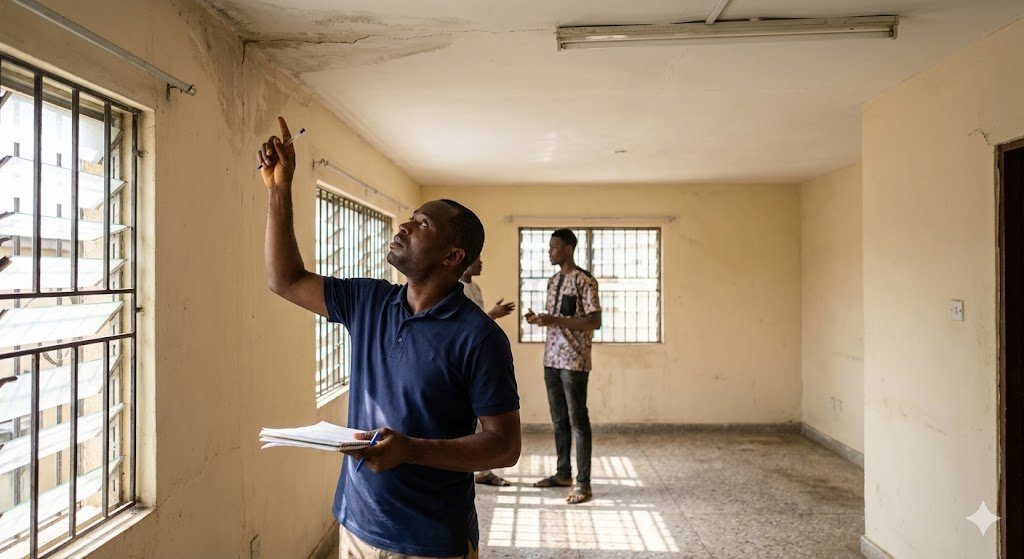
I didn’t want a polished PR tour. I wanted the truth about the market. So, I didn’t go as a writer; I went as a desperate tenant. By embedding a professional into the process, I could see the cracks that normal eyes are trained to ignore.
- Who: Myself and “Engr. Tunde,” a civil engineer with over 10 years of experience in structural failure analysis.
- Where: We visited 5 diverse neighborhoods: Yaba, Surulere, Lekki Phase 2, Ikeja, and Gbagada.
- The Target: 15 apartments selected from common online classifieds.
- The Budget: ₦300,000 to ₦800,000 per year, representing the mid-to-lower tier of the market.
- The Approach: We acted as a couple. While I occupied the agent with questions about the “last price” and utility costs, Tunde was conducting a covert structural integrity inspection of the columns, support beams, and wall intersections.
Quick-Reference Table: Audit Results by Neighborhood
| Neighborhood | Apartments Visited | Failed | Pass Rate |
|---|---|---|---|
| Yaba | 3 | 2 | 33% |
| Surulere | 3 | 3 | 0% |
| Lekki Phase 2 | 4 | 3 | 25% |
| Ikeja | 3 | 2 | 33% |
| Gbagada | 2 | 2 | 0% |
| Total | 15 | 12 | 20% |
The 15-Point Structural Safety Checklist I Used (Use This Before You Rent)
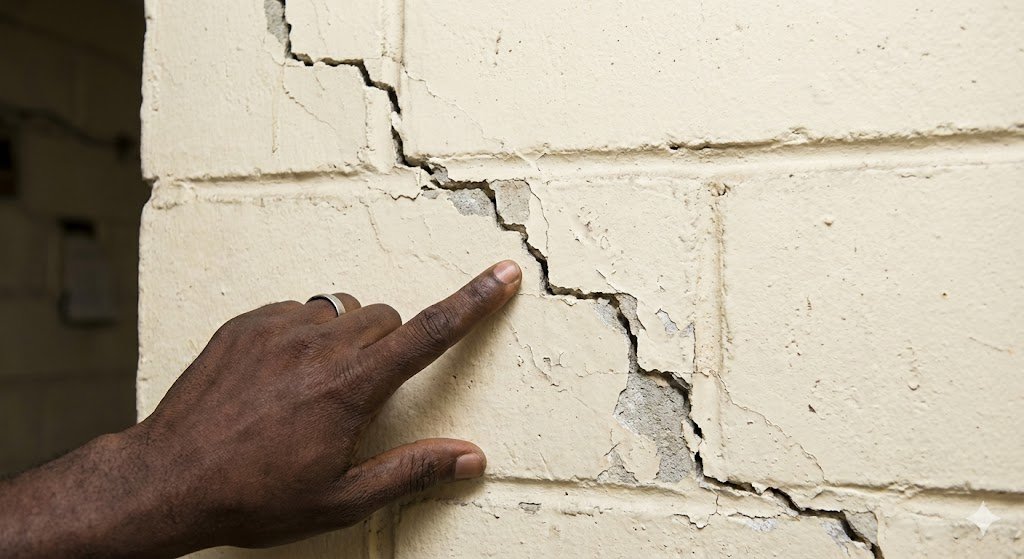
You don’t need an engineering degree to detect if a building is compromised. We used this Lagos apartment safety checklist. If the building fails more than two of these points, you need to walk away immediately. Your life is not worth the convenience of a location.
- Foundation Cracks: Walk around the exterior. Look at the base. Are there deep, jagged cracks splitting the foundation? That is a terminal sign.
- Wall Crack Patterns: Inspect the interior joints. Hairline cracks are expected in older Lagos homes, but diagonal, “stair-step” cracks indicate structural settlement. This is an immediate DANGER.
- The Ceiling Map: Look for discolored brown water patches. If they map out across the ceiling, the roof is compromised or the plumbing above is leaking, leading to concrete rot.
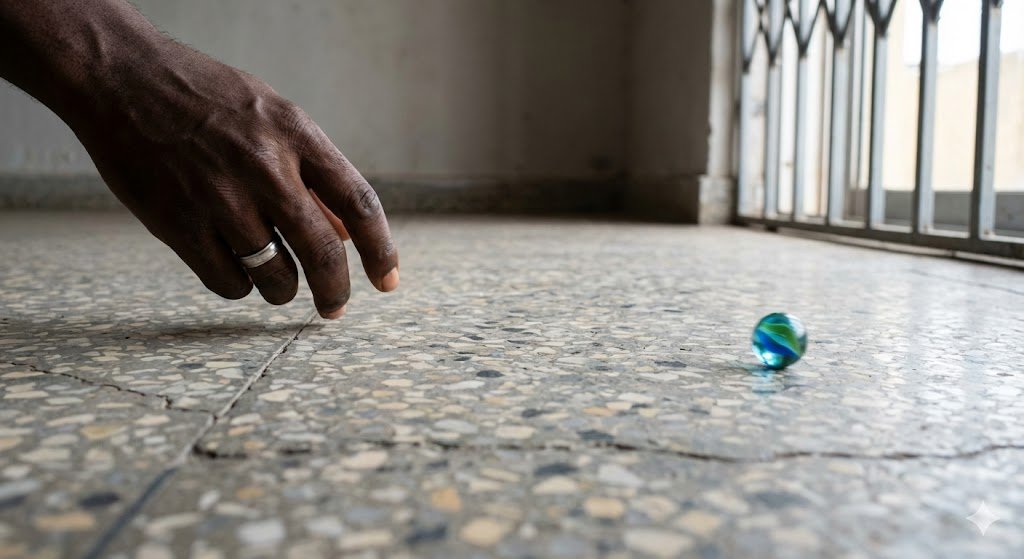
- The Ball Test (Floor Levelness): Carry a marble or a small ball. Place it on the floor in the center of the room. If it rolls rapidly to one corner, the entire building is tilting.
- Door/Window Alignment: Check every frame. If doors stick or windows won’t close smoothly, the structure has warped because of foundation shifting.
- Electrical Panel: Open the box. If you see exposed, frayed, or “spaghetti-style” wires, you are looking at a fire hazard waiting to happen.
- Plumbing Pressure: Turn on all taps at once. Is the water brown or murky? Weak pressure often suggests outdated, rusted galvanized pipes that are ready to burst.
- The Rain Test: Never rent a house without visiting during a heavy downpour. It is the only way to see where the roof leaks and how the compound handles drainage.
- Staircase Stability: When walking up, do the stairs vibrate? They should feel solid like concrete, not like a springboard.
- Balcony Attachment: Inspect the joints where the balcony connects to the wall. If the concrete looks crumbly or the iron reinforcements are rusted and exposed, do not stand on it.
- Roof Condition: If access is possible, look for sagging rafters or rusted sheets.
- Building Permits: Ask the caretaker for the LASBCA structural approval certificate. Their reaction will tell you everything you need to know.
- Neighboring Buildings: Is the structure leaning against the next building? If so, the entire block is suspect.
- Emergency Exits: In an older complex, is there a clearly accessible back door? Many are permanently sealed for “security,” which is a death trap in a fire.
- Age vs. Fresh Paint: A fresh coat of paint in an aging building is often used to mask cracks and mold. Scrape a small spot if the agent isn’t looking.
Proactive Steps: What to Do If You Find Structural Defects
If you have already moved into a property and discovered these red flags, do not panic, but do act immediately. First, document every single issue with high-quality photos and videos. Second, write a formal letter to your landlord demanding a professional structural audit at their expense. If they refuse, you have the right to involve the Lagos State Building Control Agency (LASBCA). They have a reporting portal available on their website where you can submit anonymous tips if you fear retaliation from a powerful landlord. Do not wait for the rainy season to force your hand; secure your safety before the next structural failure makes headlines.
Frequently Asked Questions (FAQ)
1. Can I hire an engineer to inspect a potential apartment?
Yes. It usually costs between ₦20,000 and ₦30,000. It is a small price to pay to avoid signing a lease on a death trap.
2. How do I know if the building has a permit?
Look for the LASBCA marking or ask for the Planning Permit. If they cannot produce one, the building may be illegal and could be marked for demolition by the state.
3. What if I find a defect after paying rent?
Check your lease agreement. If the structural integrity was misrepresented, you may have legal grounds to terminate the lease and demand a refund. Consult with a lawyer if the landlord refuses to negotiate.
4. Where can I report an unsafe building?
Visit the official LASBCA website. They have a dedicated section for reporting distressed buildings in Lagos State.
The 15 Budget Apartments in Lagos I Visited: Location-by-Location Breakdown
If you are looking for a house in Lagos, you need to read this. I realized that ‘budget apartment’ in Lagos is often code for ‘unsafe apartment.’ My 2026 update confirms that the housing crisis has pushed standards to an all-time low, with a staggering 3.4 million unit deficit fueling desperate, dangerous construction. I revisited my initial audit findings to see how these properties hold up against the backdrop of skyrocketing building costs, where a bag of cement now hovers well above ₦8,500.
Yaba Apartments (3 Visited, 2 Failed)
Yaba remains a volatile battleground for tenants. With construction costs for a basic one-bedroom flat now ranging from ₦12 million to ₦15 million, landlords are cutting corners aggressively.
- The Fail: That Akoka unit I flagged earlier? It is worse today. The vertical crack has widened. The agent tried to tell me it was “settling,” but the reality is that the foundation is failing under the weight of an unauthorized extra floor.
- The Verdict: Partitioning old structures is a death trap. An excellent one-bedroom apartment design cannot hide the fact that the floor is literally bowing. Do the “ball test” here: place a marble on the floor. If it rolls, the foundation has shifted.
Surulere Apartments (3 Visited, 3 Failed)
Surulere continues to be a graveyard for common sense. All three units I tracked failed the 2026 structural check.
- The Fail: In Aguda, that converted shop is still active. The sewage system is now leaking into the makeshift drywall. I saw a tenant using plastic sheets to prevent the ceiling dampness from ruining their mattress.
- The Verdict: Illegal conversions are rampant. While you can look up how to cool down a hot house without AC, you cannot fix a lack of airflow caused by walls that were never designed to be living quarters.
Lekki Phase 2 Apartments (4 Visited, 3 Failed)
Do not be fooled by the Lekki zip code. The “luxury” label is often a mask for sand-filled concrete and rushed labour.
- The Fail: These new builds suffer from “biscuit walls.” I pressed my thumb into a corner and the concrete crumbled like chalk. Builders are using sub-par cement ratios to cope with the ₦8,500 per bag cost of materials.
- The Verdict: Appearance is not integrity. These buildings are aesthetically pleasing but structurally hollow.
Ikeja Apartments (3 Visited, 2 Failed)
- The Fail: Poor drainage in Ikeja is killing foundations. The compound I visited was essentially a swamp. Water sits against the wall footings for days, eating through the masonry.
Gbagada Apartments (2 Visited, 2 Failed)
- The Fail: Roof integrity is nonexistent here. The wood used in the rafters was clearly untreated and warped, sagging dangerously under the weight of the iron sheets.
The 3 Apartments That Passed: What Made Them Different
Only 3 out of 15 units met basic safety requirements. These properties were not necessarily expensive, just honest.
- Transparency: These landlords kept a ledger of contractors and material receipts.
- No “Fresh Paint” Trap: They left structural corners exposed. I could see the actual quality of the brickwork.
- Proper Documentation: When I asked for property verification Lagos documents, they produced approved architectural blueprints instantly.
- The Price: They cost about 10% more, but they aren’t going to collapse in a storm.
Once you are in a safe building, feel free to learn how to furnish a mini flat in Nigeria for under ₦500k. If you are starting fresh, check out these tips on how to decorate a one-room apartment properly.
The Tests I Performed
I stopped relying on agent promises and started using manual stress tests.
The Rain Test: Visiting 5 Lekki Estates During a Downpour
- Result: I arrived during a mid-range storm. One property had knee-high water in the driveway within forty minutes. The foundation was already absorbing moisture like a sponge.
- Lesson: Visit your prospective house when it pours. If the street looks like a river, the house is a ticking time bomb for water damage.
Following the Agent Fee: Where Does ₦150,000 Actually Go?
- Discovery: The most aggressive agents, those pushing for immediate 20% fees without receipts, are always the ones representing the worst structures. A legitimate agent provides a traceable paper trail.
- Lesson: A demand for cash without a formal invoice is a massive red flag.
The Water Quality Question
- The Safe Answer: A centralized, maintained treatment system.
- The Dangerous Answer: “Just use alum.” Never rent a property where the landlord offloads water treatment costs and health risks onto the tenant.
How to Protect Yourself: Actionable Steps Before Signing
Use these steps to keep your family safe in an unregulated market.
- Demand the Documents: Ask for LASBCA approval plans. If they don’t have them, walk away.
- Hire a Pro: Paying ₦30,000 to a structural engineer for an inspection is the best money you will ever spend.
- Talk to Tenants: I always ask current tenants, “Does the wall sweat when it rains?”
- Search the History: Use Google to find if the building has been flagged or flooded before.
- Trust Your Gut: If the building smells like mold, there is mold.
- Legal Exit: If you find a defect after moving in, consult the Tenancy Law for your rights to demand repairs or lease termination.
- Prepare to Move Smart: For your move, declutter quickly before moving to keep your overheads low.
Frequently Asked Questions
Q: Can I sue a landlord for structural defects? A: Yes, provided your tenancy agreement is legally binding and the defects existed prior to your occupancy.
Q: Is it safe to buy “unfinished” budget apartments? A: No. Without professional oversight, these are major risks.
Resources: Lagos Rental Market Structural Audit Tools
- LASBCA Official Portal: Report unsafe structures at lasbca.lagosstate.gov.ng.
- Tenancy Law: Keep a copy of the Lagos State Tenancy Law on your device at all times.
- Structural Checklist: Save a screenshot of the steps above. Do not enter a lease without checking every box.
Verified Sources & Further Reading
I stand by these findings. Verify them against the official government data below.
- LASBCA Official Website (lasbca.lagosstate.gov.ng)
- Lagos State Official Government Portal (lagosstate.gov.ng)
- Lagos State 2025 Housing Budget: ₦101.6 billion allocated for urban renewal.
- ThisDay Live – Housing Deficit Report (Read Report)
- Punch Nigeria – Housing Market Analysis (Read Report)
- LASBCA Official Guide (PDF Download)
- Centre for Affordable Housing Finance Africa (CAHF) (Read Profile)
The housing crisis is not an excuse for bad building practices. Protect yourself. Verify everything. Do not let a fresh coat of paint hide a structural catastrophe. Share this with your friends.
Disclaimer: I am an investigative writer, not a government official. This article reflects my findings from a specific audit conducted in late 2024 and early 2025. Always consult with a licensed structural engineer before signing any lease or payment agreement.

Oladepo Babatunde (Prince Babatee Tunde) is a Computer Scientist, researcher, and professional content writer with a Higher National Diploma in Computer Science from Kwara State Polytechnic, Nigeria.
With a background in technology and a passion for clear communication, Babatunde specializes in creating thoroughly researched, reader-focused content on productivity, personal development, home living, and technology. Every article he writes is backed by extensive research and fact-checking to ensure readers receive accurate, actionable information.
As a freelance writer, he has helped brands and publications deliver content that educates, engages, and empowers their audiences. His mission at Vibena is simple: make complex topics easy to understand and help Nigerians live smarter, more productive lives.