itel solar generator prices in Nigeria currently start at ₦80,898.88 for the 320Wh Power Go IESS-320T on CDcare’s listing. The same model was ₦93,160–₦103,160 on itelSolar. At the larger end, the 2,000Wh Power Tank 1000 IESS-1K20N was listed at ₦605,617.98 on CDcare and ₦629,200 on itelSolar, although itelSolar marked its standalone unit out of stock when checked. Prices differ by seller and bundle.
This guide compares the itel-branded portable power stations and Power Tank models I could verify in Nigerian retailer catalogues. I checked the listings on 17 November 2026. I have not independently tested these units, so runtime examples below are calculations rather than hands-on results. Check the exact model code, stock, included accessories and warranty in writing before paying.
itel solar generator prices in Nigeria (November 2026)
| Model | Advertised battery | Output | itelSolar price checked |
|---|---|---|---|
| Power Go IESS-320T | 320Wh | 130W max | ₦93,160–₦103,160 |
| Power Go Pro IESS-320ACT | 320Wh | 200W AC | ₦145,200 |
| Power Tank 500W / 1kWh (station only) | 1,000Wh / 1kWh | 500W AC | ₦308,000 |
| Power Tank 500W / 1kWh + 410W panel | 1,000Wh / 1kWh | 500W AC | ₦460,000 |
| Power Tank 1000 IESS-1K20N | 2,000Wh / 2kWh | 1,000W AC | ₦629,200 (out of stock on itelSolar) |
| Power Tank 1000 + 2 × 620W panels | 2,000Wh / 2kWh | 1,000W AC | ₦979,200 (listed out of stock) |
Prices above are retailer catalogue prices checked on 17 November 2026, not a guaranteed manufacturer price list. The 1kWh Power Tank listing is especially important to verify: itelSolar’s standalone product URL and description identify IESS-05K10P, but its page heading and SKU metadata show IESS-05K10N. Its separate 410W-panel bundle is labelled IESS-05K10N. Because the seller’s own identifiers conflict, confirm the model code on the actual unit, carton and manual before paying. Panel bundles are not interchangeable: one listing includes a 410W panel, while another includes two 620W panels.
For a second price reference, CDcare listed the IESS-320T at ₦80,898.88, the IESS-320ACT at ₦140,449.44, the 1kWh Power Tank without a panel at ₦297,752.81, the same 1kWh station with a 620W Jinko panel at ₦435,393.26, and the 2kWh Power Tank 1000 at ₦605,617.98. CDcare also listed a 2kWh Power Tank 1000 package with two 625W panels at ₦895,505.62. These are separate retailer offers; confirm the exact product and current availability on the seller’s page.
The price gap also shows why you should compare like-for-like bundles. On itelSolar, adding its listed 410W panel to the 1kWh station increases the displayed price by ₦152,000. On CDcare, the 620W Jinko panel bundle is ₦137,640.45 more than its standalone station listing. For the 2kWh Power Tank, CDcare’s two-panel bundle is ₦289,887.64 above the standalone price. These differences are the arithmetic gap between those retailer listings, not a universal panel price; the panels, seller terms and package contents differ.
Scope: this article focuses on portable or compact all-in-one Power Go and Power Tank products. itelSolar also lists larger fixed or installed solar systems, such as 3.6kW and 6kW setups. Those require a different comparison of inverter capacity, battery storage, panels, installation and wiring, so they are not mixed into this portable-station price table.
Quick buying guide: choose the 320Wh Power Go models for low-power personal devices, not high-wattage appliances. Consider the 1kWh Power Tank if 500W output is enough for your planned load. The 2kWh Power Tank 1000 offers more stored energy and a 1,000W output rating, but check stock and surge capacity first. None of these ratings alone guarantees that a fridge, freezer or pump will start successfully.
Which itel power station should you choose?
The right model depends on the appliances you want to run. Do not choose by the product name or battery size alone. The output rating tells you the maximum load the inverter can supply; the battery capacity tells you how much energy is stored.
1. itel Power Go IESS-320T — 320Wh, 130W max
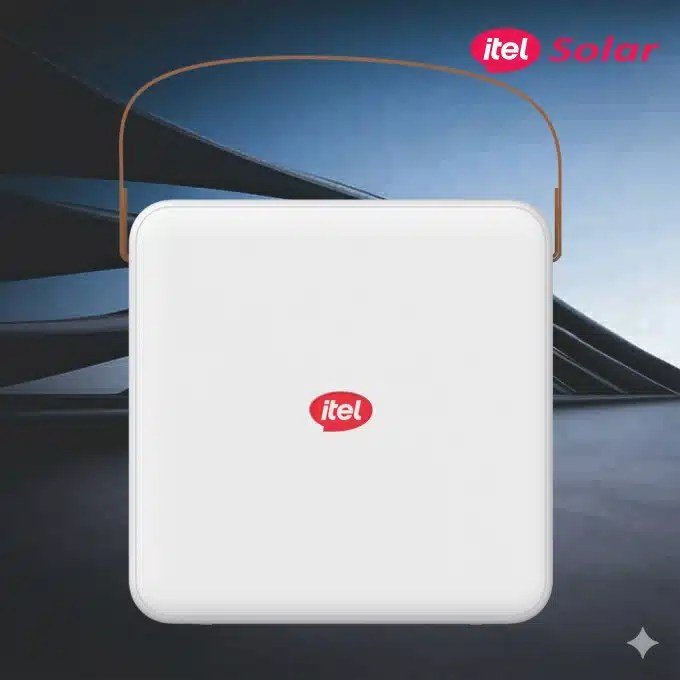
The Power Go IESS-320T is the small, personal-backup option in this group. The retailer listing gives it a 320Wh capacity and 130W maximum output. That output limit is important: this is for low-power electronics and compatible DC devices, not appliances that need several hundred watts.
At the listed price range of ₦93,160–₦103,160 on itelsolar.com, it may suit a router, phones, LED lights and selected low-power devices. The seller’s runtime examples should not be treated as guarantees; actual results depend on the device, output port, conversion losses and battery condition. Confirm whether the price variation reflects a different configuration, accessories or seller option before ordering.
2. itel Power Go Pro IESS-320ACT — 320Wh, 200W AC
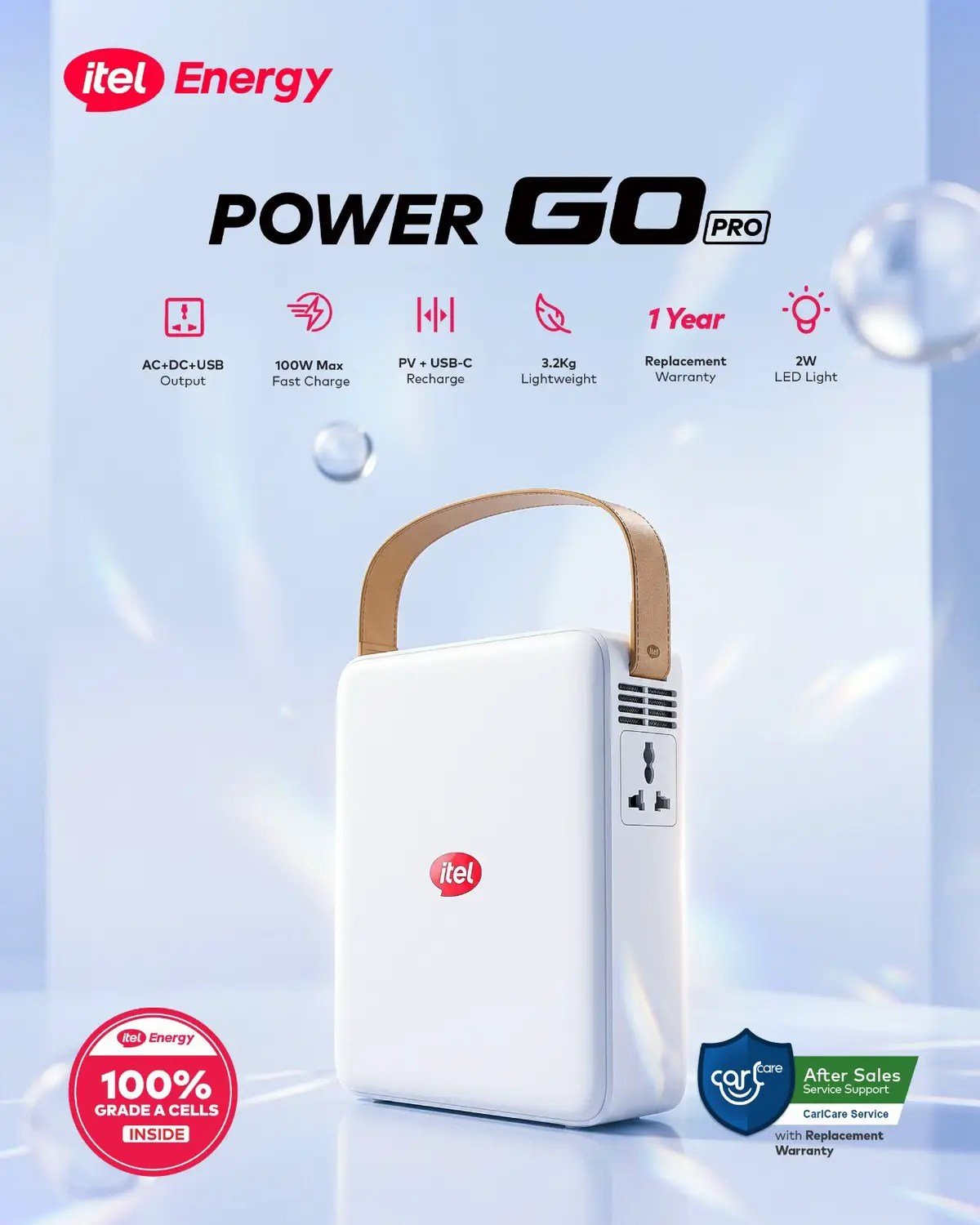
The Power Go Pro has the same advertised 320Wh energy capacity as the IESS-320T, but the product listing identifies a 200W AC output, LiFePO4 battery and 100W solar charging. It is listed at ₦145,200 on itelsolar.com and ₦140,449.44 on CDcare.
The higher AC output can make it more flexible for compatible small electronics, but it does not give it a larger battery. If both models store 320Wh, the Pro does not automatically provide longer runtime. Check the exact AC output limit, USB-C power delivery rating, solar input specification and included charging accessories in the manual before buying.
3. itel Power Tank 500W — 1kWh battery
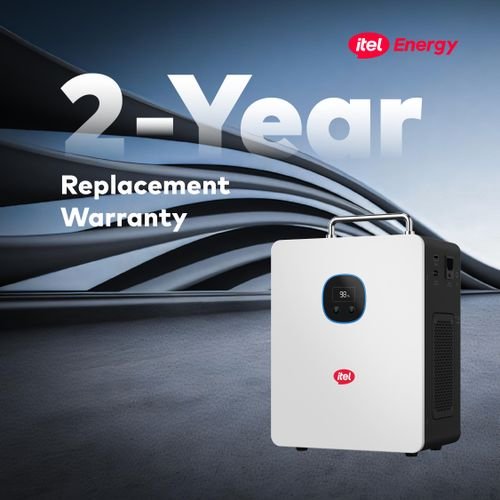
This is a different class of product from the pocket-sized Power Go units. The retailer describes this as a 500W solar generator with a 1kWh LiFePO4 battery. Its standalone listing was ₦308,000, while the separate package with an itel 410W solar panel was ₦460,000. The standalone product description also states a maximum 400W PV input and 60V maximum solar voltage. That makes the 410W panel bundle a detail worth checking carefully: ask itelSolar to confirm in writing that the supplied panel’s operating voltage and current are within the controller’s limits and explain how the 410W panel is configured with a 400W-rated input. Do not connect a panel based on its wattage alone. There is a model-code inconsistency on the retailer’s own pages: the standalone URL and product description refer to IESS-05K10P, but the page heading and SKU show IESS-05K10N. The bundle is also labelled IESS-05K10N. I would not rely on the code alone—ask the seller to confirm the exact revision printed on the unit and its manual.
CDcare listed the station alone at ₦297,752.81 and a package with one 620W Jinko panel at ₦435,393.26. These bundles have different panels, so compare the panel model, wattage, voltage, mounting hardware and cables—not just the total price. CDcare describes the standalone Power Tank as supporting 400W solar charging. The itelSolar 410W-panel bundle should therefore be confirmed against the unit’s stated 400W PV input and its voltage/current limits before purchase. The retailer product page says no installation is included for the 410W-panel bundle. Ask whether the panel is actually included in the final invoice and what else you need to buy.
A 500W output rating means you must keep the combined appliance load within the unit’s limit. It is not a promise that the station can run every fridge, freezer or pump. Confirm surge capacity and the appliance’s startup demand first.
4. itel Power Tank 1000 IESS-1K20N — 2kWh battery, 1,000W output
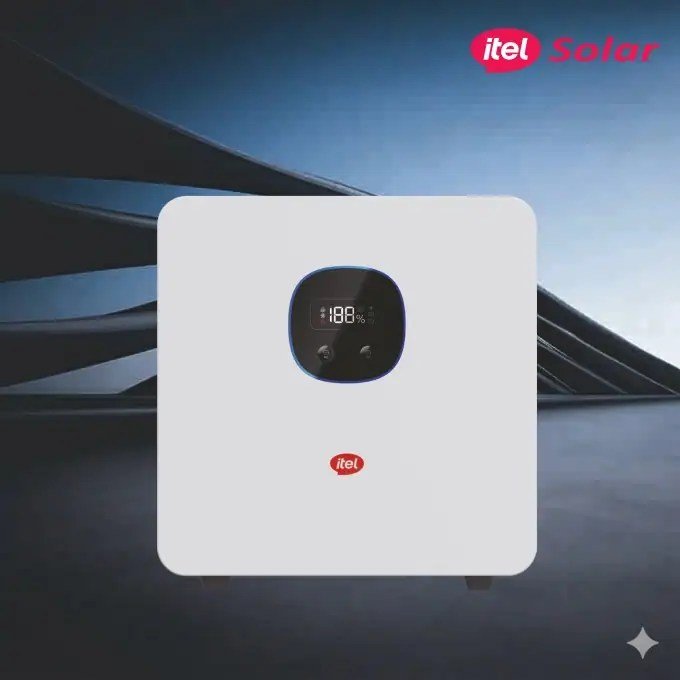
The Power Tank 1000 is listed with a 2,000Wh LiFePO4 battery, 1,000W pure-sine-wave AC output and up to 1,200W PV input. The itelsolar.com page showed ₦629,200 for the station alone but marked it out of stock; CDcare listed ₦605,617.98. Confirm availability with the seller before relying on either offer.
itelSolar also listed a bundle with two 620W panels for ₦979,200, but the page showed it as out of stock when checked. CDcare listed a separate two-panel package using two 625W JA Solar panels at ₦895,505.62. These are different bundle offers, so verify the exact panel brand and model, whether the array is approved for the controller, cable requirements and stock status.
The product page advertises a 1,200W MPPT solar input and dual PV/grid charging; its detailed specification lists an MPPT voltage range of 11–60V. Confirm the permitted PV voltage and current range from the model manual before connecting panels. A panel array’s combined wattage is not enough to establish electrical compatibility.
How long can an itel solar generator last?
Battery capacity is measured in watt-hours (Wh), while appliance demand is measured in watts (W). To give a rough planning example, assume 85% of the advertised battery energy is available to the load after conversion losses. This is an illustrative calculation, not a measured test of any itel model.
| Battery size | Approx. usable energy at 85% | At a steady 50W load | At a steady 100W load |
|---|---|---|---|
| 320Wh | 272Wh | About 5.4 hours | About 2.7 hours |
| 1,000Wh | 850Wh | About 17 hours | About 8.5 hours |
| 2,000Wh | 1,700Wh | About 34 hours | About 17 hours |
Actual runtime can be lower because of inverter losses, standby consumption, battery reserve settings, temperature, battery age and changing appliance loads. The 320T and 320ACT also have output limits of 130W and 200W respectively; do not use a runtime calculation to justify connecting a load above the unit’s rating.
Can an itel power station run a fridge, fan, TV or laptop?
It depends on the model and the appliance’s actual power demand. A laptop, router, LED lights and small DC devices are more realistic for the 320Wh Power Go products. The 500W Power Tank may handle a broader group of low-power devices, while the 1,000W Power Tank 1000 has a higher output limit and more stored energy.
But a refrigerator or freezer has a compressor that can draw a brief startup surge. Check both its normal running wattage and startup demand against the power station’s documented continuous and surge ratings. The publicly visible product listings do not provide every model’s surge rating and surge duration. Do not assume compatibility from the wattage printed in the product name.
For an appliance plan, write down the wattage on each device, add the loads you expect to use at the same time, and estimate the hours of backup you need. Then check both the power station’s output rating and battery capacity. If you need to run air conditioning, a kettle, pressing iron, water heater or large pump, these compact products may not be suitable.
Power Go vs Power Tank: what is the real difference?
| Feature | Power Go / Power Go Pro | Power Tank 500W / 1000 |
|---|---|---|
| Typical purpose | Personal electronics and small loads | More substantial backup for selected household loads |
| Advertised capacity in the models reviewed | 320Wh | 1,000Wh or 2,000Wh |
| Output in the models reviewed | 130W max or 200W AC | 500W or 1,000W AC |
| Solar charging | Power Go Pro listing says 100W solar charging | 500W model bundle includes a 410W panel; 1000 model listing says up to 1,200W PV input |
| Best buying check | Confirm port ratings and the exact output configuration | Confirm surge rating, PV voltage/current limits, panel bundle and warranty |
Do not compare the products by the number in their names alone. The 320Wh models are compact power stations; the Power Tank units have larger batteries and higher output ratings. They serve different needs and budgets.
What to check before buying an itel solar generator in Nigeria
- Exact model code: match the code on the invoice, unit label and manual. Listings use similar names for different configurations.
- Battery capacity: confirm Wh or kWh, not only mAh. For larger units, ask for the rated capacity and usable AC energy.
- Continuous and surge output: ask for both ratings and the surge duration, especially if you plan to use a fridge or pump.
- Solar input limits: confirm maximum PV watts, voltage range and current. Never connect panels based only on their wattage.
- Bundle contents: identify the exact panel model, cables, connectors, mounting equipment and whether installation is included.
- Warranty and service: request the written warranty duration, exclusions, repair location and process for battery or inverter faults.
- Stock and final price: confirm that the model is in stock and whether delivery, installation or accessories cost extra.
Is an itel solar generator worth buying?
The Power Go models are worth considering when your needs are limited to small electronics and you want a compact unit. The 1kWh Power Tank is a step up for a higher load budget, while the 2kWh Power Tank 1000 offers more stored energy and a higher output rating. The right choice depends on the devices you want to run and the number of hours you need backup—not simply which model has the highest wattage.
There are important details to confirm before making a final recommendation. Retailer listings differ in price, panel bundles and some model descriptions. The pages reviewed do not provide a complete, consistent technical datasheet for every unit, particularly surge ratings, full port specifications and warranty conditions. Ask the seller for the model-specific manual and written warranty, and compare the exact package you will receive.
If you are deciding between a portable power station and a fixed home inverter, read our guide to solar generator vs solar inverter vs complete solar system in Nigeria. If you need a larger home setup, see our solar inverter setup cost guide for a Nigerian two-bedroom flat. For inverter-only pricing, see solar inverter prices in Nigeria.
Frequently asked questions
How much is the itel Power Go 320Wh in Nigeria?
The IESS-320T was listed between ₦93,160 and ₦103,160 on itelsolar.com on 17 November 2026. CDcare listed it at ₦80,898.88. Confirm the exact variant, price and stock before ordering.
How much is the itel Power Tank 1kWh?
The 500W 1kWh Power Tank was listed at ₦308,000 without a panel and ₦460,000 with a 410W panel on itelsolar.com. Its standalone listing has conflicting IESS-05K10P and IESS-05K10N identifiers, so confirm the exact model code with the seller. CDcare listed the station alone at ₦297,752.81 and a bundle with a 620W panel at ₦435,393.26.
How much is the itel Power Tank 1000 2kWh?
The IESS-1K20N was listed at ₦629,200 on itelsolar.com, where the standalone unit was marked out of stock, and ₦605,617.98 on CDcare. A two-panel bundle was also listed separately and marked out of stock on itelsolar.com when checked.
Can the itel 320Wh Power Go run a refrigerator?
Do not assume so. The IESS-320T is listed with 130W maximum output, and the IESS-320ACT with 200W AC output. Many refrigerators have startup surges that exceed these limits. Check the refrigerator’s rating and the exact station’s manual.
Does the itel Power Tank come with solar panels?
Some listings are for the station alone and others are bundles with panels. The 1kWh model appeared with a 410W panel on one retailer page and a 620W Jinko panel on CDcare. Confirm the panel model and bundle contents on your invoice.
Is the itel Power Tank 1000 a 1,000Wh battery?
No. The IESS-1K20N product listing describes a 2,000Wh (2kWh) LiFePO4 battery and 1,000W AC output. The 1,000W figure is the output rating; it is not the battery capacity.
Sources and price checks
- itelSolar product catalogue — solar generators, checked 17 November 2026.
- itel Power Go IESS-320T listing.
- itel Power Go Pro IESS-320ACT listing.
- itelSolar 500W / 1kWh Power Tank standalone listing (the page contains conflicting model-code labels).
- itelSolar 500W / 1kWh Power Tank bundle with 410W panel.
- itel Power Tank 1000 / 2kWh listing.
- CDcare — itel Power Tank and Power Go listings, checked 17 November 2026.

Oladepo Babatunde (Prince Babatee Tunde) is a Computer Scientist, researcher, and professional content writer with a Higher National Diploma in Computer Science from Kwara State Polytechnic, Nigeria.
With a background in technology and a passion for clear communication, Babatunde specializes in creating thoroughly researched, reader-focused content on productivity, personal development, home living, and technology. Every article he writes is backed by extensive research and fact-checking to ensure readers receive accurate, actionable information.
As a freelance writer, he has helped brands and publications deliver content that educates, engages, and empowers their audiences. His mission at 9jaboizgist is simple: make complex topics easy to understand and help Nigerians live smarter, more productive lives.