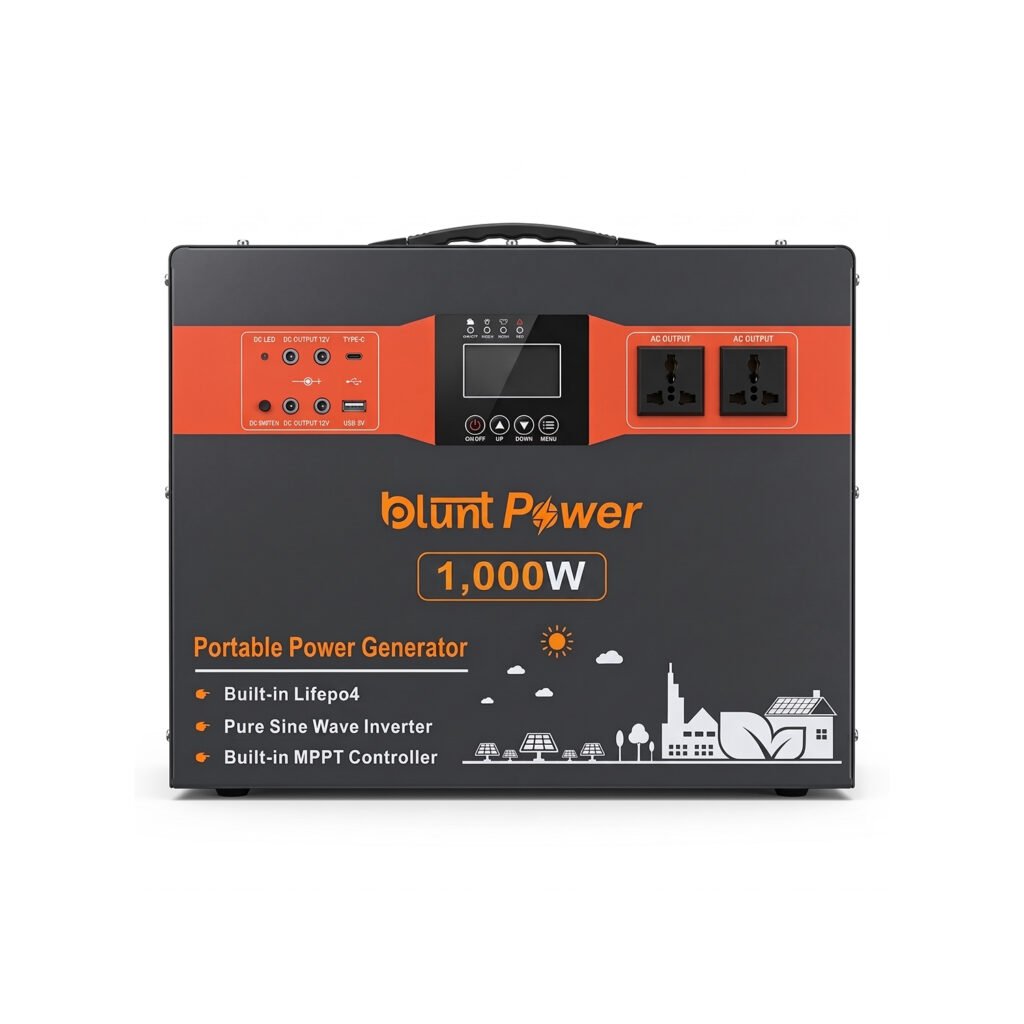
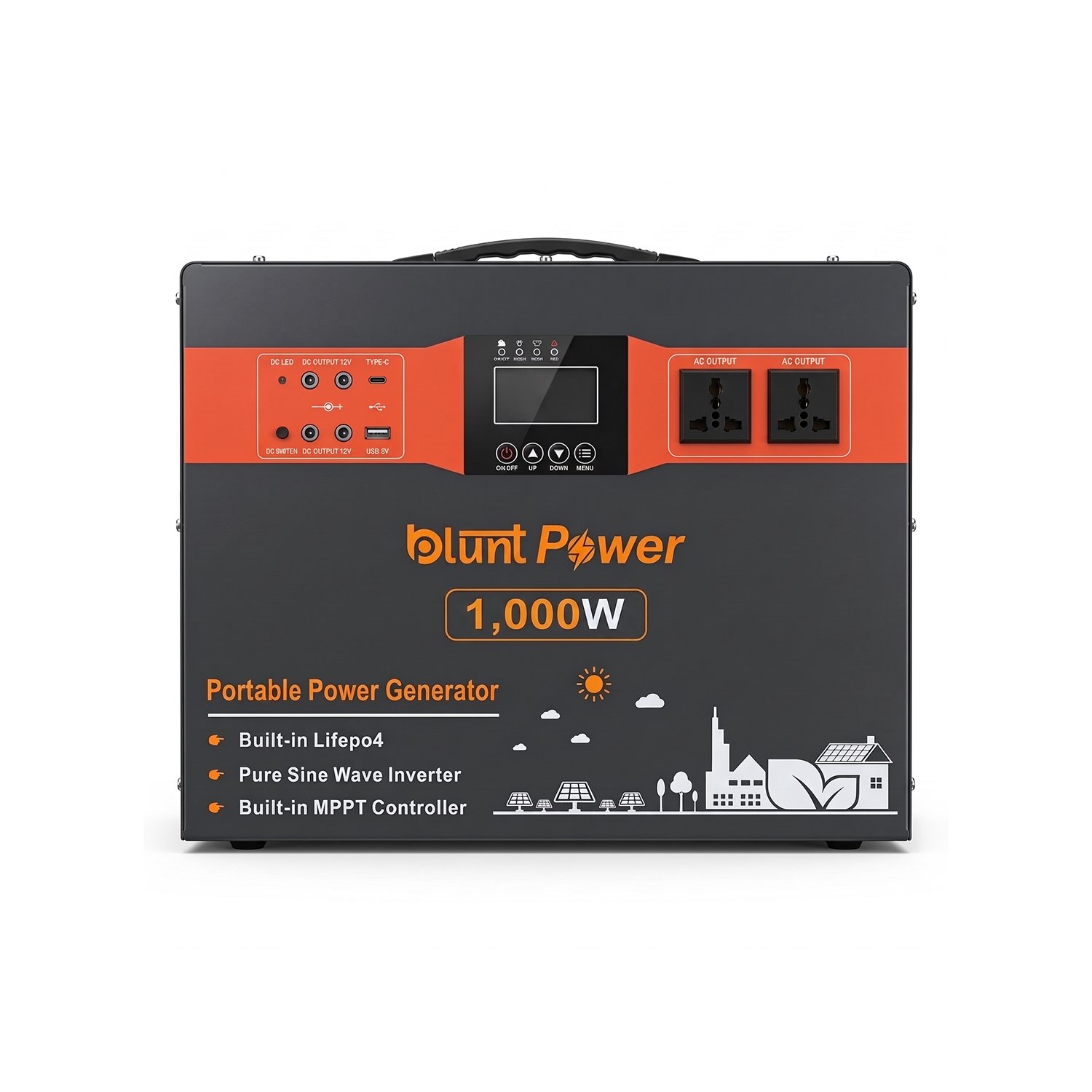
Blunt power station prices in Nigeria currently range from ₦1,180,000 to ₦6,420,000 on the official Blunt Gadgets catalogue. The five listed models are labelled 1,000W, 1,500W, 3,000W, 5,000W and 10,000W. These figures describe the advertised power-output class; they do not tell you how much energy the battery stores or how long your appliances will run.
I checked the official catalogue on 17 November 2026. This guide compares all five displayed prices and stock labels, explains the information the seller has not published, and shows what to confirm before paying. I have not independently tested these products. Because the catalogue does not provide model-specific battery capacity and several important electrical ratings, I will not invent runtime figures or claim that a particular model can power a fridge.
Blunt power station prices in Nigeria (November 2026)
| Blunt model listed | Advertised output label | Battery capacity published? | Official catalogue price | Availability shown |
|---|---|---|---|---|
| Blunt 1000W Solar Generator | 1,000W | Not stated | ₦1,180,000 | New Arrival |
| Blunt 1,500W Solar Generator | 1,500W | Not stated | ₦1,260,000 | New Arrival |
| Blunt 3000W Power Solar Generator | 3,000W | Not stated | ₦1,880,000 | Sold Out |
| Blunt 5000W Power Generator | 5,000W | Not stated | ₦3,300,000 | Low Stocks |
| Blunt 10000W Solar Generator | 10,000W | Not stated | ₦6,420,000 | Low Stocks |
Source: Blunt Gadgets official product catalogue, checked 17 November 2026. Prices and stock labels can change. Confirm the exact model, final price, delivery cost and availability directly with the seller before making payment.
How much more does each Blunt model cost?
The price gap between models is useful when planning a budget, but it does not show whether the more expensive unit stores more energy or offers better value. Here is the difference between each consecutive listing:
| Move up from | To model | Additional catalogue price |
|---|---|---|
| 1,000W | 1,500W | ₦80,000 |
| 1,500W | 3,000W | ₦620,000 |
| 3,000W | 5,000W | ₦1,420,000 |
| 5,000W | 10,000W | ₦3,120,000 |
Do not interpret the extra cost as a guaranteed increase in battery capacity. Before choosing the next model up, ask the seller for the battery Wh or kWh, continuous output, surge output and solar charging limits. Those details are needed to understand what the extra money buys.
What do the 1,000W, 1,500W, 3,000W, 5,000W and 10,000W labels mean?
Watts (W) measure power: how much electrical load a power station can supply at a given moment. Watt-hours (Wh) measure stored energy: how much electricity its battery can deliver over time. One kilowatt-hour (kWh) equals 1,000Wh.
For example, two power stations could both have a 1,000W output rating, but one might have a 500Wh battery while the other has a 2,000Wh battery. Their maximum output may be similar, but the second stores four times as much energy. Actual usable AC energy is lower than the headline battery capacity because the inverter and other components use some energy.
What the public Blunt catalogue does not currently show: battery capacity in Wh/kWh, confirmed continuous AC output, surge rating and duration, battery chemistry, solar input voltage/current limits, maximum solar wattage, AC charging rate, full charge time or warranty terms for each model. It shows model names, wattage labels, prices and stock labels. This article therefore does not assign unverified specifications to any model.
Blunt 1,000W Solar Generator — ₦1,180,000
This is the least expensive power-station model in the current catalogue. It may be the first listing to investigate if you mainly need backup for lower-power devices, but the 1,000W label alone is not enough to confirm which devices it can run. Ask whether 1,000W is the continuous rating or a peak figure, and request the battery capacity before deciding whether the price makes sense.
For a useful quote, ask the seller to confirm whether the exact unit can run your laptop, television, router, lighting or fan together, and for how long under a stated load. Do not accept a runtime promise without the battery capacity and the assumptions behind the estimate.
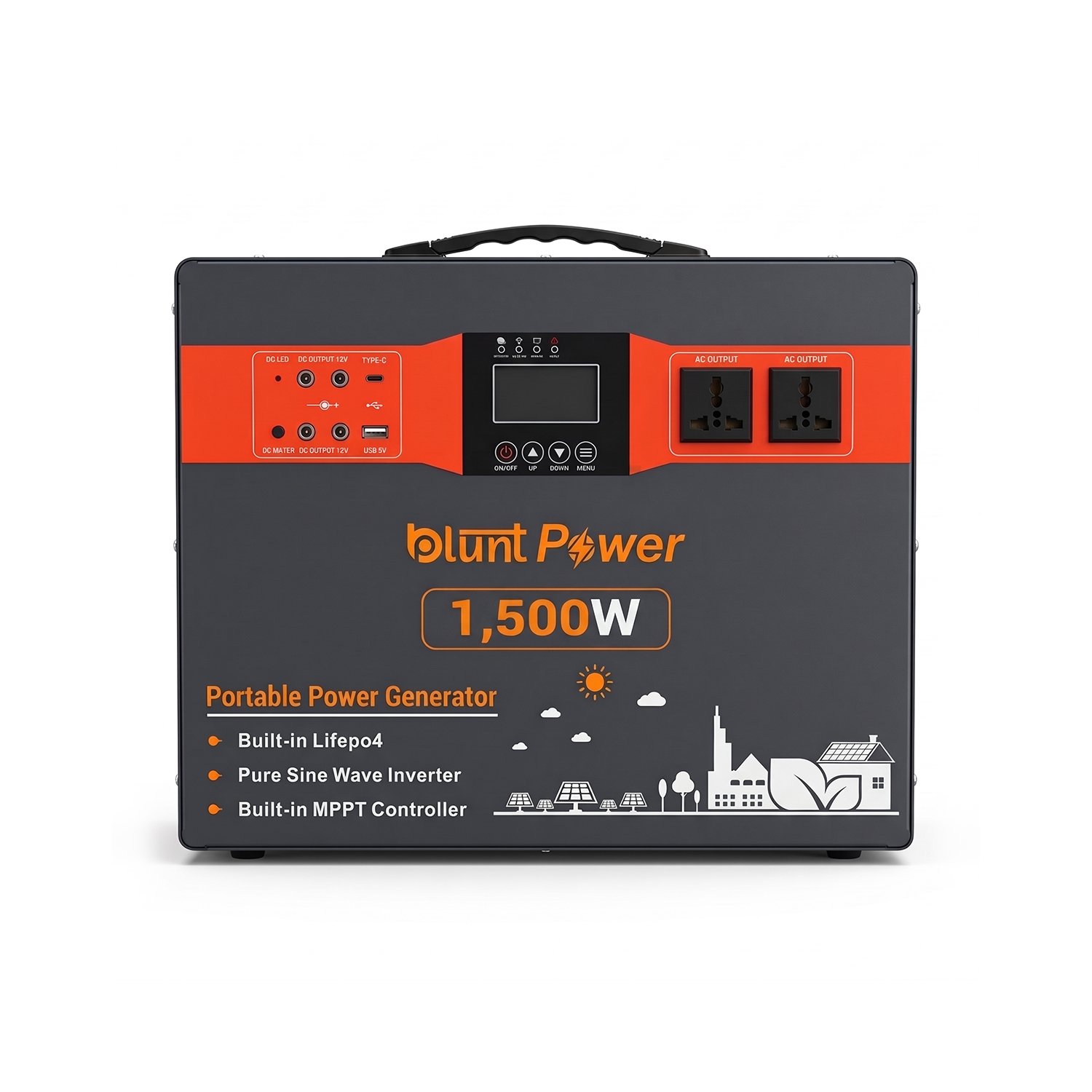
Blunt 1,500W Solar Generator — ₦1,260,000
The catalogue price is ₦80,000 higher than the 1,000W model. That difference may be worth considering if the higher-output model has a higher continuous rating and adequate surge capacity for your appliances. However, the public listing does not establish whether its battery is larger, whether it charges faster or whether it accepts more solar power.
Before paying the extra ₦80,000, ask Blunt to provide both models’ datasheets side by side. If the battery capacities are the same, the higher output rating may allow a larger load but will not automatically provide longer backup time.
Blunt 3,000W Power Solar Generator — ₦1,880,000
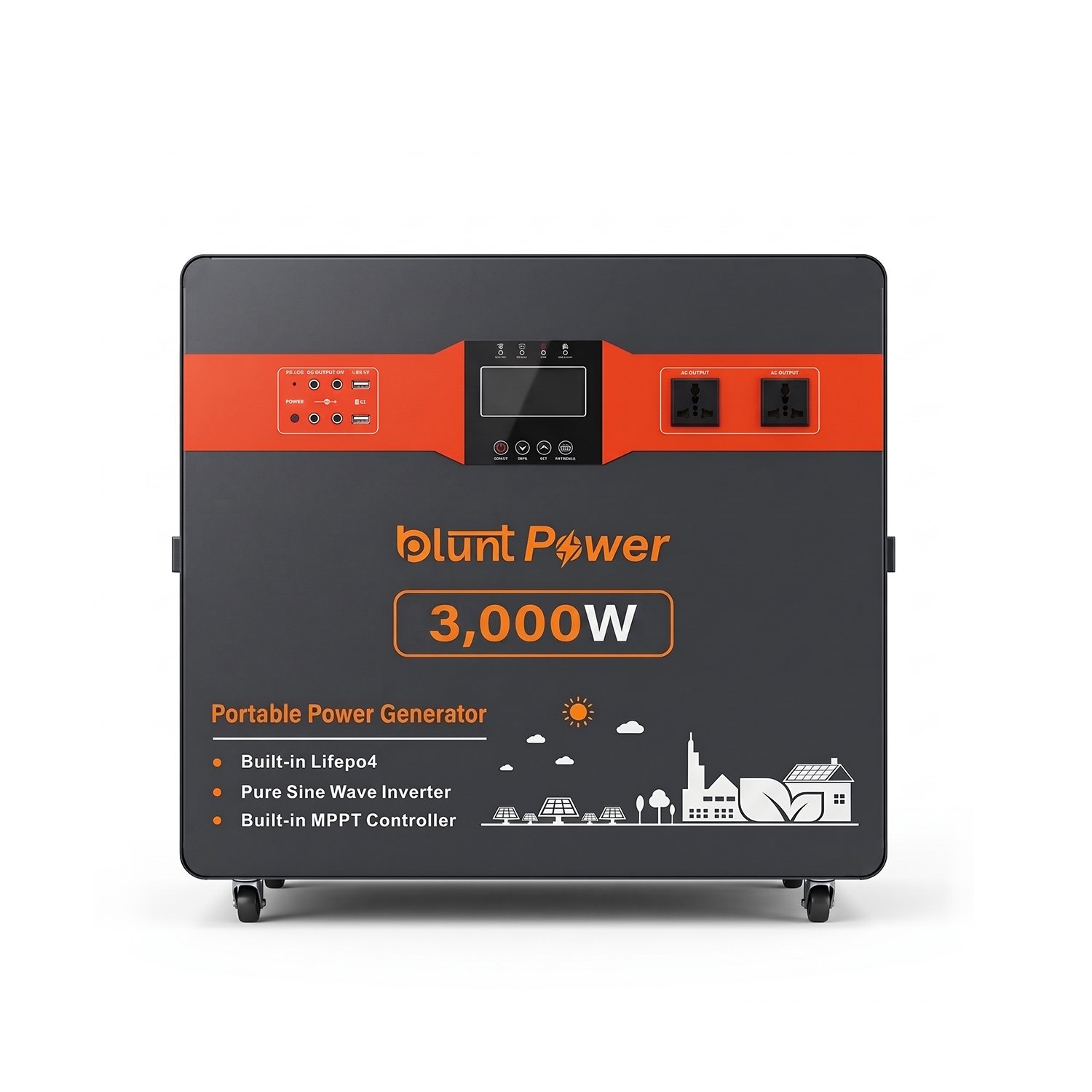
The official catalogue displayed this model as sold out when checked on 17 November 2026. A third-party Jiji seller advertised a Blunt 3,000W unit with a claimed 3.5kWh battery for ₦1,350,000. That is a seller’s claim, not a verified manufacturer specification, and I have not confirmed that the marketplace unit is the same product revision or an authorised sale.
If you find this model elsewhere, inspect the serial number and product label, request the manufacturer’s datasheet, confirm the seller’s relationship with Blunt, and obtain a written warranty and return policy. Do not treat the Jiji capacity or price as the official specification or current official price.
Blunt 5,000W Power Generator — ₦3,300,000
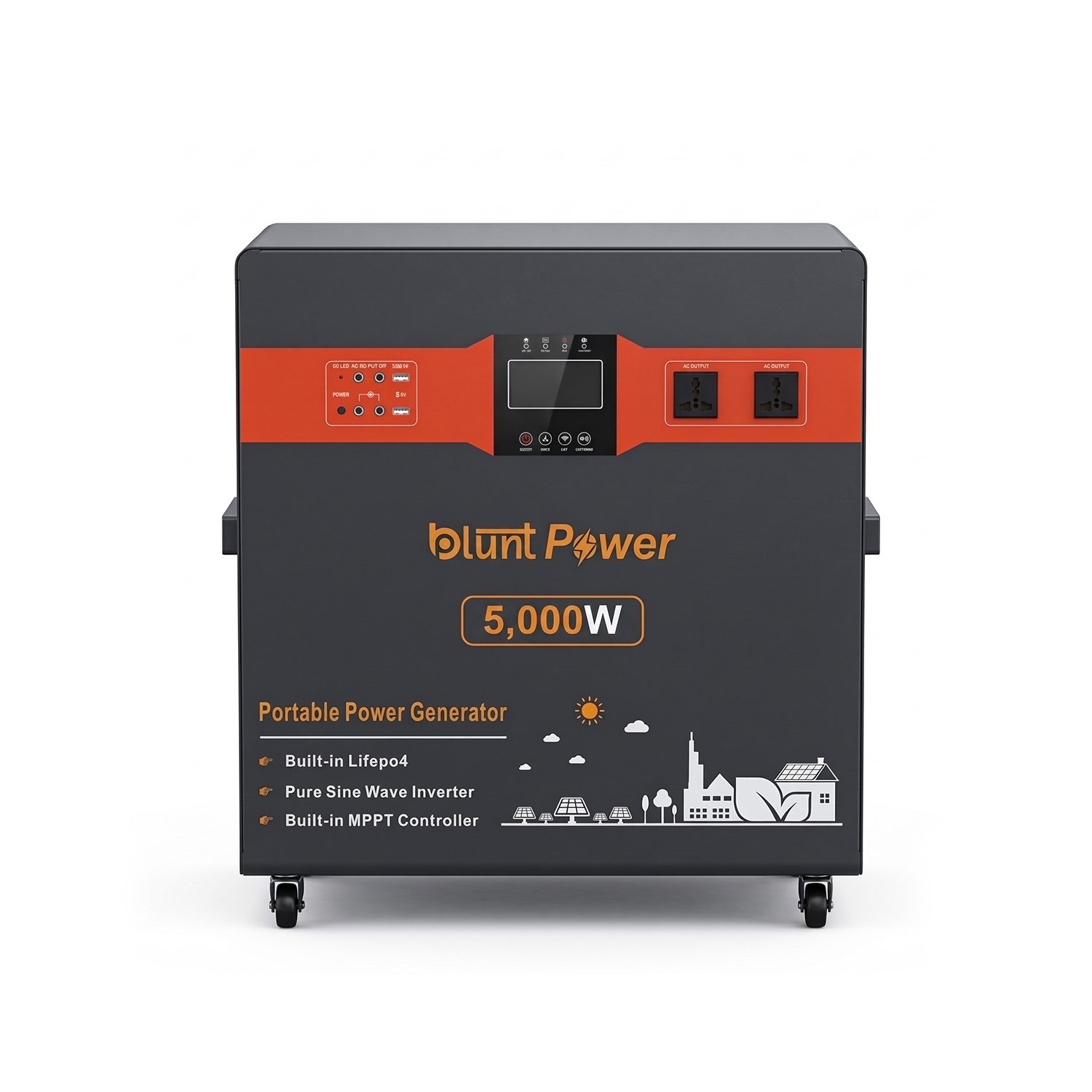
This is a substantially more expensive option than the 3,000W listing. The catalogue showed low stock. A 5,000W name in the product title does not prove that the unit can continuously supply 5,000W, nor does it tell you whether its battery can sustain a large household load through a long outage.
Before considering it for a home, ask for the continuous and surge ratings, surge duration, battery capacity, maximum solar input, AC charging time, weight and installation requirements. If you intend to use a refrigerator, freezer, water pump or air conditioner, have the seller confirm the appliance’s startup demand as well as its normal running wattage.
Blunt 10,000W Solar Generator — ₦6,420,000
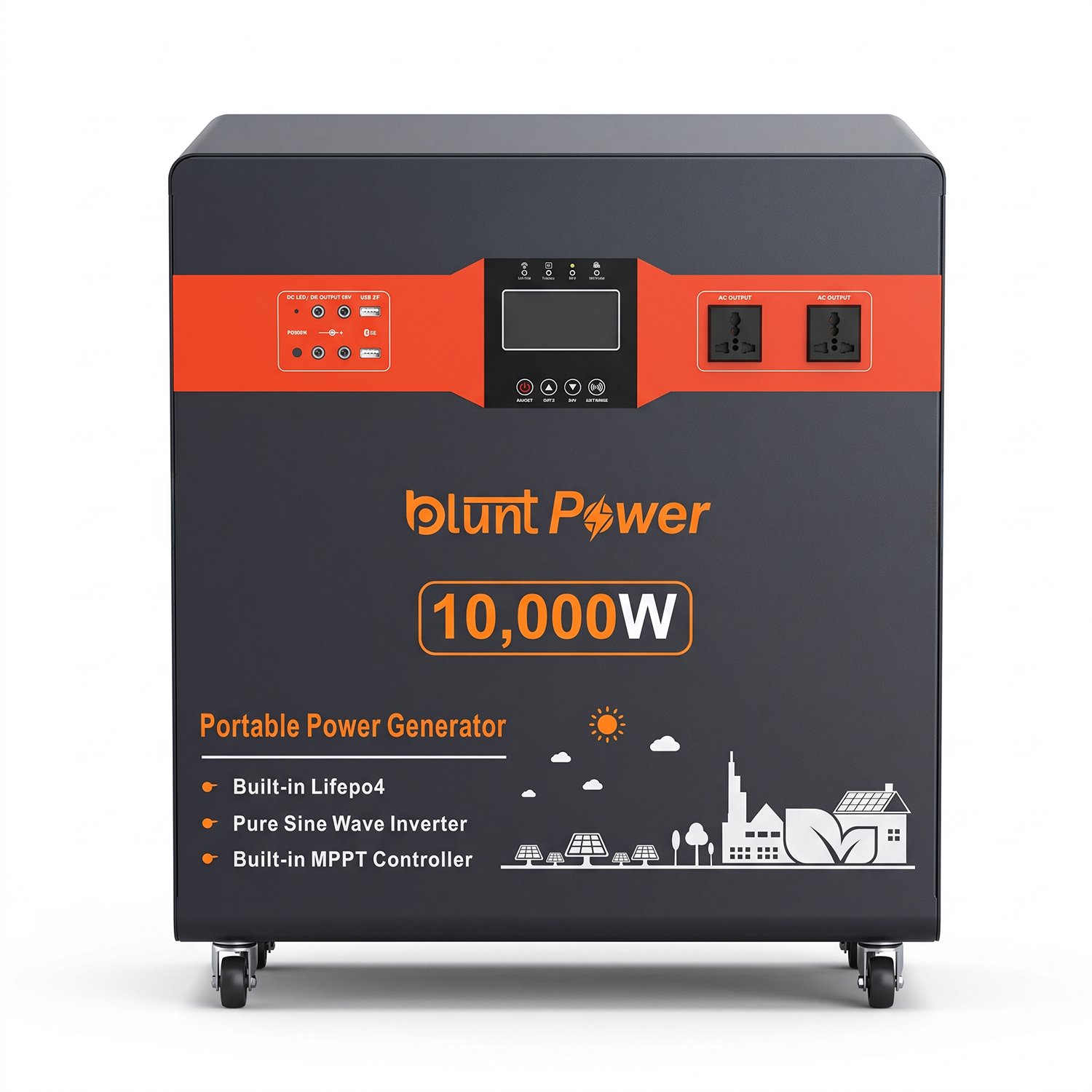
This is the most expensive of the five listings. At ₦6.42 million, do not rely on a product title or verbal assurance. Request a complete datasheet and a written quotation that identifies the exact model and everything included.
Confirm whether 10,000W is continuous or peak output, the battery capacity and chemistry, whether the battery can be expanded, the maximum solar input, supported panel voltage, grid charging rate, full charging time, weight, installation requirements and warranty coverage. Also clarify whether it is a portable all-in-one unit or a system intended for fixed installation. These details materially affect its suitability and total cost.
Can a Blunt power station run a fridge, TV, fan or freezer?
The public catalogue does not provide enough technical information to give a reliable yes-or-no answer for each model. Two limits matter:
- Continuous output (W): this must be high enough for the appliances running at the same time.
- Surge output (W): refrigerators, freezers, pumps and some other motor-driven appliances can briefly draw more power when their motors start. The station must handle that startup demand.
- Battery capacity (Wh/kWh): this determines how much energy is stored and is central to estimating how long appliances can run.
Read the rating label or manual for each appliance. Add the running wattages of the devices you want to use together, and check the startup requirements for motor-driven appliances. Then compare those figures with the exact power station’s datasheet. A model may have enough output to start an appliance but still have too little battery capacity for the backup duration you need.
Ask the seller to confirm compatibility in writing. If you are shown a demonstration, check which appliances were connected, their measured load, the battery’s starting charge, the test duration and whether the test was performed independently. A short video is not proof of a full-night runtime.
Blunt vs VDM Ratel: what can buyers compare today?
The two brands should be compared using battery energy, continuous output, surge handling, charging, warranty and after-sales support—not just the wattage in the product name. The official Blunt catalogue currently publishes five model prices and output labels but does not show comparable battery capacities or several key ratings. The official Ratel catalogue publishes capacity, output labels and prices for six models.
| What to compare | Blunt public catalogue | Ratel official catalogue |
|---|---|---|
| Number of listed power-station models | 5 | 6 |
| Prices | Published for all 5 listed models | Published for all 6 listed models |
| Battery capacity (Wh) | Not shown in the catalogue view checked | Shown for all 6 listed models |
| Output labels | 1,000W to 10,000W | 300W to 5,000W |
| Continuous vs peak rating | Not sufficiently specified by model | Some models explicitly identify max or continuous output; check each model |
| Warranty and service detail | Confirm directly in writing | Confirm directly in writing |
For context, Ratel’s official catalogue lists the RP1200 at 992Wh and ₦567,000, with 1,200W max output. That does not prove the Ratel is automatically better value: the Blunt models’ battery capacities and detailed ratings are not published in the catalogue for a like-for-like comparison. It does show why buyers should request the missing Blunt specifications before choosing.
See our VDM Ratel power station prices and six-model comparison for the Ratel range, and our Ratel RP1200 review for its listed capacity, runtime calculations and remaining specification questions. For Blunt, the official product catalogue is the primary source for the prices shown in this article.
A fair brand comparison should use the exact model’s battery Wh, continuous AC output, surge rating and duration, battery chemistry, solar input range, AC charging speed, included accessories, warranty length, local repair arrangements and final delivered price. Until those Blunt details are available, a definitive winner would be guesswork.
What to ask before buying a Blunt solar generator
- What is the exact battery capacity in Wh or kWh? Can I see it on the product label and datasheet?
- Is the advertised wattage continuous output or peak output? What is the surge rating and how long can it sustain it?
- What battery chemistry is used, and what cycle-life conditions apply?
- What is the maximum solar input in watts? What panel voltage and current ranges are supported?
- How long does a full AC charge take, and can grid and solar charging work at the same time?
- Which appliances can it support, including the startup demand of a fridge, freezer or pump?
- Are solar panels included? If yes, what is their exact wattage and what cables or accessories come in the box?
- What is the written warranty period, what parts are covered, and where is authorised repair handled in Nigeria?
- What is the return process if the delivered model or its specifications do not match the invoice?
Ask for the answers in writing and keep your invoice, serial number, product-label photos and warranty document. For a purchase costing over ₦1 million, pause if the seller cannot provide a battery capacity and a proper technical specification sheet.
Blunt power station vs a home inverter system: which makes more sense?
A portable power station combines a battery and inverter in one product. It can be convenient if you want a ready-made unit, need to move backup power between rooms or locations, or do not want a separate installation. But you still need to check the battery capacity, output limits, solar compatibility and whether the unit can be serviced locally.
A fixed inverter system is built from separate components, usually an inverter, battery bank, solar panels and protection equipment. It can be sized around a household’s actual load and may allow more flexibility when adding battery capacity or panels later. It also requires correct system design, suitable wiring and installation by a qualified technician.
Consider a portable station if convenience and portability are priorities and its verified capacity meets your needs. Consider a fixed system if you need a tailored home installation, longer backup or room for future expansion. Compare the complete installed cost—not only the inverter price—with the delivered cost of a power station and any solar panels or accessories you still need.
Our guide to solar generator vs solar inverter vs complete solar system in Nigeria explains the differences. If you are planning a fixed installation, see our solar inverter setup cost guide for Nigerian 2- and 3-bedroom flats.
Frequently asked questions about Blunt power station prices
How much is the cheapest Blunt power station in Nigeria?
The cheapest model in the official catalogue checked on 17 November 2026 is the Blunt 1,000W Solar Generator at ₦1,180,000. Confirm the current price and stock before ordering.
How much is the Blunt 5,000W power generator?
The official catalogue lists the Blunt 5,000W Power Generator at ₦3,300,000 and labels it low stock. Ask the seller to confirm availability and provide the full specifications.
What is the battery capacity of Blunt power stations?
The catalogue view checked for this article does not publish battery capacity in Wh or kWh for the five listed models. Request the exact model’s datasheet and check the physical product label before buying.
How long can a Blunt power station run a fridge?
There is not enough published information to calculate a dependable runtime for the Blunt models. You need the battery capacity, usable energy, fridge’s average consumption and compressor startup requirements. Do not rely on the wattage in the product name alone.
Does Blunt include solar panels with its power stations?
The catalogue page used for this price check does not clearly state the panel wattage or bundle contents for each model. Ask for a written list of included accessories and the solar input limits before paying.
What warranty does Blunt offer on its power stations?
The catalogue view does not provide a clear model-by-model warranty duration or coverage. Obtain the warranty document and confirm who handles repairs, which components are covered and where service is available in Nigeria.
Final verdict: should you buy a Blunt power station?
The official Blunt catalogue gives buyers a starting price for each of its five listed power stations: ₦1.18 million for 1,000W, ₦1.26 million for 1,500W, ₦1.88 million for 3,000W, ₦3.3 million for 5,000W and ₦6.42 million for 10,000W, checked on 17 November 2026. It does not currently provide enough model-specific battery and electrical information to establish runtime, appliance compatibility or value per kWh.
I would not recommend choosing a Blunt model based on price and wattage alone. Shortlist the exact model only after the seller supplies its battery capacity, continuous and surge ratings, solar input limits, charging details and written warranty. If those details are not available, compare it with products that publish a fuller datasheet before committing your money. Check the official Blunt catalogue for current prices and stock.
Sources and price-check notes
- Blunt Gadgets official product catalogue — model names, output labels, displayed prices, stock labels and official product images; checked 17 November 2026.
- Ratel Power official catalogue and company information — published Ratel model capacities, output labels and prices used for the limited comparison.
- Third-party Jiji listing for a claimed 3kWh/3,000W Blunt unit — seller claim only; not treated as an official specification or price.

Oladepo Babatunde (Prince Babatee Tunde) is a Computer Scientist, researcher, and professional content writer with a Higher National Diploma in Computer Science from Kwara State Polytechnic, Nigeria.
With a background in technology and a passion for clear communication, Babatunde specializes in creating thoroughly researched, reader-focused content on productivity, personal development, home living, and technology. Every article he writes is backed by extensive research and fact-checking to ensure readers receive accurate, actionable information.
As a freelance writer, he has helped brands and publications deliver content that educates, engages, and empowers their audiences. His mission at 9jaboizgist is simple: make complex topics easy to understand and help Nigerians live smarter, more productive lives.