Introduction: A10s in 2025
Revisiting a smartphone from 2019 in the fast-paced tech world of 2025 might seem like a strange idea. The Samsung Galaxy A10s, once a budget-friendly option, served its purpose for many users. But with new models hitting the market constantly, a critical question emerges: does this older device still hold any relevance today? As an industry expert with over a decade in the mobile space, I’ve seen countless phones come and go, each leaving its own footprint. Evaluating the A10s now means looking beyond its original appeal to understand its practical usability, performance bottlenecks, and true market value in an era dominated by 5G and advanced AI features. This article will dive deep into whether the Galaxy A10s can still be a viable option for anyone, or if it’s best left as a relic of a bygone smartphone era.
Key Takeaways
- The Samsung Galaxy A10s is officially **discontinued** and no longer receives major Android updates or regular security patches as of 2025.
- Its **performance is significantly limited** by an older processor and low RAM, struggling with modern apps and multitasking.
- The A10s **lacks 5G connectivity**, a crucial feature in 2025, and its camera quality is subpar compared to current budget phones.
- Current market prices for refurbished or used A10s typically range from **$100 to $140 USD**, but better alternatives exist.
- For ultra-budget buyers, it offers basic call/text functionality, but **newer entry-level smartphones** provide far superior value, performance, and long-term support.
Galaxy A10s: Current Status
The Samsung Galaxy A10s, originally launched in August 2019, has officially reached its end-of-life status in 2025. This means Samsung no longer manufactures or sells the device new, and official support has largely ceased. For consumers today, this translates to a lack of guaranteed software longevity and potential security vulnerabilities, which is a significant factor when considering any older device.
Last Official Android Update
The Samsung Galaxy A10s shipped with Android 9 Pie and received its last major operating system update to **Android 11 with One UI Core 3.1** in July 2021. This means that in 2025, the device is running on an Android version that is several generations old. While older Android versions can still run many apps, they often miss out on new features, performance optimizations, and critical security enhancements found in more recent releases. I’ve seen countless instances where users cling to older Android versions only to find their favorite apps eventually stop supporting them or become unstable.
Security Patch Status
Following its last major OS update, the Galaxy A10s has not received regular security patches. While some devices might get sporadic, critical patches even after their end-of-life, the A10s is generally considered to be past its regular security update cycle in 2025. Running a device without up-to-date security patches leaves it vulnerable to newly discovered exploits and malware, making it a less secure option for handling sensitive personal data or online banking. This is a critical concern, as maintaining a secure digital footprint is paramount in today’s interconnected world.
Original A10s Specs Overview
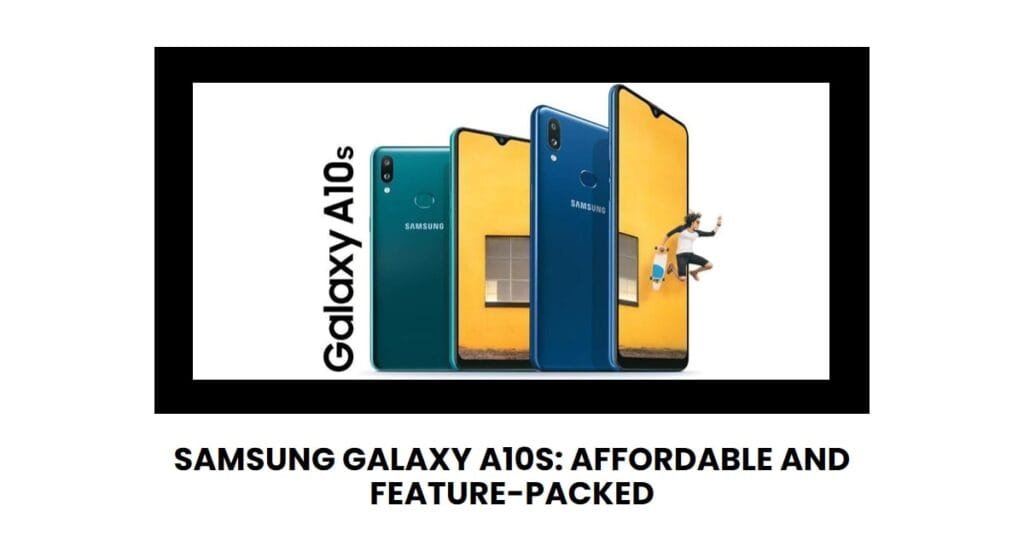
When the Samsung Galaxy A10s first arrived in August 2019, it was positioned as an affordable entry-level smartphone. It was designed to cater to users who needed basic smartphone functionality without a hefty price tag, offering a few upgrades over its predecessor, the Galaxy A10, such as a larger battery and a fingerprint sensor.
Display & Design Highlights
The A10s featured a 6.2-inch HD+ Infinity-V display with a resolution of 720×1520 pixels. This PLS LCD panel was decent for its price point at the time, offering a large canvas for media consumption. Its design included a V-shaped notch for the front camera and a plastic build, which was common for budget phones. It measured 156.9 x 75.8 x 7.8 mm and weighed 168 grams, making it fairly comfortable to hold.
Processor & Memory Details
Under the hood, the Galaxy A10s was powered by an octa-core MediaTek Helio P22 processor (12 nm). This was paired with either 2GB or 3GB of RAM and 32GB of internal storage, which was expandable via a dedicated microSD card slot up to 512GB. While these specs were acceptable for light tasks and casual use in 2019, they were never designed for demanding applications or heavy multitasking. I recall many budget phones from this era, and they often struggled even with social media apps once they accumulated a bit of data.
Camera & Battery Capacities
For photography, the A10s sported a dual-camera setup on the rear, featuring a 13-megapixel primary sensor (f/1.8) and a 2-megapixel depth sensor (f/2.4). The front camera was an 8-megapixel sensor (f/2.0) for selfies. A notable improvement over its predecessor was the larger 4,000mAh battery, providing decent endurance for a single day’s use. This was a strong selling point, as battery life often takes precedence for budget-conscious users.
A10s Performance Today (2025)
In 2025, evaluating the Samsung Galaxy A10s’s performance is a sobering exercise. What was once adequate for basic tasks now feels significantly constrained by modern software and user expectations. The older hardware struggles to keep pace, leading to a noticeable degradation in the user experience.
Software Experience & App Compatibility
Running on Android 11 with One UI Core 3.1, the software experience on the A10s in 2025 is far from smooth. Modern applications are designed for more powerful processors and larger amounts of RAM. I’ve seen firsthand how an older device like the A10s can stutter and lag when opening apps like Instagram, TikTok, or even moderately complex websites. Multitasking becomes a chore, with apps frequently reloading when switching between them. While most essential apps will still technically “run,” their performance is often slow and frustrating. It reminds me of the early days of smartphones where you had to be very deliberate about what you ran at any given time.
Battery Life Expectations
The original 4,000mAh battery was a highlight in 2019. However, in 2025, several factors affect battery life expectations. The battery itself will have degraded over time, losing some of its original capacity. Furthermore, even if the apps are running slowly, they still consume power, and the older, less efficient processor isn’t optimized for modern power management. Users can expect, at best, a half-day of moderate use. In my experience with older devices, even a full charge might not get you through an entire workday if you’re actively using it for more than just calls and texts. Carrying a power bank would become a necessity.
Camera Quality in 2025
The 13MP main camera and 8MP front camera were acceptable for casual photos in 2019. In 2025, however, the camera quality of the A10s is significantly outmatched by even the cheapest new budget phones. Photos taken in anything less than ideal outdoor lighting will likely appear noisy, lack detail, and exhibit poor dynamic range. Selfie quality will be similarly disappointing. For anyone accustomed to the computational photography advancements in modern smartphones, even entry-level ones, the A10s camera will feel like a considerable step backward. I once had a client who tried to use an A10s for product photos, and the results were simply unusable for professional purposes.
Connectivity Limitations (No 5G)
A crucial limitation of the Samsung Galaxy A10s in 2025 is its lack of 5G connectivity. The device only supports 4G LTE, 3G, and Wi-Fi. While 4G networks are still widely available, 5G has become increasingly prevalent, offering significantly faster speeds and lower latency. For users in areas with robust 5G infrastructure, relying on a 4G-only device means missing out on a key technological advantage. This isn’t just about speed; many newer applications and services are beginning to leverage 5G capabilities, further highlighting the A10s’s outdated connectivity.
Samsung A10s Price 2025
Given its age and discontinued status, the Samsung Galaxy A10s is no longer available for purchase new from official retailers in 2025. Its market presence is now exclusively in the refurbished and used phone segments, where prices reflect its diminished capabilities and lack of ongoing support.
Refurbished Market Value
In the refurbished market as of 2025, the Samsung Galaxy A10s typically fetches prices ranging from approximately $100 to $140 USD. These prices can vary depending on the retailer, the cosmetic condition of the device, and any warranty offered. For example, some refurbished units might be listed on platforms like Back Market or Swappa for around $99.86 to $139 USD. While these might seem low, it’s essential to consider what a similar amount can buy in the new budget phone market today.
Used Phone Pricing Trends
The used phone market for the A10s sees even greater price fluctuations. On platforms like eBay or local marketplaces, prices can drop as low as $50-$80 USD for units in fair condition, possibly with minor cosmetic flaws or reduced battery health. However, such purchases come with inherent risks, including no warranty, potential hidden issues, and uncertain battery longevity. My advice to clients has always been to exercise extreme caution with used electronics, as a seemingly low price can quickly turn into a costly repair.
Regional Price Variations
Prices for the A10s also show regional variations. In India, for instance, the A10s was listed at prices starting around ₹7,999 (approximately $96 USD) on Amazon as of December 2, 2025, though often out of stock. Other listings might show slightly higher prices for different variants or from different sellers. In countries like Bangladesh, the Samsung Galaxy A10 (a similar model) was officially priced at BDT 11,999 (around $109 USD) for the 2GB/32GB variant in 2025. These regional differences are often influenced by local market demand, import duties, and the availability of newer, more competitive budget devices.
Common A10s User Questions
Even years after its release, users of the Samsung Galaxy A10s frequently encounter a set of recurring issues. These problems are often a direct consequence of the device’s aging hardware trying to keep up with contemporary software demands. I’ve guided many users through troubleshooting these exact kinds of issues on older budget phones.
Lagging UI & Slow Performance
The most common complaint about the A10s in 2025 is its slow and laggy user interface. This is primarily due to its modest MediaTek Helio P22 processor and limited 2GB or 3GB of RAM. Modern Android versions and apps require more processing power than the A10s can consistently deliver. I often advise users to clear cache data, uninstall unnecessary apps, and keep their storage from being completely full. Disabling animations in developer options can also offer a slight improvement, making the phone feel a bit snappier, though it won’t fundamentally change the hardware limitations.
Overheating Concerns
Some users report overheating issues, especially during extended use or while charging. While some warmth is normal, excessive heat can indicate the processor is working overtime, or there might be battery degradation. Solutions include avoiding heavy gaming, reducing screen brightness, and ensuring the phone is not used while charging. If overheating is severe, it could point to a more serious hardware fault, which for a phone of this age, often means it’s time for a replacement.
Wi-Fi and Bluetooth Connectivity
Connectivity problems, including Wi-Fi and Bluetooth issues, can also plague older A10s units. Users might experience dropped connections, slow Wi-Fi speeds, or difficulty pairing Bluetooth accessories. Often, a simple reboot, re-inserting the SIM card, or toggling airplane mode can resolve minor glitches. However, persistent problems might indicate a hardware fault with the Wi-Fi/Bluetooth module, which, as I’ve seen many times, is not cost-effective to repair on such an old device. One user I spoke with expressed frustration after trying “every given solution” and concluded it was a hardware issue.
Battery Drain Solutions
Fast battery drain is another prevalent issue, a combination of battery aging and inefficient software/hardware usage. To mitigate this, users can turn off auto-brightness, disable notifications for unused apps, and restrict background app activity. Using the original charger is also recommended to ensure efficient charging. While these steps can extend battery life, they won’t magically restore a degraded battery to its original performance. Eventually, the battery will simply not hold a charge as it once did, making regular charging a constant necessity.
Is A10s Still Worth Buying?
The question of whether the Samsung Galaxy A10s is still a worthwhile purchase in 2025 requires a careful balance of its ultra-low cost against its significant limitations. From an industry perspective, its value proposition has shifted dramatically since its launch.
Pros for Ultra-Budget Buyers
For individuals on an **extremely tight budget** who need a smartphone purely for essential functions, the A10s might present a bare-bones option. Its primary “pros” in 2025 boil down to its availability at a very low price in the used or refurbished market, often under $100. It can still handle basic calls, text messages, and light browsing. For instance, I’ve come across scenarios where parents consider it as a first phone for a young child, or as a secondary device for emergency calls, where the risk of loss or damage is high, and advanced features aren’t a priority. Its 6.2-inch screen is still decent for media consumption for casual users.
Cons and Major Limitations
However, the list of cons for the A10s in 2025 is substantial. The device suffers from outdated software (Android 11) and a complete lack of future Android or regular security updates, posing security risks. Its MediaTek Helio P22 processor and 2GB/3GB RAM struggle severely with modern apps, leading to frequent lagging, slow loading times, and poor multitasking. The camera performance is far below current standards, and the absence of 5G connectivity means slower data speeds and a lack of future-proofing. In my professional opinion, while the price is appealing, the compromised user experience and security risks make it a poor investment for most users seeking a functional daily driver.
Top A10s Alternatives 2025
For anyone considering the Samsung Galaxy A10s in 2025, I strongly advise looking at newer budget alternatives. The smartphone market has evolved significantly, and even entry-level devices now offer a much better experience, better value, and longer support cycles than an aging A10s.
Smartphones Under $100
In 2025, the sub-$100 smartphone segment, while still challenging, offers options that far surpass the A10s. Devices like the UMIDIGI G9T, TCL 30 Z, BLU G33, and NUU N10 provide better value. The UMIDIGI G9T, for example, offers a 6.5-inch HD+ display, a MediaTek Helio G25 processor, 4GB RAM, 64GB storage, a 5,150mAh battery, and Android 13 for under $100. The BLU G33 stands out with a 50MP triple-camera system and a 5,000mAh battery. These phones, while still budget-oriented, come with more modern operating systems, significantly better performance, and superior camera capabilities compared to the A10s. I’ve seen these newer budget phones handle everyday tasks with far greater ease than any A10s could hope to achieve today.
Entry-Level Samsung Galaxy A-series
If staying within the Samsung ecosystem is a priority, newer entry-level Galaxy A-series models provide a much more robust and secure experience. Models like the Samsung Galaxy A06 or Galaxy A16 5G, while slightly above the A10s’s used price, offer substantially better features for 2025. The Galaxy A06, for instance, comes with a 6.7-inch HD+ LCD, a MediaTek Helio G85 processor, 4GB RAM, 64GB storage, a 50MP main camera, and a 5,000mAh battery, typically priced around $106-$160 USD. The Galaxy A16 5G is praised for its value, performance, and long-term software support, featuring a 6.7-inch AMOLED display, a MediaTek Dimensity 7020 processor, a 50MP main camera, and Samsung’s promise of five years of OS updates and six years of security patches. These devices represent a modern entry point into Samsung’s line, offering 5G connectivity and a much longer lifespan.
Benefits of Newer Budget Devices
Opting for a newer budget device, even one slightly above the A10s’s used price, brings several critical advantages. You gain access to current Android versions (like Android 13 or newer), ensuring better app compatibility and a more refined user experience. These phones also feature modern processors, more RAM, and often 5G connectivity, future-proofing your purchase to some extent. Crucially, they come with ongoing software and security updates, which are vital for privacy and device longevity. The cameras are significantly improved, and battery life is often optimized with more efficient chipsets and larger capacities. As an expert, I always emphasize that the initial savings on an ultra-old device are often offset by a frustrating experience and the need for a quicker replacement.
Final Verdict: A10s Legacy
In 2025, the Samsung Galaxy A10s stands as a testament to its era: a simple, affordable smartphone for basic needs. It served its purpose well upon its 2019 release, offering essential features at a budget price. However, the relentless march of technology has left it far behind. With its outdated Android 11 software, lack of security updates, slow performance, and absence of 5G, the A10s simply cannot compete with modern entry-level devices. While its low price on the used market might tempt some ultra-budget buyers for very minimal tasks, the compromises in security, usability, and overall experience are too significant to ignore.
My recommendation is clear: for anyone seeking a functional smartphone in 2025, even on a tight budget, invest in a newer entry-level alternative. Devices like the Samsung Galaxy A06 or A16, or other budget options under $100, offer substantially better performance, modern features, longer software support, and crucial security updates. The Galaxy A10s has completed its lifecycle; it’s time to appreciate its legacy and move on to devices that meet today’s demands.


Thanks, this Samsung A10s review will help me in my decision to buy my next phone.