Last updated on December 4, 2025
It feels like only yesterday we were marveling at how far smartphone cameras had come, especially their ability to zoom in on distant subjects or capture tiny details. Remember when the Samsung S21 Ultra pushed the boundaries with its periscope zoom, or when the Oppo Find X3 Pro introduced that fascinating micro-lens? Fast forward to 2025, and the “zoom wars” are more intense than ever, driven by both hardware innovation and computational wizardry. This article will explore how far we’ve come, what’s leading the pack today, and what the future holds for mobile photography.
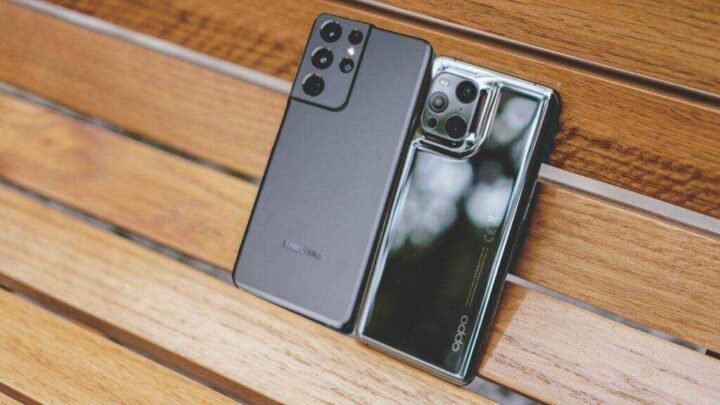
A Look Back: Samsung S21 Ultra and Oppo Find X3 Pro’s Zoom Legacy
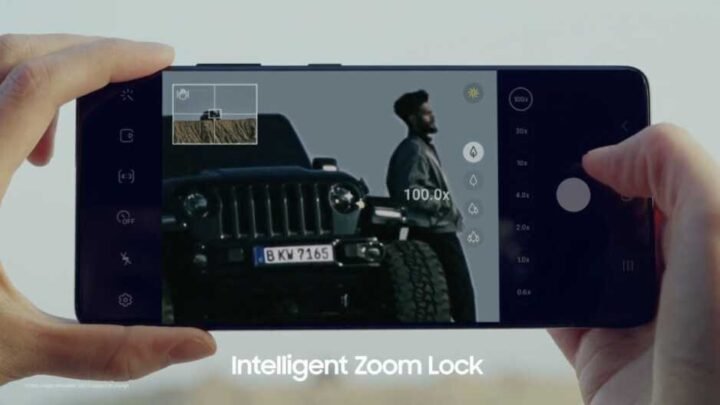
Back in their day, the Samsung S21 Ultra and the Oppo Find X3 Pro were true pioneers, each bringing something special to the table. The S21 Ultra, released in early 2021, was a beast when it came to zoom. It boasted not one, but two telephoto lenses: a 3x optical and a 10x optical periscope lens. I remember being genuinely impressed with its ability to pull in distant subjects, offering up to 100x “Space Zoom,” which, while largely digital beyond 10x, was still a huge leap for smartphones at the time.
The Oppo Find X3 Pro, on the other hand, took a different approach. While it also had competent zoom, its real party trick was the unique “micro-lens” camera. This wasn’t just a basic macro lens; it was essentially a tiny microscope that let you capture incredible, almost alien-like close-ups of everyday objects. It felt like holding a science lab in your pocket, revealing textures and patterns you’d never normally see. Both phones, in their own ways, showed us that smartphone cameras weren’t just about snapping wide-angle shots anymore; they were becoming versatile tools for creative and exploratory photography.
The State of Smartphone Zoom Technology in 2025
If you thought those early innovations were impressive, 2025 has truly elevated the game. We’re seeing more sophisticated hardware paired with incredibly powerful computational photography. Modern periscope lenses, for example, have evolved significantly. Instead of fixed optical zoom levels, some flagship phones are now starting to incorporate “continuous optical zoom” systems. This means you can seamlessly zoom between different focal lengths (like 3x to 7x or even more) without relying on digital cropping, giving you much sharper results throughout the range.
Computational zoom, powered by advanced AI, has also become a game-changer. It’s no longer just about digitally enlarging pixels. Today’s phones use sophisticated algorithms to combine data from multiple frames and lenses, intelligently enhancing details and reducing noise even at extreme zoom levels. Think of it like a smart painter filling in the gaps with incredible accuracy, though it still has its limits. We’re also seeing larger sensor sizes, which capture more light and detail, and some phones are even experimenting with variable aperture, allowing for more control over depth of field and low-light performance, much like a traditional camera.
2025 Flagship Showdown: Who Leads in Zoom and Macro Photography?
As we navigate 2025, the competition for the best camera phone, especially in zoom and macro, is fierce. Here’s a quick look at some of the top contenders and what they might bring to the table:
-
Samsung Galaxy S25 Ultra
Samsung continues its legacy of zoom prowess. The Galaxy S25 Ultra is expected to refine its multi-telephoto lens system, likely offering improved optical zoom ranges and even more intelligent computational photography for its “Space Zoom.” I anticipate it will still be a top choice for those who want to capture distant subjects with impressive clarity, often pushing the boundaries of hybrid zoom capabilities.
-
Oppo Find X7 Pro
Oppo, with its history of innovation, is likely to push boundaries with the Find X7 Pro. While the micro-lens might not be its primary focus anymore, I wouldn’t be surprised if they offer a highly versatile telephoto setup, perhaps with an extended optical zoom range or even a return to a more advanced macro solution. Their ColorOS software often provides excellent image processing and vibrant colors.
-
Apple iPhone 17 Pro Max
Apple’s approach to zoom has traditionally been more conservative, focusing on image quality, consistency, and video performance across all lenses. The iPhone 17 Pro Max will undoubtedly feature a powerful telephoto lens, likely with improved optical zoom and Apple’s renowned computational photography, making it a reliable performer for telephoto shots, even if it doesn’t always boast the longest zoom numbers. Expect excellent color science and dynamic range.
-
Google Pixel 10 Pro
Google’s strength has always been its computational photography, often making up for less aggressive hardware specifications. The Pixel 10 Pro will probably continue this trend, using its powerful AI to enhance zoom performance, reduce noise, and deliver exceptional results, especially in challenging lighting conditions. Their “Super Res Zoom” technology is constantly evolving, aiming for natural-looking results even at higher magnifications.
While DxOMark scores can give us a technical benchmark, real-world usage often tells a different story. It really comes down to what you prioritize: raw zoom power, consistent image quality across all lenses, specialized macro capabilities, or perhaps video performance.
Deep Dive: Optical Zoom vs. Digital Zoom vs. Hybrid Zoom in 2025
Understanding the different types of zoom is crucial when evaluating a smartphone camera, especially in 2025, as technologies blur the lines:
-
Optical Zoom
This is the gold standard. Optical zoom uses actual lens elements to magnify the image before it hits the sensor, much like a traditional camera. Because no information is lost or invented, optical zoom delivers the sharpest, most detailed results. When a phone advertises “3x optical zoom,” it means the lens itself is physically adjusting to achieve that magnification. In 2025, we’re seeing more phones with multiple optical zoom levels or even continuous optical zoom systems for greater flexibility, offering true lossless magnification within their range.
-
Digital Zoom
Digital zoom is essentially cropping and enlarging a portion of the image. The camera takes the image from the sensor and then simply magnifies the pixels, often leading to a noticeable loss of detail and a “pixelated” or “soft” look, especially at higher magnifications. While it’s significantly improved with computational photography and AI upscaling, it’s still generally inferior to optical zoom for pure detail retention.
-
Hybrid Zoom
This is where things get truly interesting, especially with modern computational photography. Hybrid zoom combines optical zoom with digital processing and AI algorithms to create a more compelling result than pure digital zoom. For instance, a phone with a 10x optical telephoto lens might offer 20x hybrid zoom. It uses the optical lens for the initial 10x, and then intelligent software fills in the gaps, enhances detail, and reduces noise for the remaining magnification. This often results in much better quality than pure digital zoom, making higher zoom levels far more usable for everyday shots.
Beyond Zoom: The Rise of Micro-Photography and Specialized Lenses
While zoom often steals the spotlight, the world of close-up photography on smartphones has also matured since the Oppo Find X3 Pro’s micro-lens. Many flagship phones in 2025 offer excellent macro capabilities, either through a dedicated macro lens or, more commonly, by utilizing their ultra-wide camera with advanced autofocus for impressive close-up shots. Some niche phones still include microscope cameras, offering even higher magnification than traditional macro lenses, letting you explore the intricate details of everyday objects in a truly unique way.
Beyond macro, we’re also seeing other specialized lenses and features. Some phones might offer enhanced portrait lenses with wider apertures for more natural-looking bokeh, or even advanced LiDAR/depth sensors that improve augmented reality experiences and low-light focusing. The trend is moving towards offering a versatile camera system that can handle a wide range of photographic scenarios, not just long-distance shots, giving users more creative freedom.
Key Factors to Consider When Choosing a Zoom-Focused Smartphone
If you’re in the market for a smartphone with excellent zoom and macro capabilities in 2025, here’s what I’d recommend you keep in mind:
- Optical Zoom Range: This is paramount. Look for phones that offer multiple optical zoom levels (e.g., 3x, 5x, 10x) or continuous optical zoom for the best, lossless image quality.
- Computational Photography: Even with great optics, software processing makes a huge difference. Strong computational photography helps clean up images, enhance details, and stabilize shots, especially at higher zoom levels and in challenging light.
- Image Stabilization (OIS/EIS): Optical Image Stabilization (OIS) is crucial for sharp zoom shots, as any hand tremor is magnified significantly. Electronic Image Stabilization (EIS) also plays a role, especially in video, working in tandem with OIS.
- Low Light Performance: Zooming in often means less light reaches the sensor. A phone with good low-light performance on its telephoto lens will give you much more usable results in challenging conditions, preventing muddy, noisy images.
- Video Zoom Quality: Don’t forget about video! If you plan to zoom while recording, check reviews for how well the phone maintains stability, detail, and smooth transitions in zoomed-in video.
- Macro Capabilities: Decide if you need a dedicated macro mode or a specialized micro-lens, or if a good ultra-wide camera with close-focus will suffice for your needs. Consider the minimum focus distance.
The Future of Smartphone Zoom: What’s Next?
Looking ahead, the future of smartphone zoom is incredibly exciting. I believe continuous optical zoom will become more commonplace across flagship devices, offering truly seamless magnification without quality loss within its range. We might even see advancements in under-display camera technology that allow for more flexible lens designs without compromising screen real estate, potentially enabling even larger sensors or more complex optical systems.
Further integration of AI and computational photography will continue to push the boundaries, potentially allowing for “super-resolution” images that intelligently reconstruct detail to exceed the sensor’s native capabilities, rather than just upscaling. Events like Mobile World Congress (MWC) and CES often give us glimpses into these prototypes and upcoming technologies. Imagine a phone that can analyze a scene and automatically select the perfect blend of optical and computational zoom for the best possible shot, adapting to light and subject. It feels like we’re just scratching the surface of what’s possible, balancing physical limitations with digital ingenuity.
Conclusion: Defining the ‘Future of Zoom’ in 2025 and Beyond
The “zoom wars” that the Samsung S21 Ultra and Oppo Find X3 Pro helped kickstart have evolved dramatically by 2025. While those phones set important benchmarks, today’s flagships offer an incredible blend of advanced optical hardware and sophisticated computational photography. The future of zoom isn’t just about how far you can magnify; it’s about delivering usable, high-quality images across a versatile range of focal lengths, from extreme telephoto to intricate macro shots. If you’re looking for the best camera phone in 2025, you’re truly spoiled for choice, with innovation happening at a rapid pace and offering something for every type of mobile photographer.
FAQs About Smartphone Camera Zoom and Macro
-
How does phone zoom work?
Smartphone zoom works through a combination of optical lenses (physical magnification), digital cropping (enlarging pixels), and hybrid zoom (combining optical with AI software enhancements). Optical zoom provides the best quality, while digital zoom can lead to pixelation if not heavily processed by AI.
-
Is digital zoom ever good?
While historically poor, modern digital zoom, especially when part of a hybrid zoom system and powered by advanced computational photography, can be surprisingly good. AI algorithms help to enhance details, reduce noise, and even reconstruct information, making digital zoom more usable than ever before, though still not on par with pure optical zoom at the same magnification.
-
What is a periscope lens in a smartphone?
A periscope lens allows for longer focal lengths (and thus higher optical zoom) in a thin phone body. Instead of placing the lens elements vertically, they are laid out horizontally within the phone chassis, using a prism or mirror to bend the light 90 degrees into the sensor. This clever design enables impressive optical zoom capabilities without making the phone excessively thick.
-
Are microscope cameras on phones just a gimmick?
While not for everyone, microscope cameras (like the original one on the Oppo Find X3 Pro) are not just gimmicks. They offer a unique perspective for capturing extreme close-ups, revealing details invisible to the naked eye. For enthusiasts of macro photography, educators, or those who enjoy exploring textures and hidden patterns, they can be a genuinely fun and creative tool that offers a different way to see the world.
-
What is continuous optical zoom?
Continuous optical zoom is an advanced technology that allows a smartphone camera to seamlessly zoom between different optical focal lengths, much like a traditional camera lens. This eliminates the reliance on digital or hybrid zoom within that range, providing consistently sharp images at various magnifications. It’s a significant step forward from fixed optical zoom lenses, offering true lossless flexibility.