
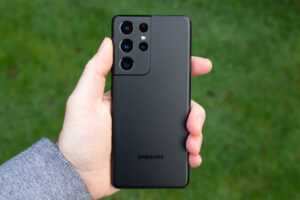
We’re going to see how accurate all those rumors about the Samsung Galaxy S21 are. With most of Samsung’s next phones unveiled thanks to the steady leakage current of recent months, it’s now Samsung’s turn to show what it has as the company prepares for its second product release later this month.
It may seem like we were just talking about the release of the Galaxy Note 20 and Galaxy Note 20 Ultra. But now it’s the Galaxy S21’s turn to take attention, and even Samsung has dropped clues as to what to expect from future phones.
The Best Phones Right Now
Samsung Galaxy S21 vs. iPhone 12: Which Phone Will Dominate in 2021?
Based on everything we’ve seen, the Samsung Galaxy S21 should be faster than Qualcomm’s new Snapdragon 888 chipset, a more advanced camera system, and a smoother design.
We can also see some Galaxy Note features that got into the S20 configuration. There are, of course, many more things that could be improved by evaluating the Galaxy S20 Review, the Galaxy S20 Plus Review, and the Galaxy S20 Ultra Review.
Here’s everything we know about the Samsung Galaxy S21 right now, as well as a few things we want Samsung to include when the phones see the light of day this month.
Samsung Galaxy S21 news
The new leak has revealed that the Samsung Galaxy S21 Ultra has a good screen update that supports a refresh rate of 120 Hz while using WQHD + resolution.
The video, which shows the One UI 3.1 interface, reveals many of the software features of the Galaxy S21.
Camera and monitor leaks on the Galaxy S21 have confirmed other important information. We inspected the optional S Pen of the Galaxy S21 Ultra as well as the case that fits the pen.
Samsung Galaxy S21 Release Date
We now know when we will see the Galaxy S21 after Samsung announces a new uncompressed event on January 14 at 10 a.m. EST / 7:00 PST. The event will be streamed online. This confirms the existing rumors about the launch date.
As for when we should be able to buy new phones, the Android Authority predicts a release date of January 22, although other sources have said it will be January 29. Either way, wait to get your hands on the Galaxy S21 by the end of the month.
Samsung has begun to allow people to reserve their seats in the queue to reserve the “next Galaxy” device. The S21 isn’t mentioned by name, but it’s a pretty sure bet, Samsung suggests.
Samsung has released similar pages for previous phone numbers, usually a few weeks before the phone’s release. Before the release of the uncompressed event on January 14, Samsung sent a summary video to the new phone and promised that “the new Galaxy is waiting.”
Samsung Galaxy S21 Price
Samsung has been gambling with the Galaxy S20 line because it didn’t offer a cheaper version of the Galaxy S20e between $ 700-750. The cheapest Galaxy S20, on the other hand, was $ 999.
Leaker Max Weinbach has suggested that the Samsung Galaxy S21 models could be cheaper than their predecessors. But the Indian release TechQuila pointed out that prices are starting in the same range as before, meaning we are looking for an entry-level model for the S21 at $ 999 / £ 899 / $ 1499.
However, Ishan Agarwal’s new leak has tilted the Galaxy S21 platform to start at € 849, while the Galaxy S21 Plus costs € 1049 (256GB model € 1099) and the Galaxy S21 Ultra € 1399. In dollars, these prices range between $ 1,040 and $ 1,715, but since the costs between regions are never exact currency conversions, take these prices with a touch of salt. The prices of the S21 and S21 Plus are both cheaper than Samsung charges in euros for similar S20 models.
Samsung Galaxy S21 Specifications
Full technical data for all three Samsung Galaxy S21 models have been leaked thanks to Android Police, and WinFuture provides data on storage capacity. The specifications of the camera and processor were later confirmed with the Android Authority in discussions with Indian staff.
An extensive leak by Android Police in mid-November revealed all the important specifications of the Galaxy S21 series. It suggested that the phones use the Snapdragon 875 – now confirmed as the Snapdragon 888 – in some areas and Samsung’s own Exynos 2100 in others.
On December 10, Samsung’s Opera House store confirmed to the Android Authority that the Galaxy S21 series devices in India will be powered by the Exynos 2100, confirming the existence of the chip. The recent FCC list also confirmed that the US models of the Galaxy S21 will be equipped with Snapdragon 888 silicon.
According to rumors, all phones will receive a refresh rate of 120 Hz. However, we are not sure whether this refresh rate works at the highest screen resolution.
We can also go ahead and assume that no specifications of the Galaxy S20 series will be downgraded. This means that no phone should have less than 12 GB of RAM or less than 128 GB of internal storage. Here are the rumored storage sizes leaked by WinFuter:
- Samsung Galaxy S21 – 128 GB, 256 GB
- Galaxy S21 Plus – 128 GB, 256 GB
- Galaxy S21 Ultra – 128 GB, 256 GB, 512 GB
According to a large WinFuture leak on December 26, the Galaxy S21 is said to have a 6.2-inch screen, while the S21 Plus has a 6.7-inch screen. Both monitors have 2400 x 1,080 pixels and a refresh rate of 120 Hz. Gorilla Glass Victus is visible in both. The phones are also said to have an IP68 rating, NFC, Bluetooth 5.0, and Wi-Fi 6 support.
Samsung Galaxy S21 Design
Based on the renderings shown, the Galaxy S21 may look similar to the Galaxy S20. According to Ice Universe, a social media voice site, the S21 has a vertical camera stack similar to the Galaxy Note 20 series, and the front screen is flat rather than curved. The compromise is that the frames appear a bit thicker for the Galaxy S21.
The rough dimensions of the Samsung Galaxy S21 have also leaked from the ice universe. 151.7 x 71.2 x 7.9mm (9.0mm with camera bump). It’s quite a major camera glitch. In comparison, the Galaxy S20 measures 151.7 x 69.1 x 7.9mm, so the S21 could be wider than its predecessor.
IceUniverse also revealed that the S21 and S21 Plus both have the same 2.5D displays that come with their S20 counterparts, while the S21 Ultra has a more traditional curved display.
There is also speculation as to whether the S21 will get Samsung’s recently patented frame structure, which is intended to almost remove the frame. When implemented, we could see very thin and smooth bezels along the S21, and along with the curves on the 2.5D screen, they can be difficult to stop.
According to this, it seems unlikely that Samsung would have it ready so soon after receiving the patent. So we do not expect leaf frames in the S21 series.
Samsung has spent more than a year designing the “perfect full-screen phone” and it was hoped that the Samsung Galaxy S21 could make this vision a reality. Samsung Display started talking about the possibility of removing the holes in its phones in March 2019.
The idea is that the hole in the camera would be invisible, “but it will not affect the operation of the camera in any way.” However, based on early leaks, it seems that the camera below the screen will not be in the Galaxy S21.
Samsung Galaxy S21 Cameras
Speaking of camera groups, the cameras on the Galaxy S21 will largely resemble what we saw on the Galaxy S20, but with some major upgrades to the premium model.
The Galaxy S21 and Galaxy S21 Plus again feature triple cameras, with an ultra-wide 12-megapixel sensor, 12-megapixel main sensor, and 64-megapixel telephoto lens. The state-of-the-art Galaxy S21 Ultra is equipped with a second-generation version of the 108 MP sensor in the S21 Ultra and Note 21 Ultra, with a new 3x optical telephoto lens and 10x optical “super” telephoto lens.
This should result in a high coke price in zoom quality. And according to Android police, Samsung is bringing back the 100x Space Zoom feature and introducing autofocus on the S21 Ultra to avoid some of the alignment issues from last year.
Samsung, for its part, promises “highly intelligent, professional camera and video capabilities by 2021,” based on a message from TM Electronics President TM Roh.
Samsung Galaxy S21 Processor
If Samsung follows the earlier policy, it will use two different chipsets to power the Galaxy S21: the latest Snapdragon 8 series system chip for a phone released in the US and one of the only Exynos processors for models sold elsewhere. will be sent. world.
In the US, the Samsung Galaxy S21 should run on Qualcomm‘s new Snapdragon 888, the company’s first 5nm chip. It features a primary Arm Cortex-X1 processor, three Arm Cortex A-78 processors, and four efficiency cores. You can expect a 25% improvement in overall CPU performance and a 25% improvement in power consumption.
Additionally, the Snapdragon 888’s Adreno graphics processor should boost graphics performance by up to 35%. This should be the biggest leap ever.
Samsung’s next processor is the Exynos 2100, and it’s another 5-nanometer chip. This chip was originally believed to be called the Exynos 1000 and may have a graphics accelerator made by AMD.
Each Galaxy S21 is expected to have 128 GB of storage in the base configuration, with the option to upgrade to 256 GB. (Galaxy S21 Ultra owners can apparently also opt for 512GB.) That’s good news, as the Galaxy S21 is rumored to have no microSD card slot, so you have storage space. Stuck.
Samsung Galaxy S21 Performance And Early Benchmarks
As noted, the Galaxy S21 series will likely be used by Qualcomm’s new Snapdragon 888 circuit. The Galaxy S21 Plus’ early leaked benchmarks didn’t look very promising, although we suspect the phone may not have used an optimized version of the chip.
However, Qualcomm later released its own benchmarks for the Snapdragon 888 when it was powered by the benchmark. While many changes could take place with the introduction of Samsung’s proprietary mobile phone processing platform, Qualcomm’s numbers paint a more encouraging picture in terms of performance and graphics, well ahead of the Galaxy S20 with Snapdragon 865. In the multi-core, Geébench 5 test screamed the Snapdragon 888 away from Apple’s A14 Bionic.
Samsung Galaxy S21: No Charger
Apple angered many by announcing that they were looking for packaged headphones and charging adapters for the iPhone 12 and iPhone 12 Pro. Leaker Ishan Agarwal wrote in the now-deleted tweet that the Galaxy S21 doesn’t include a charger or headphones in the box (at least in the UK). The USB charging cable is set as the only accessory packaged.
Previously, SamMobil quoted in its Korean media report that Samsung is crashing the package’s internal charger. It is a predictable step; By removing packaged accessories, Samsung can reduce its environmental impact and increase margins for mobile phones. References from Brazilian authorities also suggest that the Galaxy S21 does not come with the supplied charger.
Samsung Galaxy S21: S Pen Support
According to an early report from the South Korean publication The Elec, the Galaxy S21 Ultra could include an S pen. At the moment, however, the phone has more support for S Pen but lacks a stylus. It would be optional and the cases provide a way to store the S pen. The leaked Galaxy S21 Ultra cover shows how it would work.
These rumors were confirmed by a massive Android Central leak stating that the Galaxy S21 Ultra will support the S Pen but as an optional accessory. WinFuture has also confirmed S Pen support for the Ultra model, but the support status for the S21 and S21 Plus remains unclear. And the FCC listing for the Galaxy S21 Ultra essentially confirms that S Pen support has been made.
Samsung Galaxy S21 Ultra S Pen
The WinFuture leak in the S21 Ultra case also featured images of the S Pen, which looks slightly different from the pen that came with the Galaxy Note phones. The new S Pen has apparently extended the click button upwards while having an improved pressure-sensitive tip.
However, Roh’s message of plans for Samsung’s 2021 phones confirms that S Pen support is coming for the Galaxy S21 Ultra and possibly other models. In that post, Samsung’s president says his company has looked at “people’s favorite aspects of the Galaxy Note experience and is excited to add some of his most loved features to other devices in our range.” The note’s most notable feature is the stylus, so we think that means other phones will get S Pen support, and the early release of the S21 will put it on the line first.
Samsung Galaxy S21 Battery
The Galaxy S21 leaks suggest that the phone’s battery capacity will change little, at least when compared to last year’s Galaxy S models.
The Galaxy S21 is expected to have a 4000 mAh battery that is the same size as the Galaxy S20’s power pack. Likewise, the Galaxy S21 Ultra should keep the S20 Ultra’s 5000 mAh battery. Only the S21 Plus achieves a battery life of up to 4800 mAh compared to the 4500 mAh of the Galaxy S21 Plus.
Despite similar-sized batteries, the Galaxy S21 is expected to offer longer battery life than its predecessor. A major reason why Samsung is reportedly switching to the FHD + display in its new phone. It doesn’t consume that much power, so the S21 can provide up to two hours more battery life than the S20.
Samsung S21 Vs Samsung Galaxy S21 Ultra
The main difference between the S21 and S21 Ultra is the size. The standard S21 is set to shake the 6.2-inch screen and measures 151.7 x 71.2 x 7.9mm (9.0mm on camera impact).
According to OnLeaks, the publisher of the phone’s first renderings, the S21 Ultra has a larger screen, ranging in size from 6.7 to 6.9 inches, while leaker Ishan Agarwal says it has a 6.8-inch screen – which is slightly less than the 6.9-inch screen of the S20 Ultra.
It might even have a super-fast 144Hz refresh rate, although it seems the jury is still out on that rumor. Everyone seems to agree that all S21 models support a 120Hz refresh rate and that the S21 Ultra can dynamically adjust the refresh rate depending on what you’re using the phone for. You can also use the 120Hz refresh rate and the highest resolution of the S21 Ultra at the same time, a leak says.
The phone measures 165.1 x 75.6 x 8.9mm (10.8mm with bumps) according to OnLeaks. It is therefore longer, wider, and always slightly thicker than the regular S21 – especially considering the camera bump.
OnLeaks’ renderings also showed the S21 Ultra on a curved screen and seemingly brighter than the 2.5D glass used in the S20 and S20 + last year.
This suggests that, like the S20 Ultra, Samsung is sticking to the Edge-style curved screen we’ve had for years, rather than the 2.5D’s more subtle curves. IceUniverse has also confirmed this information.
These renderings also revealed that the S21 Ultra is a fourth camera lens and wider camera bump to include both this and the flash. However, OnLeaks later released an updated render, claiming that there was actually a fifth lens behind the S21 Ultra.
IceUniverse’s new cover leak still shows the phone with four lenses, so we’re not sure what it is, but that doesn’t stop us from speculating on what the five-lens S21 Ultra might include.
So all those lenses are for? There are rumors from the Korean site The Elec that the S21 would get two optical zoom lenses – 3x and 10x zoom. It seems unlikely that the standard S21 would have two lenses, especially now that we’ve seen it with three cameras, but the S21 Ultra is the perfect candidate.
While the S20 Ultra came with an incredible 100x hybrid zoom, Samsung has reduced it to 50x with the Note 20 Ultra. Extended optical zoom may offer an even longer zoom function, although it seems more likely to be used to improve the overall quality of long-range zoom.
However, Ishan Agarwal says Samsung sticks to the 108-megapixel main lens, which makes sense considering how accurate it really is. Similarly, he says the S21 Ultra has the same 40-megapixel front camera as last year’s S20 Ultra. In addition to the 5000 mAh battery, which is again the same as before.
Samsung Galaxy S21: What We Want
The Galaxy S21 will fight the iPhone 12 when it arrives this month. And it also has to compete with Google Pixel 5.
This allows Samsung to improve the Galaxy S20 while staying one step ahead of the competition.
- Lower starting price: The $ 699 Samsung Galaxy S20 FE proves that Samsung needs a direct response to the iPhone 12 and iPhone 12 mini from the port, not months after. We expect the standard Galaxy S20 to start at $ 699 and the Galaxy S20 Plus to be a first-class flagship.
- Longer battery life: Despite having larger batteries in the Galaxy S20 series, Samsung phones didn’t last as long as their predecessors in the network test. For example, a standard Galaxy S20 lasted 8 hours 31 minutes, while the S10 had 10:19. And the Galaxy S20 Plus lasted 10:31 compared to the Galaxy S10 Plus 5G at 10:56.
- Only the Galaxy S20 Ultra made a list of the best batteries for phones with up to 12:13 usage. However, that time dropped to 9:13 when the 120 Hz mode was in use. The best guess is that adding 5G took its toll on the durability of these phones, so you may need a more powerful Qualcomm modem to get more power for your Galaxy S21.
- Fewer startup bugs: The good news is that Samsung has released a software update for the Galaxy S20 that fixed some early critics and user complaints. The bad news is that the company didn’t notice these things before the phones were launched. The biggest problem we had was the Galaxy S20 Ultra, which focused slowly while recording the video. Fortunately, the Note 20 Ultra uses the same 108MP sensor for much more reliability, but here Samsung hopes to do more internal testing and quality control before the release of the Galaxy S21 series.
Pre-Registration For Samsung Galaxy S21
If you live in the US, you can pre-register now to purchase the Galaxy S21 Series. Pre-registration costs nothing but comes with a few bonuses. First, Samsung will grant $ 50 rebates on future phone accessories to those who sign up for pre-order notifications. Also, $ 10 will be distributed to those who log in through the Samsung Shop app.
Alternatives are also available. If you own a Galaxy S20 or Galaxy Note 20, you can earn up to $ 700 in credit for your Galaxy S21 series when you replace it.
The pre-registration program will run until January 28, 2021. To block these credit offers, you must reserve your phone on January 13, 2021, at 11:59 AM ET, and finalize your pre-order between January 14 and 28.