Last updated on December 1, 2025
As a Senior SEO Strategist and someone who keeps a close eye on the smartphone market, I often get asked about older devices. The Samsung Galaxy A21s is one that occasionally pops up, especially from folks looking for an ultra-budget option or those curious about its longevity. Released in May 2020, this phone was a solid entry-level contender in its day, offering a compelling mix of features for its price point. But five years is a long time in tech. In 2025, we need to ask: does the Galaxy A21s still hold any value, or is it merely a relic best left in the past?
Frankly, the answer isn’t a simple yes or no. It depends heavily on your expectations and needs. Let’s dive into what the A21s offers (and doesn’t offer) from a 2025 perspective.
Quick Specs at a Glance (2025 Context)
Here’s a snapshot of the Samsung Galaxy A21s’s core specifications, framed for today’s market:
- Display: 6.5-inch PLS TFT LCD, HD+ (720 x 1600 pixels)
- Processor: Octa-core Exynos 850 (8nm)
- RAM: 3GB, 4GB, or 6GB options
- Storage: 32GB, 64GB, or 128GB, expandable via microSDXC
- Rear Camera: Quad setup (48MP main, 8MP ultrawide, 2MP macro, 2MP depth)
- Front Camera: 13MP
- Battery: 5000 mAh Li-Po
- Charging: 15W wired
- Operating System (Latest Official): Android 12 with One UI 4.1 (released July 2022)
- Security Updates: Ended May 2024
- Connectivity: 4G LTE only, Wi-Fi 5, Bluetooth 5.0, 3.5mm jack, USB-C 2.0
Design & Display: A Look Back
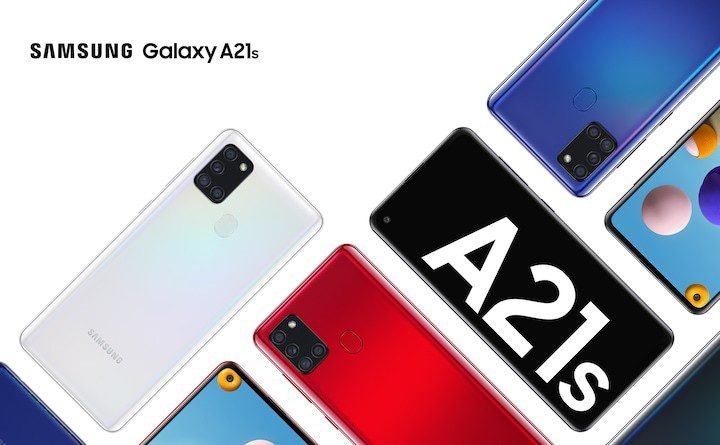
When it launched, the Galaxy A21s sported a design that was pretty standard for Samsung’s budget lineup. It had a glossy plastic finish, often with a subtle “hologram” effect that caught the light nicely. While some might call it “plasticky” in hand, I found it felt sturdy enough for its price point back then. The rear-mounted capacitive fingerprint sensor was reliable, and the square camera module was a common aesthetic for Samsung at the time, similar to the Galaxy A51 and A71.
The 6.5-inch display is a PLS TFT LCD, not a Super AMOLED as some might mistakenly recall. It offers an HD+ resolution (720 x 1600 pixels) and about 270 PPI. In 2020, this was acceptable for a budget phone. In 2025, however, it’s a noticeable downgrade from the sharper, more vibrant AMOLED panels common even on new entry-level devices. Colors don’t pop, and the resolution means text and images won’t be as crisp. It’s protected by Corning Gorilla Glass 3, which offers a decent level of scratch resistance, but certainly isn’t the latest in display durability.
Performance in 2025: Managing Expectations
The Samsung Galaxy A21s is powered by the Exynos 850 processor, an 8nm octa-core chip. In 2020, this was designed for “dependable processing and gaming” for entry-level tasks. Fast forward to 2025, and this chipset is definitely showing its age.
Frankly, if you’re expecting snappy performance for anything beyond basic messaging, web browsing, and very light social media, you’ll be disappointed. Opening apps can feel sluggish, multitasking will likely lead to stutters, and demanding games are largely out of the question. Even casual games might struggle. A recent review from October 2025 noted that its performance is “quite limited” for current use, though it can handle social media and light games.
It’s important to understand that while the Exynos 850 was built with power efficiency in mind, its raw processing power was never its strong suit, even when new. Modern apps are heavier, and the operating system (even Android 12) demands more resources. If you value speed, you’ll find much better options in the current budget market.
Camera Capabilities Today: Daylight Warrior, Nighttime Napper
The A21s featured a quad-camera setup on the back: a 48MP main sensor, an 8MP ultrawide, and two 2MP sensors for macro and depth. The front had a 13MP selfie camera.
In my experience, 48MP main sensors on budget phones from 2020 could produce decent results in ideal lighting conditions. The A21s was no exception. It captured photos with a characteristic Samsung saturation, which some people quite like. Daylight photos are generally “defensible,” meaning they’re good enough for social media if you’re not pixel-peeping.
However, the moment light becomes challenging – indoors, at dusk, or at night – the camera system falls apart quickly. Detail drops significantly, noise increases, and dynamic range suffers. The 8MP ultrawide and 2MP macro sensors were never stellar, even at launch, and are practically negligible by 2025 standards. The 13MP front camera delivers “average” results, often with some softening, especially in less-than-perfect light.
If a strong camera is a priority, even for casual use, you’ll find that newer budget phones in 2025 offer significantly improved image processing and often better sensor technology, especially in low light.
Software & Security: The Biggest Caveat
This is where the Samsung Galaxy A21s really shows its age, and it’s a critical point to consider in 2025. The phone launched with Android 10 and received its last major Android update to Android 12 with One UI 4.1 in July 2022. It will not receive Android 13 or any newer Android versions.
More importantly, Samsung officially ended software support for the Galaxy A21s with the May 2024 security patch. This means that as of December 2025, your device is no longer receiving regular security updates.
While some critical Google Play system updates might still trickle through, the lack of consistent security patches makes the device more vulnerable to security threats. For many, this alone is a deal-breaker, especially for a primary device used for banking, personal data, and communication. It’s a significant security risk that I simply cannot recommend overlooking.
Battery Life: Still a Strong Suit
One area where the Samsung Galaxy A21s still holds its own is battery life. With a substantial 5000 mAh Li-Po battery, it was designed for endurance. Coupled with its power-efficient Exynos 850 processor and lower-resolution display, the A21s could easily last a full day, and often two, on a single charge for moderate users.
Even in 2025, for basic usage, this battery capacity remains impressive. If all you need is a phone that stays powered for a long time without heavy usage, the A21s could still deliver on this front. Charging is limited to 15W, which is slow by today’s standards, but that’s a minor trade-off for its longevity.
Connectivity: A 4G World
The A21s supports 4G LTE connectivity, Wi-Fi 5 (802.11ac), and Bluetooth 5.0. It also includes a 3.5mm headphone jack, which many appreciate.
The most obvious limitation here in 2025 is the lack of 5G support. While 4G LTE is still widely available and perfectly adequate for most tasks, 5G networks are expanding rapidly. If you live in an area with good 5G coverage or anticipate needing faster mobile data speeds in the future, the A21s will be a bottleneck. For those who primarily use Wi-Fi, this might not be a significant issue, but it’s something to be aware of.
Samsung Galaxy A21s Price in 2025: The Used Market Reality
Given its age, you won’t find the Samsung Galaxy A21s new in retail stores anymore. Your only options are the used or refurbished markets.
In November 2025, prices for a used Galaxy A21s typically start around A$149.00 in Australia, or globally, you might find them for as low as $93, depending on the storage, color, and overall condition. Trade-in values for a working device are very low, averaging around $30.
At these prices, you’re looking at a very inexpensive device. However, even at a low cost, the trade-offs in software security and performance are substantial.
FAQs: Addressing Common Questions
Is the Samsung Galaxy A21s waterproof?
No, the Samsung Galaxy A21s does not have an official IP rating for water or dust resistance. You should definitely keep it away from liquids.
Is the Samsung Galaxy A21s a good phone in 2025?
Frankly, no. While it still functions for basic tasks, its outdated Android version (12) and lack of security updates (ended May 2024) make it a poor recommendation for a primary device in 2025. Performance is also significantly behind modern budget phones.
Is the Samsung Galaxy A21s camera still good?
In good daylight, the 48MP main camera can still capture usable photos, especially with Samsung’s characteristic color saturation. However, its performance quickly degrades in challenging lighting, and the auxiliary lenses are largely unimpressive. Compared to current budget phones, it falls short.
Does the Samsung Galaxy A21s have Gorilla Glass?
Yes, the Samsung Galaxy A21s display is protected by Corning Gorilla Glass 3.
Is the Samsung Galaxy A21s a 4G phone?
Yes, the Samsung Galaxy A21s only supports 4G LTE networks. It does not have 5G connectivity.
Who is the Samsung Galaxy A21s Still For in 2025?
Given its limitations, I can only recommend the Samsung Galaxy A21s for a very specific niche in 2025:
- Emergency Backup Phone: If you need an absolute bare-bones backup device for calls and texts, and you understand the security implications.
- Kids’ First Phone (Highly Supervised): For a very young child who only needs basic communication, doesn’t handle sensitive data, and whose usage is heavily monitored. Even then, I’d prefer a newer, more secure budget option.
- Dumbphone Replacement (with smart features): For someone who primarily wants a long-lasting battery and basic phone functions, but occasionally needs access to simple apps like WhatsApp or a web browser, and doesn’t care about performance or security updates.
- Dedicated Offline Device: Perhaps for playing old games that don’t require updates, or as a music player, completely disconnected from the internet.
Alternatives to Consider in 2025
If you’re on a tight budget but need a functional and secure smartphone in 2025, I strongly advise looking at newer, entry-level models from Samsung’s current A-series (like the Galaxy A15 or A25) or other brands. These phones will offer:
- Current Android versions: Android 14 or 15, with guaranteed updates for several years.
- Active security patches: Essential for protecting your data.
- Improved performance: Even budget chipsets from 2024/2025 are significantly better than the Exynos 850.
- Better displays: Often higher resolution and sometimes AMOLED.
- 5G connectivity: Future-proofing your purchase.
- Enhanced cameras: More capable in various lighting conditions.
Even a refurbished flagship from a few years ago (like a Galaxy S21 or S22) can offer a far superior experience for a comparable price to a *new* budget phone, though you’ll still need to check its remaining software support.
My Final Take: Proceed with Caution (or Not At All)
The Samsung Galaxy A21s was a respectable budget smartphone in 2020. In 2025, however, its time has passed for most users. The lack of ongoing security updates is a critical flaw that outweighs any potential savings on the used market. Its performance is sluggish, and its camera is dated.
While the battery life remains a strong point, and it can still perform basic functions, I can’t confidently recommend the Galaxy A21s as a primary device for anyone in 2025 who values security, performance, or up-to-date features. Save your money or spend a little more on a newer budget smartphone that will offer a safer, more enjoyable, and more capable experience.
The Samsung Galaxy A21s, released in May 2020, has undeniably reached the end of its useful life as a primary smartphone in 2025. While its initial budget appeal might tempt some on the used market, the critical downsides far outweigh any perceived savings, particularly concerning security, performance, and camera capabilities.
Security Risks in 2025: A Deeper Dive
The most significant red flag for the Galaxy A21s in 2025 is its complete lack of ongoing software support. Samsung officially ended software support for the Galaxy A21s in July 2024, with the last security patch being released in May 2024. This means the device no longer receives crucial security updates and is stuck on Android 12, which was released in July 2022.
Operating a smartphone without current security patches in 2025 is akin to leaving your front door unlocked in a bustling city. The mobile threat landscape has evolved dramatically, with cyberattacks rising annually. Outdated devices are a primary target for attackers, who actively exploit known vulnerabilities that remain unpatched. These vulnerabilities can range from “use-after-free” flaws allowing apps to gain elevated system privileges, to permissions errors that disable security features like USB Restricted Mode, and WebKit flaws enabling attackers to break out of web sandboxes.
Users of the Galaxy A21s are exposed to increased risks of malware, phishing attacks (including AI-amplified social engineering tactics like “smishing” and “vishing”), and data breaches. Malicious apps, sometimes even distributed through unofficial stores or disguised as fake system updates, can steal personal and financial data. Furthermore, connecting to untrusted Wi-Fi networks on an unpatched device can make users susceptible to Man-in-the-Middle (MITM) attacks, where sensitive communications can be intercepted. While Google Play system updates may continue to offer some security for essential components, the core operating system remains vulnerable. For anyone handling sensitive personal or financial information on their device, the security posture of the Galaxy A21s in 2025 is simply unacceptable.
Performance Pitfalls: More Than Just Sluggish
Beyond security, the Galaxy A21s struggles significantly with performance in 2025. It is powered by the Exynos 850 (8 nm) chipset, an octa-core processor with all eight Cortex-A55 cores clocked at 2.0 GHz. While this was adequate for basic tasks in 2020, it is demonstrably underpowered for modern smartphone usage. Even with 3GB, 4GB, or 6GB of RAM options, the processor is the bottleneck.
In 2025, modern apps and operating systems are designed for chipsets like the Snapdragon 8 Gen 3, which offers significantly faster speeds and multitasking capabilities. The Galaxy A21s will exhibit noticeable lag when opening and switching between applications, especially more demanding social media apps, web browsers with multiple tabs, or any form of mobile gaming. The user interface itself will feel less responsive, with animations and transitions often stuttering. Attempting to multitask, such as having a video playing while browsing, will likely lead to frustrating slowdowns and app crashes. This sluggishness impacts not just the user experience but also productivity, making even routine tasks feel cumbersome and time-consuming. The overall lack of processing power means the device cannot efficiently handle the demands of contemporary software, leading to a consistently frustrating experience.
The Camera Conundrum: Missing Out on Memories
The camera system on the Galaxy A21s, while featuring a quad-camera setup on paper, is severely dated by 2025 standards. It boasts a 48MP main camera, an 8MP ultrawide, and two 2MP sensors for macro and depth. The front-facing camera is 13MP. Both front and rear cameras can record video at a maximum of 1080p at 30 frames per second.
In an era where budget smartphones offer impressive computational photography features, enhanced low-light performance, and more versatile video recording capabilities, the A21s falls far short. Photos taken in anything less than ideal, bright lighting conditions will suffer from significant noise, lack of detail, and poor dynamic range. The 8MP ultrawide camera, while offering a wider field of view, produces images that are often soft and lack sharpness, especially around the edges. The 2MP macro and depth sensors are largely gimmicks, offering minimal practical improvement to photography.
Compared to current budget phones that leverage advanced image processing and often include optical image stabilization (OIS) or electronic image stabilization (EIS) for smoother video, the A21s’s fixed focus front camera and lack of OIS on the main sensor mean blurry selfies and shaky video footage are common. For anyone who values capturing clear, vibrant photos and videos of everyday moments or special occasions, the Galaxy A21s camera will be a constant source of disappointment, failing to keep pace with the quality and features expected from even an entry-level smartphone today.
Advanced Tips for Maximizing Your A21s Camera
Despite the inherent limitations of the Samsung Galaxy A21s camera, particularly the absence of optical or electronic image stabilization and a fixed-focus front camera, there are several techniques and settings you can employ to significantly improve your results.
1. Master Stability for Sharper Photos and Smoother Video
Given the lack of OIS or EIS, stability is paramount. For still photography, always use two hands and brace yourself against a stable surface whenever possible. When shooting videos, strive for static shots or extremely slow, deliberate pans to minimize shakiness. Investing in a small, portable tripod or a smartphone gimbal can dramatically enhance video quality and reduce blur in photos, especially in challenging lighting conditions.
2. Optimizing Low-Light Performance (Without Night Mode)
The Galaxy A21s does not feature a dedicated Night Mode. To combat poor low-light performance, maximize any available external light sources. Position your subject near lamps or windows. While the single LED flash can be helpful, use it judiciously as it can often result in harsh lighting and overexposure. For more control, delve into the Pro Mode settings. Here, you can manually adjust the ISO (camera’s sensitivity to light) and exposure compensation to brighten your shots, though be mindful that higher ISO values can introduce more digital noise.
3. Elevate Your Selfies
The 13MP front-facing camera has a fixed focus, meaning there’s an optimal distance for sharpness. Experiment to find this sweet spot, typically arm’s length or slightly further. Ensure your face is well-lit, ideally with natural, diffused light. The camera app often defaults to an 8MP cropped view for selfies; make sure to select the wider 13MP option for higher resolution and a broader frame. For hands-free captures, enable the “Show palm” setting in the camera options, allowing you to trigger the shutter by showing your palm to the camera. Additionally, if you find text or mirrored images appearing reversed in your selfies, toggle off the “Save selfies as previewed” setting.
4. Harnessing Pro Mode for Creative Control
The A21s’s Pro Mode offers manual controls that can be invaluable for specific scenarios.
- ISO: Adjust this to control light sensitivity. Lower ISO (e.g., 100-200) is ideal for bright conditions to minimize noise, while higher ISO (e.g., 400-800) can help in dimmer environments, albeit with increased noise.
- White Balance: Correct colors to appear natural under different light sources (e.g., sunny, cloudy, fluorescent).
- Exposure Compensation: Manually lighten or darken your image. This is useful when the automatic metering misjudges the scene, such as when shooting a bright subject against a dark background or vice versa.
5. Effective Use of Specialized Lenses
The quad-camera setup includes an 8MP ultrawide lens and a 2MP macro lens.
- Ultrawide Camera: Best used in good lighting for expansive landscapes or group shots where you want to fit more into the frame. Be aware that images from the ultrawide lens may not be as sharp as those from the main sensor.
- Macro Camera: This lens has a fixed focus distance of approximately 4cm. To get clear close-up shots, you’ll need to physically move your phone back and forth until your subject is precisely in focus at this very specific distance.
6. Post-Processing is Your Friend
Even with the best shooting techniques, post-processing can significantly enhance your photos. Utilize the built-in gallery editor or third-party apps to make minor adjustments to brightness, contrast, saturation, and sharpness. Cropping can also improve composition and remove distractions.
Troubleshooting Common Camera Issues
Even with advanced tips, you might encounter recurring problems with the A21s camera. Here’s how to address some common frustrations:
1. Persistent Blurry Photos and Shaky Videos
As highlighted, the primary culprit is the lack of optical or electronic stabilization. If your photos or videos are consistently blurry or shaky, revisit the stability tips above. Ensure you are using a two-hand grip, bracing your arms, or considering external stabilization tools like a tripod. For video, minimize movement or aim for static shots.
2. Poor Image Quality in Dim Environments
The absence of a dedicated Night Mode means the A21s struggles in low light. If your low-light shots are grainy or underexposed, focus on finding and utilizing external light sources. Experiment with Pro Mode to manually adjust ISO and exposure, but remember that pushing these settings too high can introduce noticeable noise.
3. Selfies Appearing Out of Focus
The fixed-focus front camera requires you to be at an optimal distance for a clear shot. If your selfies are consistently soft, try adjusting your distance from the phone. Ensure adequate lighting on your face, as this helps the camera capture more detail.
4. Camera App Lag or Freezing
Like any app, the camera can occasionally experience glitches. If the camera app is slow to open, lags, or freezes:
- Clear Cache: Go to `Settings > Apps > Camera > Storage > Clear cache`. This can resolve temporary data conflicts.
- Restart Your Phone: A simple reboot can often fix minor software issues.
- Check for Software Updates: Ensure your phone’s operating system and camera app are up to date, as updates often include bug fixes and performance improvements.
- Free Up Storage: A full storage can impact app performance. Delete unnecessary files or move them to an SD card.
5. Macro Shots Not Focusing
The 2MP macro camera has a very specific fixed focus distance of 4cm. If your macro shots are blurry, you are likely not at the correct distance. Move the phone slowly closer to and further away from your subject until it snaps into focus. This requires patience and precision.
[Truncated]