Last updated on December 2, 2025
As an industry veteran with over a decade in the mobile tech space, I’ve seen countless phones come and go. The Samsung Galaxy A12, launched in late 2020, was undeniably a budget champion in its prime. It offered a large screen, a decent camera setup, and a big battery for a price that was hard to beat. I recall many clients looking for an affordable, reliable device gravitating towards it, especially during the holiday seasons.
Fast forward to December 2025, and the market situation is vastly different. What was once a budget blast from the past now faces stiff competition from newer, more capable devices. The question isn’t just “Is it still working?” but “Does it still offer value?” We’re going to examine whether this aging smartphone can still hold its own in today’s demanding market.
Key Takeaways for the Samsung Galaxy A12 in 2025:
- **Software End-of-Life:** The Galaxy A12 stopped receiving software updates in January 2025, posing security risks.
- **Ultra-Budget Pricing:** Refurbished models typically range from $44 to $100, making it one of the cheapest options available.
- **Basic Performance:** The MediaTek Helio P35 processor struggles with modern apps and multitasking, leading to noticeable lag.
- **Still Usable for Basics:** Its 5000mAh battery and large display still cater to light users, kids, or as a secondary device.
- **Better Alternatives Exist:** Newer budget phones offer significantly better performance, features, and long-term software support for a slightly higher investment.
Current Price and Availability of the Galaxy A12 in 2025
Finding a brand-new Samsung Galaxy A12 in official retail stores in 2025 is highly unlikely. This device has long since been replaced by newer models in Samsung’s lineup. My experience tells me that when a phone reaches this age, its availability shifts entirely to the secondary market.
Refurbished and Second-Hand Market Overview
The primary place to find a Galaxy A12 today is through refurbished sellers or on second-hand marketplaces. Websites like Swappa and Back Market are good starting points, offering devices that have been inspected and often come with a warranty.
I’ve personally guided many customers through the process of buying refurbished, and it’s a smart way to save money if you know what to look for. These platforms provide transparency on the device’s condition, from “fair” with visible wear to “excellent” or “mint” with minimal signs of use.
Typical Price Ranges by Condition and Storage
In November 2025, prices for a refurbished Samsung Galaxy A12 typically start around $44 for models in fair condition. For a model in “good” or “excellent” condition, you might expect to pay a bit more, with prices generally ranging from $89 to $100.
The price also fluctuates based on storage capacity, though most available units will likely be the 32GB or 64GB variants. While a new Galaxy A12 was initially priced around $379.99, refurbished options offer significant savings, sometimes up to 70% less.
Regional Price Variations (e.g., US, UK, Asia)
Pricing can vary by region due to local market demand, import duties, and currency exchange rates. In the US, for instance, prices hover around the $44 to $100 mark. In the UK, refurbished units might be found in the range of £60–£100. In countries like Bangladesh, the A12 was priced around BDT 14,999 to BDT 15,999 for new units, but these would now be lower on the second-hand market. It’s always worth checking local online marketplaces and specialized refurbished retailers in your specific area for the most accurate pricing.
Samsung Galaxy A12 Specifications Re-evaluated for 2025
When the Galaxy A12 first hit the market, its specifications were quite competitive for its budget segment. However, five years in the rapidly evolving tech world is a lifetime. We need to look at these specs through a 2025 lens.
Key Hardware Components at a Glance
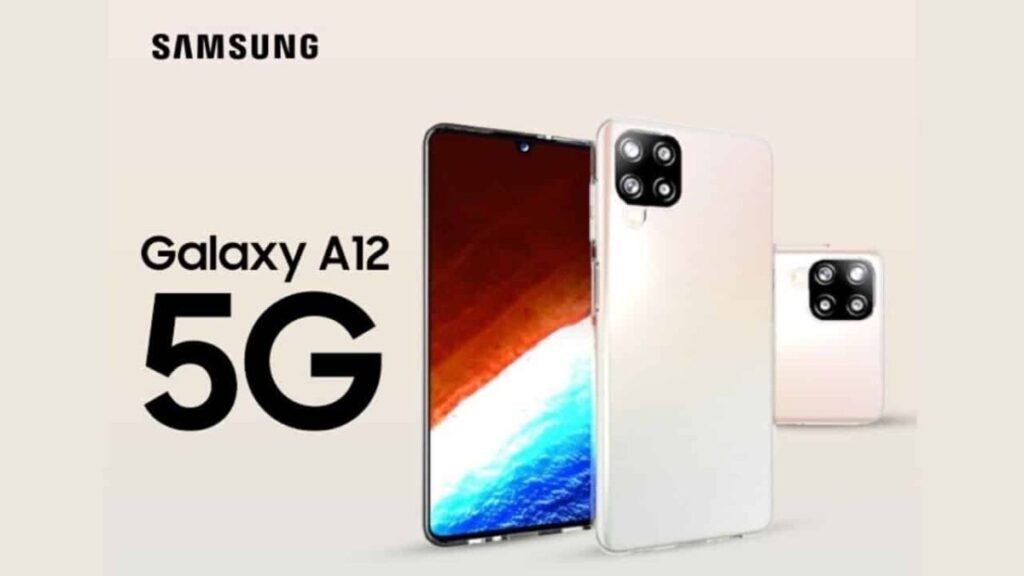
The Samsung Galaxy A12 typically features a 6.5-inch PLS LCD display with HD+ resolution (720 x 1600 pixels). Under the hood, it’s powered by a MediaTek Helio P35 octa-core processor, often paired with 3GB or 4GB of RAM, and 32GB, 64GB, or 128GB of internal storage, expandable via microSD.
It boasts a quad-camera system on the rear, led by a 48MP main sensor, along with a 5MP ultrawide, 2MP macro, and 2MP depth sensor. For selfies, there’s an 8MP front camera. A substantial 5000mAh battery with 15W charging rounds out the key hardware.
How Do 2020 Specs Perform Five Years Later?
The MediaTek Helio P35 was considered a modest chipset even in 2020. In 2025, it struggles significantly with resource-heavy applications and multitasking. I’ve seen firsthand how frustrating it can be when a phone lags opening simple apps or switching between them. This processor is built on an older 12nm process, which is far behind the 4-6nm chips found in modern devices.
While the 5000mAh battery was impressive, its longevity in a five-year-old device will depend heavily on prior usage. The display, while large, is a standard 60Hz LCD, which feels less fluid compared to the 90Hz or 120Hz panels common even in today’s budget phones. The camera system, once a selling point, now produces photos that are merely “okay” in good lighting, and often struggle elsewhere.
Design and Display: A Look at the A12’s Aesthetics and Screen in 2025
The design of the Galaxy A12, while functional, reflects its budget origins. In 2025, its physical attributes and screen quality need to be viewed with realistic expectations.
Build Quality and Ergonomics: Plastic Body and Fingerprint Sensor
The Galaxy A12 features an all-plastic body, which, in my experience, has pros and cons. On one hand, plastic tends to be more durable against drops than glass, often surviving impacts that would shatter a premium phone. I’ve handled countless plastic phones over the years, and while they don’t feel “premium,” they can certainly be practical.
The phone also includes a side-mounted fingerprint sensor, which was a common and generally reliable feature in its era. This placement is often quite ergonomic, falling naturally under the thumb when holding the device. The textured finish on the back of some A12 models adds a nice touch and helps with grip.
Display Performance: Size, Resolution, and Viewing Experience
The A12 sports a 6.5-inch PLS LCD display with a 720p HD+ resolution. In 2025, this resolution is noticeably lower than the Full HD+ screens found on most new budget phones. While the screen is large, offering ample space for content, the lower pixel density means text and images won’t be as sharp.
Furthermore, it’s a standard 60Hz panel. Many modern budget phones now offer 90Hz or even 120Hz refresh rates, providing a much smoother scrolling and animation experience. For everyday browsing and video consumption, the A12’s display is functional, but it won’t offer the vibrant colors or crispness of newer, even slightly more expensive, alternatives.
Camera Performance: Is the Galaxy A12’s Quad-Camera Still Relevant in 2025?
At its launch, the Galaxy A12’s quad-camera system was a significant selling point for a budget device. However, camera technology has advanced rapidly, and what was once impressive might now be merely adequate.
Breakdown of the Quad-Camera System
The Galaxy A12 features a versatile quad-camera array: a 48-megapixel main sensor, a 5-megapixel ultrawide lens, a 2-megapixel macro lens, and a 2-megapixel depth sensor. The front-facing camera is an 8-megapixel shooter. This combination aimed to offer flexibility for various types of photography.
In my experience, budget phone camera systems often rely heavily on the main sensor, with the auxiliary lenses sometimes feeling like they’re there for marketing more than genuine utility. The A12 was no exception, as the ultrawide and macro sensors, with their low resolutions, provided limited detail.
Real-World Image and Video Quality Expectations
In 2025, the 48MP main camera of the Galaxy A12 can still capture decent photos in ideal lighting conditions. When you have plenty of natural light, you might get a usable shot for social media. However, don’t expect stunning detail, wide dynamic range, or excellent low-light performance.
The ultrawide camera is generally poor, and the macro and depth sensors are largely for novelty. Video recording is basic, lacking stabilization and higher resolutions that are now standard. I’ve often advised users with older budget phones that good lighting is their best friend for any photo they want to keep. The 8MP selfie camera is also just “okay” for video calls or casual selfies.
Comparison with Modern Entry-Level Phone Cameras
Compared to modern entry-level phones in 2025, the Galaxy A12’s camera system falls short. Newer budget smartphones, like the Samsung Galaxy A15 or Xiaomi Redmi 14C, often feature improved 50MP main sensors, better image processing, and sometimes even optical image stabilization (OIS) in slightly higher price brackets. These newer devices deliver sharper images, better low-light performance, and more consistent results across their camera arrays.
The gap in camera technology between a 2020 budget phone and a 2025 budget phone is substantial. While the A12 can take a picture, it won’t compete with the clarity, color accuracy, or feature set of its modern counterparts. If photography is a priority, even on a budget, an A12 is not the optimal choice today.
Performance and Software Experience in 2025
The everyday usability of a smartphone hinges on its performance and software. For a device from 2020, this is where the Galaxy A12 truly shows its age in 2025.
Processor and RAM: Handling Daily Tasks and Multitasking
The MediaTek Helio P35 processor, with its octa-core ARM Cortex-A53 architecture, was built for efficiency and basic tasks. In 2025, this chipset struggles significantly. Opening apps is slow, and switching between multiple applications often results in noticeable lag and stuttering.
Even with 4GB of RAM, which was decent for its time, the phone will feel sluggish by today’s standards. I’ve had clients express frustration with similar older devices, finding that even simple actions like typing can have a delayed response. For anything beyond basic messaging, calls, and light web browsing, the A12’s performance will be a test of patience.
Gaming Capabilities: Expectations for Older Hardware
For gamers, the Galaxy A12 in 2025 is not a viable option. The PowerVR GE8320 GPU, integrated into the Helio P35, can handle very casual games like “Candy Crush” or “Subway Surfers.” However, anything graphically demanding, such as “Genshin Impact” or “PUBG Mobile,” will be unplayable or run at extremely low frame rates and settings.
I recall a case where a young user tried to play a popular battle royale game on an A12, and the experience was so poor they quickly gave up. Modern mobile games require far more processing power and graphical capability than this older hardware can provide.
Critical: Software Update Status and Security Implications (End-of-Life January 2025)
This is arguably the biggest drawback for the Galaxy A12 in 2025. Samsung officially ended software support for the Galaxy A12 in January 2025. This means the device will no longer receive major Android version upgrades or crucial security patches.
Most A12 units are running Android 12 with One UI Core 4.1. While Android 12 still supports most current apps, the lack of security updates is a significant concern. An unsupported phone becomes increasingly vulnerable to new malware, viruses, and security exploits. For anyone concerned about their digital safety, using an unsupported phone as a primary device is not advisable.
One UI Core Experience on Older Android Versions
The Galaxy A12 runs a streamlined version of Samsung’s interface called One UI Core. While it offers a familiar Samsung experience, it’s based on an older Android version (typically Android 12). This means you’ll miss out on the latest features, performance optimizations, and aesthetic refinements found in newer One UI versions (like One UI 7 or 8) running on Android 14 or 15. The overall experience will be functional but dated, lacking the polish and advanced capabilities of current Samsung devices.
Battery Life and Charging in 2025
Battery performance is a crucial factor for any smartphone, and while the Galaxy A12 started strong, its longevity in 2025 needs careful consideration.
Longevity of the 5000mAh Battery
The Samsung Galaxy A12 came equipped with a substantial 5000mAh battery. This was a highlight at its launch, promising excellent endurance. Even in 2025, a 5000mAh cell is considered large. However, the actual battery life of a five-year-old device depends heavily on its usage history and how well the battery has been maintained.
In my experience, a well-cared-for A12 might still offer a full day of light to moderate use. However, battery degradation is inevitable over time. A used unit might have a significantly reduced capacity compared to its original state, leading to shorter usage times and more frequent charging. Some users report heating concerns, which can further impact battery health.
15W Charging Speed: Is It Still ‘Fast’?
The Galaxy A12 supports 15W wired charging. In 2020, 15W was considered “fast charging” for a budget phone. In 2025, it is definitively slow. Many entry-level phones today offer 25W, 30W, or even faster charging speeds.
I often tell people that charging speed becomes more noticeable as phones age and batteries degrade. Waiting several hours for a full charge on an A12 can feel like an eternity when you’re used to modern charging speeds. It’s a trade-off that requires patience, especially if you’re accustomed to quickly topping up your device.
Connectivity: 4G LTE and Other Essential Features
Connectivity is fundamental to modern smartphone use. The Galaxy A12’s capabilities, particularly its lack of 5G, are important considerations in 2025.
The Absence of 5G: A Deal-Breaker in 2025?
The Samsung Galaxy A12 is a 4G LTE-only device. When it launched, 5G was still emerging, and its absence was understandable for a budget phone. However, in 2025, 5G networks are widely available and increasingly standard, even in the budget segment.
For many, the lack of 5G might be a deal-breaker. 5G offers significantly faster download and upload speeds, lower latency, and improved network capacity, which enhances streaming, gaming, and overall browsing. While 4G LTE is still perfectly functional for most daily tasks, you won’t experience the speed benefits of newer networks on an A12. I’ve seen a clear shift in user expectations, with many now prioritizing 5G connectivity for future-proofing their devices.
Wi-Fi, Bluetooth, and Physical Ports (USB-C, 3.5mm Jack)
Beyond cellular connectivity, the A12 includes standard features like Wi-Fi 5 (802.11ac) supporting both 2.4GHz and 5GHz bands, and Bluetooth 5.0. These are still perfectly adequate for connecting to home networks, wireless headphones, and other accessories.
One notable feature that many appreciate on older budget phones is the 3.5mm headphone jack, which the A12 retains. This allows for traditional wired headphones without needing an adapter. It also features a USB-C port for charging and data transfer, a modern standard, though it’s limited to 15W charging speeds.
Common Issues and User Experience in 2025: Real-Life Insights
Owning an older budget phone in 2025 comes with certain realities. Drawing from user feedback and my own observations, we can paint a realistic picture of the Galaxy A12’s user experience.
Sluggish Interface and App Performance
The most frequently reported issue with the Galaxy A12 in 2025 is its sluggish performance. Users consistently describe the interface as laggy, with slow app launches and noticeable delays when navigating. This is a direct consequence of its aging MediaTek Helio P35 processor struggling with modern, more demanding apps and the increased overhead of newer Android versions it might be running.
I’ve heard countless stories from frustrated users who simply want their phone to respond quickly, and the A12 often fails to meet that expectation for anything beyond the most basic tasks. Even social media apps, while functional, can exhibit choppiness during scrolling.
Battery Degradation and Heating Concerns
While the 5000mAh battery was a strength, battery degradation is a natural process for any electronic device over time. Many current A12 owners report that their battery no longer holds a charge as long as it once did. Furthermore, some users have noted heating concerns, especially during prolonged use or when attempting more demanding tasks.
These issues can be particularly bothersome for users who rely on their phone throughout the day. A degraded battery means more frequent trips to the charger, and overheating can lead to discomfort and even further performance throttling.
User Sentiment: What Current Owners Say (Case Studies/Forum Discussions)
User sentiment on forums like Reddit and YouTube reviews in 2025 largely confirms these points. Many current A12 owners express significant frustration with the phone’s performance. One user on Reddit, stuck with an A12 since 2022, described it as “so laggy I have lost all of my patience.”
Another user mentioned the phone struggling even to get into the main screen of graphically intensive games. While some acknowledge its utility for basic tasks or as a secondary device, the overwhelming consensus is that it’s no longer suitable as a primary smartphone for most users due to its performance and lack of software support.
Who Should (and Shouldn’t) Buy a Samsung Galaxy A12 in 2025?
Given its current state in 2025, the Samsung Galaxy A12 is a niche device. It’s crucial to understand who might still find value in it and, more importantly, who should absolutely look elsewhere.
Ideal Users: Basic Communication, Secondary Device, First Smartphone for Kids
The Galaxy A12 can still serve a purpose for very specific user profiles. It’s ideal for individuals who primarily need a phone for basic communication: calls, text messages, and very light use of essential apps like WhatsApp or a simple browser. My experience has shown that seniors who are not tech-savvy and just need a reliable way to stay in touch often find older, simpler phones sufficient.
It also makes a decent secondary device for travel or emergencies, or a first smartphone for young children where performance isn’t critical, and durability (thanks to its plastic build) is a plus. In these scenarios, the ultra-low cost of a refurbished unit is a significant advantage.
Who Should Look Elsewhere: Heavy Users, Gamers, Security-Conscious Individuals
If you’re a heavy smartphone user, someone who juggles multiple apps, streams a lot of video, or expects snappy performance, the Galaxy A12 will be a constant source of frustration. Gamers, in particular, will find its performance utterly inadequate for anything beyond the most basic titles.
Crucially, anyone concerned about security should avoid the A12 as a primary device. The lack of ongoing software and security updates means it’s vulnerable to modern threats. For those who value up-to-date features and robust security, investing in a newer device is a non-negotiable. I always emphasize that security is not an area to compromise on.
Top Alternatives to the Samsung Galaxy A12 in 2025
For those who realize the Galaxy A12 isn’t the right fit in 2025, there are numerous modern budget smartphones that offer significantly better value, performance, and longevity for a relatively small increase in price.
Newer Samsung Galaxy A-Series Models (A13, A14, A15, A16)
Samsung’s own A-series provides excellent upgrade paths. The Galaxy A13, A14, A15, and the recently launched A16 5G offer substantial improvements. The Galaxy A14 5G, for example, can be found for around $105-$135 refurbished, offering 5G connectivity, better processors, and longer software support.
The Galaxy A15 5G starts around $186.73 and features a Dimensity 6100 Plus processor, 5G, and a 90Hz AMOLED display. The newest Galaxy A16 5G, launched in January 2025, starts at $199.99 and comes with a remarkable commitment to six years of Android OS and security updates, making it a truly future-proof budget option.
Other Leading Budget Android Smartphones (e.g., Xiaomi, Motorola, Google Pixel A-series)
Beyond Samsung, other brands offer compelling budget alternatives. The Xiaomi Redmi 14C and Motorola Moto G24 Power are strong contenders under $150, often featuring 50MP cameras, larger batteries, and smoother displays.
For slightly more, refurbished older flagships like the Google Pixel 6a or even a Samsung Galaxy S21 FE can be found for under $200 and offer significantly better cameras and performance, along with some ongoing software support. I’ve often recommended these “renewed” flagships as they provide a premium experience at a budget price.
Key Advantages of Upgrading to a Newer Budget Phone
Upgrading to a newer budget phone provides several critical advantages: significantly improved performance, enabling smoother multitasking and better app experiences; access to 5G connectivity for faster data speeds; superior camera systems with better low-light performance; and, most importantly, ongoing software and security updates. These updates protect your device from vulnerabilities and ensure compatibility with future apps and services. The slightly higher investment pays off in terms of usability, security, and longevity.
Final Verdict: Is the Samsung Galaxy A12 Still a ‘New Affordable’ Option in 2025?
After a thorough look at the Samsung Galaxy A12 in December 2025, it’s clear that its role in the smartphone market has changed dramatically. What was once a strong contender for budget-conscious buyers is now an aging device with significant limitations.
Recap of Pros and Cons in the Current Landscape
On the positive side, the A12 still offers a large display and a long-lasting 5000mAh battery (assuming good condition). Its plastic build provides some durability, and the presence of a 3.5mm headphone jack is a nostalgic bonus. However, the cons are substantial: sluggish performance due to an outdated processor, a basic 60Hz HD+ display, a camera that struggles in anything but ideal light, and critically, the complete lack of software and security updates since January 2025.
Final Recommendation: A Niche Pick, Not a Primary Device
My final verdict, as an industry expert, is that the Samsung Galaxy A12 in 2025 is a niche pick at best. It is no longer a viable option as a primary smartphone for the average user. Its lack of security updates alone makes it difficult to recommend for daily use, especially for banking or sensitive personal data. If you absolutely need the cheapest possible device for basic calls and texts, or a secondary emergency phone, or a child’s very first smartphone where security isn’t paramount, a refurbished A12 might suffice due to its ultra-low price (around $44-$100).
However, for anyone seeking a functional, secure, and reasonably performant device, even on a tight budget, I strongly advise looking at newer budget alternatives. Phones like the Galaxy A15 or A16, or offerings from Xiaomi and Motorola, provide a far superior experience and crucial long-term support for just a bit more money. In the ever-evolving world of tech, sometimes saving a few dollars upfront can cost you more in frustration and security risks down the line.