Last updated on December 7, 2025
Imagine a time when the idea of a worker strike at a major tech powerhouse like Samsung seemed almost impossible. Yet, that’s exactly what happened, marking a truly historic moment for the company.
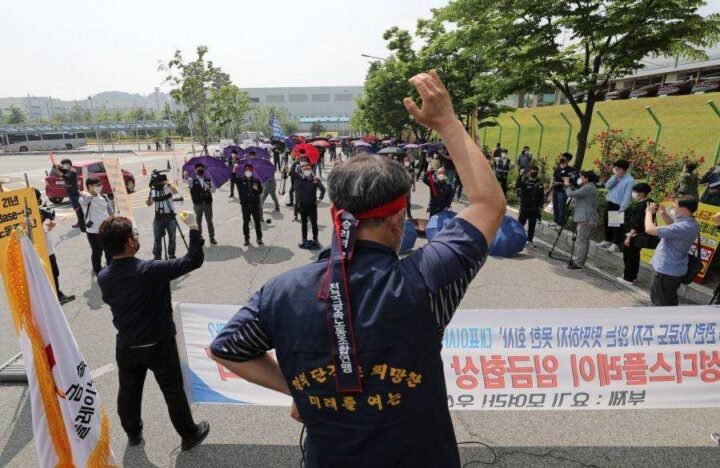
The event that captured global attention was the Samsung Display Workers On Strike For The First Time In History, a significant turning point that occurred in June 2021. This unprecedented action by Samsung Display employees challenged a long-standing corporate culture that had historically resisted unionization.
It signaled a notable shift in labor relations, not just within Samsung, but potentially across the broader tech industry.
Understanding the implications of this first-ever Samsung strike helps us grasp the evolving landscape of tech industry labor disputes.
Key Takeaways: Understanding the Samsung Display Strike
In June 2021, Samsung Display experienced a truly historic event: the Samsung Display Workers On Strike For The First Time In History. This unprecedented action marked a significant moment for labor relations within the tech giant. It challenged a long-standing corporate culture that had historically resisted unionization.
To give you a quick overview, here are the key facts about this notable labor dispute:
| Aspect | Detail |
|---|---|
| Event | The first-ever strike by Samsung Display workers. |
| Date | June 2021. |
| Location | Samsung Display’s plant in Asan, South Chungcheong Province, South Korea. |
| Parties Involved | The labor union at Samsung Display and Samsung Display management. The union represented approximately 2,400 members, or about 10 percent of the total workforce. |
| Primary Demands | A wage increase, with the union seeking a 6.8% raise against the company’s 4.5% offer. The union also highlighted a lack of transparency and fairness in negotiations. |
| Historical Significance | This was the first strike at any Samsung Group affiliate since Vice Chairman Lee Jae-yong pledged in May 2020 to end the company’s “no labor union” policy. It represented a notable shift in Samsung’s approach to labor relations. |
This initial strike, though involving a limited number of union representatives, was a powerful statement. It signaled an evolving landscape for workers’ rights within one of the world’s largest technology conglomerates.
The Genesis of the Strike: A Historic Shift in Samsung’s Labor Relations
For many decades, Samsung Group maintained a strict “no labor union” policy across its various affiliates. The company’s founder, Lee Byung-chul, was famously quoted as saying he would never allow unions “until I have dirt over my eyes”.
This long-standing stance led to a history of union-busting activities, including surveillance and intimidation, to prevent workers from organizing.
This aggressive approach persisted for a significant period, with reports of the company sabotaging employee councils and pressuring subcontractors to dismiss union members. It took many years, including judicial interventions and even the arrests of South Korean presidents linked to bribery, for the company to begin formally recognizing unions.
However, a notable shift occurred in May 2020 when Vice Chairman Lee Jae-yong publicly apologized for Samsung’s past labor issues and pledged to end the “no labor union” policy.
This apology paved the way for a new era in Samsung’s labor relations, though the path was not always smooth. The Samsung Display Workers On Strike For The First Time In History occurred in 2021, marking a significant moment for the display maker.
This initial strike by Samsung Display workers came after a breakdown in wage negotiations, highlighting the emerging power of organized labor within the conglomerate.
Wage Negotiations: A Path to Discontent
The 2021 strike at Samsung Display stemmed directly from a failure of wage negotiations Samsung management had with its union. Workers initially sought a 6. 8 percent increase in their base pay.
However, the company countered with a lower offer of 4. 5 percent, a figure determined by the labor-management council.
Despite multiple rounds of talks, both sides remained firm in their positions, leading to an impasse. This deadlock eventually prompted the union to take the unprecedented step of industrial action, resulting in the first strike in Samsung Display’s history.
This event underscored the growing determination of workers to advocate for their demands.
In early 2024, Samsung Display again found itself on the brink of another strike, signaling ongoing challenges in labor relations. The union presented a comprehensive list of 25 to 26 demands, including a 5 percent base wage increase, enhanced holiday bonuses, and a revamp of the performance incentive system.
Unfortunately, several rounds of negotiations failed to yield a satisfactory agreement, with the union expressing frustration over the company’s perceived unwillingness to negotiate.
When negotiations reached a breaking point, the union declared a rupture and applied for mediation through the National Labor Relations Commission. This formal process is a crucial step in South Korean labor law, as it allows unions to legally pursue a strike if mediation efforts prove unsuccessful.
The persistent struggle over fair wages and working conditions forms the core of the Samsung Display strike background, reflecting a broader movement for workers’ rights within the tech giant. [IMAGE: diagram showing timeline of Samsung’s labor policy shift and key strike dates]
Understanding the Demands: What Workers Are Fighting For
The Samsung Display union’s strike is rooted in a disagreement over wages and working conditions. The union is pushing for a significant pay increase, arguing that current compensation doesn’t reflect the company’s profitability and the workers’ contributions. They are also seeking improvements in their overall work environment and benefits.
[IMAGE: infographic comparing Samsung Display’s profit growth to average worker wage increases]
Specifically, the union initially proposed a wage increase of 10%. This figure was put forth after considering inflation, the company’s financial performance, and industry standards. They believe this percentage is a fair reflection of their value and the economic climate.
Samsung Display, on the other hand, has countered with a more modest offer. The company proposed a wage increase of 4. 5%.
This counter-offer is significantly lower than what the union is demanding, creating a substantial gap in negotiations.
Key Points of Contention
| Demand/Offer | Details |
|---|---|
| Union’s Initial Wage Demand | 10% increase |
| Company’s Wage Offer | 4.5% increase |
| Other Union Concerns | Working conditions, benefits |
This difference of 5. 5 percentage points in the wage increase is the primary sticking point in the ongoing labor dispute. The union views the company’s offer as insufficient and a sign that their concerns are not being fully addressed.
They are looking for a compromise that acknowledges their hard work and dedication to the company’s success.
Imagine a scenario where you’ve consistently exceeded your performance goals, and your company reports record profits. You’d naturally expect your compensation to reflect that success. The Samsung Display workers are in a similar situation, feeling that their efforts have not been adequately rewarded.
The union’s stance is that a 10% Samsung Display union demands are not just about money; they are about respect and fair recognition for their labor. The company’s 4. 5% Samsung wage increase offer, while a raise, is seen by many as falling short of what is deserved.
This significant gap highlights the deep divide that has led to this historic strike.
Potential Ripple Effects: Beyond Samsung Display
This historic strike at Samsung Display raises a pretty important question: could this lead to similar actions at other Samsung companies? It’s definitely something many are watching closely, especially given the conglomerate’s vast reach across various tech sectors.
The success of this walkout could embolden workers elsewhere within the Samsung group to organize and voice their own demands.
Samsung Subsidiaries Strike Risk and Unionization
The Samsung group is a massive entity, encompassing everything from smartphones and semiconductors to shipbuilding and construction. If Samsung Display workers achieve a favorable outcome, it might signal to employees in other subsidiaries that collective bargaining is a viable path to better working conditions and compensation.
This could increase the Samsung subsidiaries strike risk significantly. Historically, unionization efforts within the broader Samsung group have faced considerable challenges, but this event could mark a turning point.
The Impact of Lee Jae-Yong’s Labor Policy
The leadership of Samsung, particularly figures like Lee Jae-Yong, will be under increased scrutiny regarding their labor policies. The current strike highlights a potential disconnect between management’s approach and the workforce’s expectations.
A more proactive and employee-centric labor policy from the top could be crucial in preventing future widespread labor disputes across the Samsung group. Ignoring these growing sentiments could lead to more significant disruptions down the line.
A Ripple Effect Scenario
Imagine a scenario where Samsung Electronics, a much larger subsidiary, faces similar demands. If the display workers’ union negotiates a substantial wage increase and improved benefits, employees at Samsung Electronics might feel empowered to push for comparable gains.
This could lead to a domino effect, impacting production schedules and, consequently, the availability of popular tech products worldwide. The company’s response to the current strike will likely set a precedent for how it handles future labor relations across all its divisions.
The Broader Context: Labor Movements in the Global Tech Industry
It might surprise some people, but the Samsung Display workers’ strike isn’t an isolated event. We’re actually seeing a pretty significant rise in worker activism across the entire global tech industry.
For a long time, tech companies were seen as these almost untouchable giants, but that’s starting to change as employees demand better treatment and fairer conditions.
This growing trend of Samsung Display workers on strike for the first time in history is part of a much larger story about labor rights in tech.
Think about it: companies like Google, Amazon, and Apple have all faced protests and unionization efforts in recent years. Workers are organizing to ask for things like better pay, improved benefits, and more say in how their workplaces are run.
This isn’t just about one company or one country anymore; it’s a global movement pushing for change in how the tech world operates.
Why Are Tech Workers Organizing Now?
Several factors are contributing to this surge in unionization trends in technology. Many tech workers, despite often earning good salaries, are realizing that their contributions are not always reflected in their working conditions or job security.
The pandemic also highlighted vulnerabilities, making many employees re-evaluate their priorities and the power they hold collectively.
Furthermore, the success of labor movements in other sectors has provided a blueprint and inspiration for tech employees. When workers see that collective bargaining can lead to tangible improvements, it encourages others to explore similar paths.
This growing awareness of worker activism in the tech sector is really reshaping the industry’s future.
Potential Impact on the Tech Giant and Beyond
If Samsung Display workers achieve their goals, it could really empower employees at other Samsung subsidiaries and even at competing tech companies. Imagine if a successful negotiation at Samsung Display leads to significant wage increases and better benefits.
This could create a ripple effect, encouraging workers elsewhere to push for similar gains.
This kind of domino effect could potentially disrupt production schedules and impact the availability of popular tech gadgets worldwide. The way Samsung handles this current strike will likely set a precedent for how it addresses labor relations across all its divisions.
It’s a critical moment for the company and a clear indicator of the evolving power dynamics within the global tech industry.
Impact on Production and Supply Chain: A Look Ahead
A strike at Samsung Display, especially for the first time in its history, could really shake things up for the tech world. This isn’t just about Samsung; it’s about the many companies that rely on their cutting-edge displays, particularly for foldable phones.
If production lines halt, we could see a noticeable slowdown in the availability of these popular devices.
The most critical component affected would likely be ultra-thin glass (UTG), which is essential for the flexible screens of foldable smartphones. Samsung Display is a major, if not the primary, producer of this specialized material.
A disruption here means fewer foldable phones being manufactured globally, potentially leading to a foldable phone display shortage.
The Ripple Effect on Global Tech
Imagine this: a major smartphone brand has a big product launch planned, relying on a steady supply of Samsung’s foldable displays.
If those displays aren’t coming, the launch could be delayed, or they might have to scramble to find an alternative, which is pretty unlikely given Samsung’s dominance in this area.
This kind of delay doesn’t just affect one company; it can impact accessory makers, app developers, and even the retailers selling the phones.
The tech supply chain resilience is put to the test with events like this. Companies have worked hard to create intricate networks to get products to us quickly and efficiently. However, a significant strike at a key component supplier like Samsung Display highlights the vulnerabilities in these systems.
It forces other tech giants to think harder about backup plans and diversifying their supply sources, though for highly specialized components like UTG, that’s a tough ask.
A prolonged strike could mean that the innovative foldable phones you’ve been looking forward to might become harder to find, or even more expensive, for a while.
This situation underscores how interconnected the global technology market actually is and how a labor dispute in one corner can have far-reaching consequences for consumers everywhere.
Samsung’s Evolving Stance on Unions: From Ban to Bargaining
For a long time, Samsung was known for its strict “union-free” policy. This meant that the company actively discouraged or prevented the formation of labor unions within its workplaces. This approach was a core part of Samsung’s corporate culture for decades, shaping its labor relations.
A Historic Shift in Policy
However, things have changed significantly. In a landmark move, Samsung officially abolished its long-standing union-free policy. This decision came after years of scrutiny and pressure regarding labor practices.
The company’s de facto leader, Lee Jae-Yong, publicly pledged to uphold the three basic labor rights for all employees. This promise marked a major turning point for the tech giant, signaling a new era of labor relations.
It’s a pretty big deal when a company with Samsung’s history makes such a public commitment to change.
Commitment to Corporate Social Responsibility
This shift is also seen as a crucial step in improving Samsung’s corporate social responsibility (CSR) image. By embracing labor rights, Samsung aims to align itself with global standards and expectations for ethical business practices.
This move is intended to foster a more positive and collaborative relationship between the company and its workforce.
This evolving stance is important for Samsung’s future, especially as labor disputes, like the current one at Samsung Display, highlight the ongoing need for fair treatment and open communication with employees.
The company is now in a position where it must demonstrate that this policy change is more than just words. It needs to show that it’s genuinely committed to respecting and bargaining with its workers.
Expert Perspectives: What Analysts Are Saying
Industry analysts are closely watching the Samsung Display workers on strike for the first time in history, with many seeing it as a significant moment for the tech giant. Some experts believe this could signal a shift in labor relations within South Korea’s powerful chaebols, or family-controlled conglomerates.
The long-term implications for Samsung’s production and its stock performance are still being assessed.
Labor experts in South Korea are highlighting the historical nature of this strike, noting that it challenges the long-held perception of a largely compliant workforce within major tech firms.
They suggest that the workers’ decision to strike indicates growing dissatisfaction and a stronger desire for improved working conditions and fair compensation. This could set a precedent for future labor actions across the industry.
Potential Impacts on Samsung and the Tech Industry
Analysts are forecasting potential short-term disruptions to Samsung’s display production, which could affect the availability of components for its popular smartphones and other electronic devices. While the company has significant resources, a prolonged strike could lead to increased costs and delays.
This, in turn, might cause some fluctuations in Samsung’s stock price as investors react to the uncertainty.
Looking further ahead, some tech industry analysts suggest that this strike could push Samsung to re-evaluate its labor policies more broadly. If the company engages in meaningful negotiations and makes concessions, it might foster a more stable and collaborative environment in the long run.
Conversely, a mishandled dispute could damage Samsung’s reputation and make it harder to attract and retain talent.
For instance, imagine a scenario where the strike continues for several weeks. This could lead to a shortage of OLED panels needed for new smartphone launches. Competitors might then see an opportunity to gain market share if Samsung struggles to meet demand.
This ripple effect underscores why resolving the strike quickly and fairly is crucial for Samsung’s continued dominance in the display market.
| Area of Concern | Analyst Outlook | Potential Consequence |
|---|---|---|
| Production Output | Short-term disruptions possible; long-term impact depends on strike duration. | Component shortages, delayed product launches. |
| Samsung Stock | Potential for short-term volatility; long-term impact tied to resolution and future labor relations. | Investor confidence fluctuations. |
| Labor Relations | Could be a catalyst for policy changes; precedent-setting for other Korean tech firms. | Improved or strained employee relations depending on negotiation outcomes. |
Common Misconceptions About Tech Industry Strikes
It’s easy to think of tech companies as these unstoppable, always-smoothly-running machines. Because of this, many people are surprised when they hear about strikes in the tech industry. They might assume that because technology moves so fast, labor disputes are somehow less likely or less impactful.
Myth 1: Tech Workers Don’t Strike
One of the biggest misconceptions is that tech workers, especially in places like South Korea, are too content or too specialized to ever go on strike. The reality is that like any other industry, tech workers can and do face issues with working conditions, pay, and benefits.
When these issues aren’t resolved through normal channels, collective action, including strikes, becomes a possibility.
Myth 2: Strikes Don’t Affect Innovation
Some believe that a strike, even a significant one like the Samsung Display Workers On Strike For The First Time In History, won’t really slow down innovation. The thinking is that engineers will just keep working on new ideas behind the scenes.
However, strikes can disrupt the supply chain, halt production lines, and delay the rollout of new products that rely on those manufactured components. This can indirectly impact the pace of innovation by preventing the testing and deployment of new technologies.
Myth 3: Strikes Are Always About Huge Pay Hikes
While compensation is often a factor, labor disputes in the tech sector can be about much more than just salary. Workers might be striking over issues like mandatory overtime, job security, unfair work practices, or the right to unionize freely.
These underlying problems can be just as important to employees as the amount of money they take home.
Myth 4: Strikes Only Hurt the Company
It’s often assumed that a strike solely harms the company involved. However, this isn’t always the case. A prolonged strike can lead to shortages of critical tech components, affecting other businesses that rely on those parts.
Consumers might also face higher prices or delayed access to the latest gadgets.
Myth 5: Tech Strikes Are Rare and Insignificant
While perhaps less common than in some older industries, strikes in the tech sector are becoming more visible. The Samsung Display Workers On Strike For The First Time In History is a prime example of how significant these events can be.
Such actions can have ripple effects, influencing labor relations not just within the company but across the wider tech industry in a region. They signal that even in fast-paced tech environments, worker rights and fair treatment remain crucial concerns.
Frequently Asked Questions (FAQ) About the Samsung Display Strike
What is the Samsung Display strike about?
The Samsung Display workers on strike for the first time in history are raising concerns about wages and working conditions. While specific details can vary, common issues in such labor disputes often include demands for better pay, improved benefits, and safer work environments.
These actions highlight the ongoing importance of employee well-being, even in technologically advanced companies.
When did the Samsung Display strike start?
The first-ever strike by Samsung Display workers occurred in June 2021. This marks a significant moment, as it’s the first time Samsung Display employees have organized such a widespread work stoppage. The duration of the strike can depend on negotiations between the workers’ union and the company’s management.
Why are Samsung workers striking now?
Workers are striking to advocate for what they believe are fairer labor practices and compensation. This action reflects a growing trend where employees in various sectors, including tech, are seeking to address perceived imbalances in their work-life and compensation.
The goal is to prompt the company to meet their demands for improved terms of employment.
What are the potential impacts of this strike?
The strike could lead to disruptions in Samsung Display’s production, potentially affecting the supply of components like OLED screens used in various electronic devices. This might, in turn, influence the availability and pricing of popular consumer electronics.
Beyond Samsung, such a significant strike in the tech industry could also encourage similar actions or negotiations at other companies, impacting broader labor relations in the sector.
What is the company’s response to the strike?
Samsung Display management is reportedly engaged in discussions with the union to resolve the dispute. The company’s official statements usually emphasize their commitment to employee welfare while also aiming to maintain business operations. The outcome of these negotiations will be crucial in determining how quickly production can return to normal.
Conclusion: Navigating a New Era for Samsung and its Workforce
The recent strike by Samsung Display workers for the first time in history marks a significant turning point for the tech giant.
It signals a potential shift in Samsung labor relations future, moving away from a historically less confrontational approach to one where collective bargaining and worker action are becoming more prominent.
This event is not just about Samsung; it reflects broader trends in the tech industry, where workers are increasingly organizing to voice their concerns.
Samsung Display management has stated they are in discussions with the union to find a resolution. The company’s public stance typically highlights a commitment to employee well-being while striving to maintain business continuity.
How these negotiations unfold will be key to understanding the immediate impact of Samsung Display strike and the speed at which normal operations can resume. It’s a delicate balance between addressing worker demands and ensuring the company’s competitive edge.
This strike ushers in a new era for Samsung workforce, one that may see more open dialogue and a greater emphasis on worker rights. For employees, it’s a demonstration of collective power. For Samsung, it’s an opportunity to adapt and build stronger, more trusting relationships with its employees.
The tech industry as a whole will be watching closely to see how Samsung navigates this new chapter in labor relations.